*Post written by Mona Meyer, Archives and Special Collections Metadata Librarian.
UASC doesn’t really have a collection that relates specifically to the establishment of this nation, the event celebrated on July 4. This blog, will therefore, focus on images we do have that illustrate some aspect of fight for independence or the celebration of the 4th. But, first, just a wee (I promise!) bit of history.
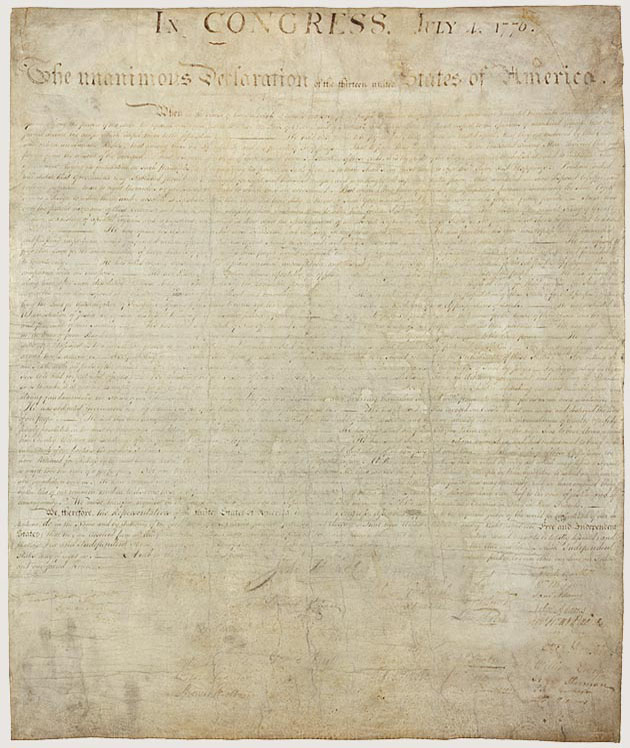
The condition of the parchment Declaration of Independence is a sign of the place it has held in the hearts of many Americans. Years of public display have faded and worn this treasured document. Today it is maintained under the most exacting archival conditions possible. This document is held in the National Archives Museum and is on display in the Rotunda for the Charters of Freedom. Located online, with transcript, here.
The first and last paragraphs are a good summary. “In Congress, July 4, 1776 The unanimous Declaration of the thirteen united States of America, When in the Course of human events, it becomes necessary for one people to dissolve the political bands which have connected them with another, and to assume among the powers of the earth, the separate and equal station to which the Laws of Nature and of Nature’s God entitle them, a decent respect to the opinions of mankind requires that they should declare the causes which impel them to the separation. … We, therefore, the Representatives of the united States of America, in General Congress, Assembled, appealing to the Supreme Judge of the world for the rectitude of our intentions, do, in the Name, and by Authority of the good People of these Colonies, solemnly publish and declare, That these United Colonies are, and of Right ought to be Free and Independent States; that they are Absolved from all Allegiance to the British Crown, and that all political connection between them and the State of Great Britain, is and ought to be totally dissolved; and that as Free and Independent States, they have full Power to levy War, conclude Peace, contract Alliances, establish Commerce, and to do all other Acts and Things which Independent States may of right do. And for the support of this Declaration, with a firm reliance on the protection of divine Providence, we mutually pledge to each other our Lives, our Fortunes and our sacred Honor.
Enough history….on with the “picture show!”
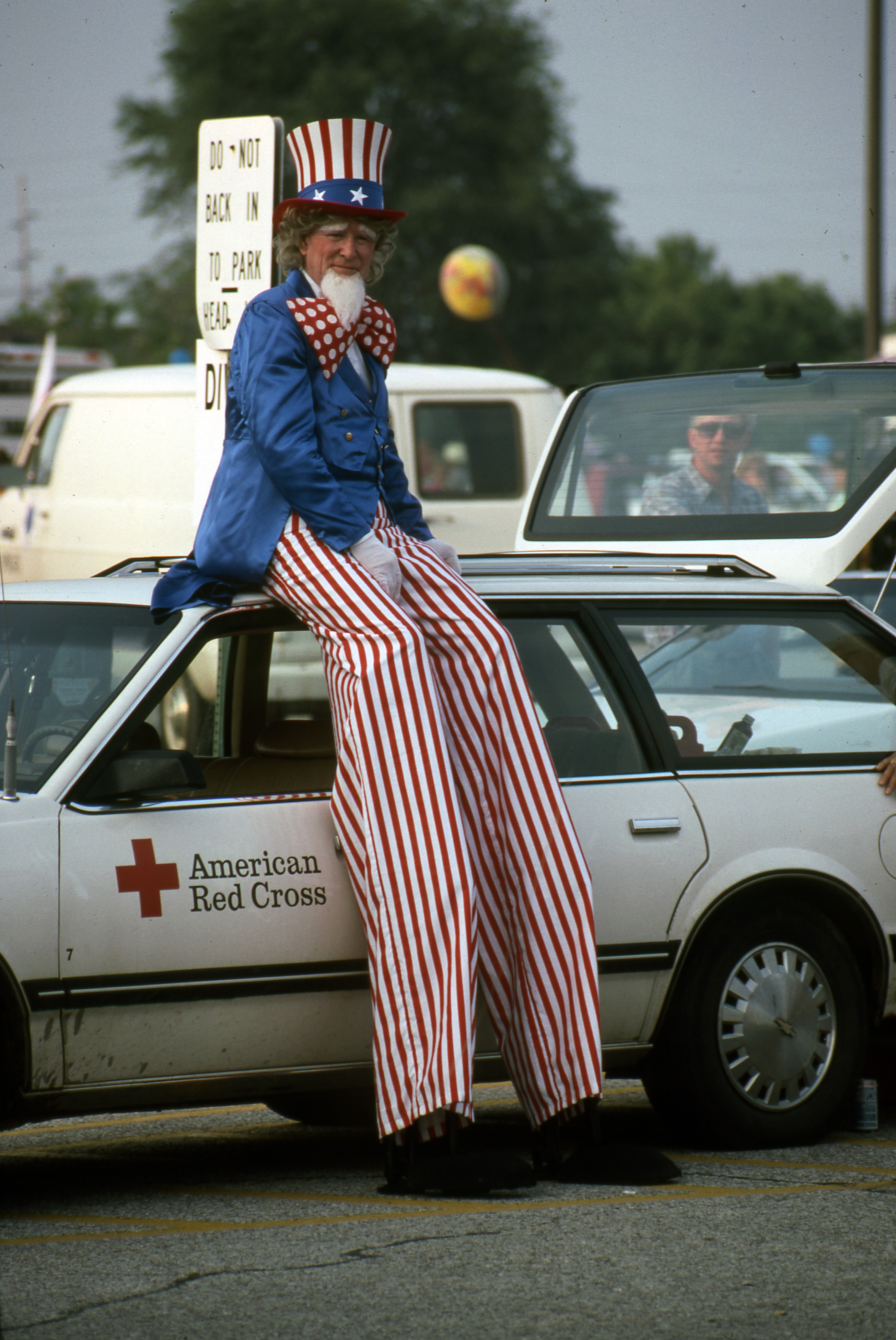
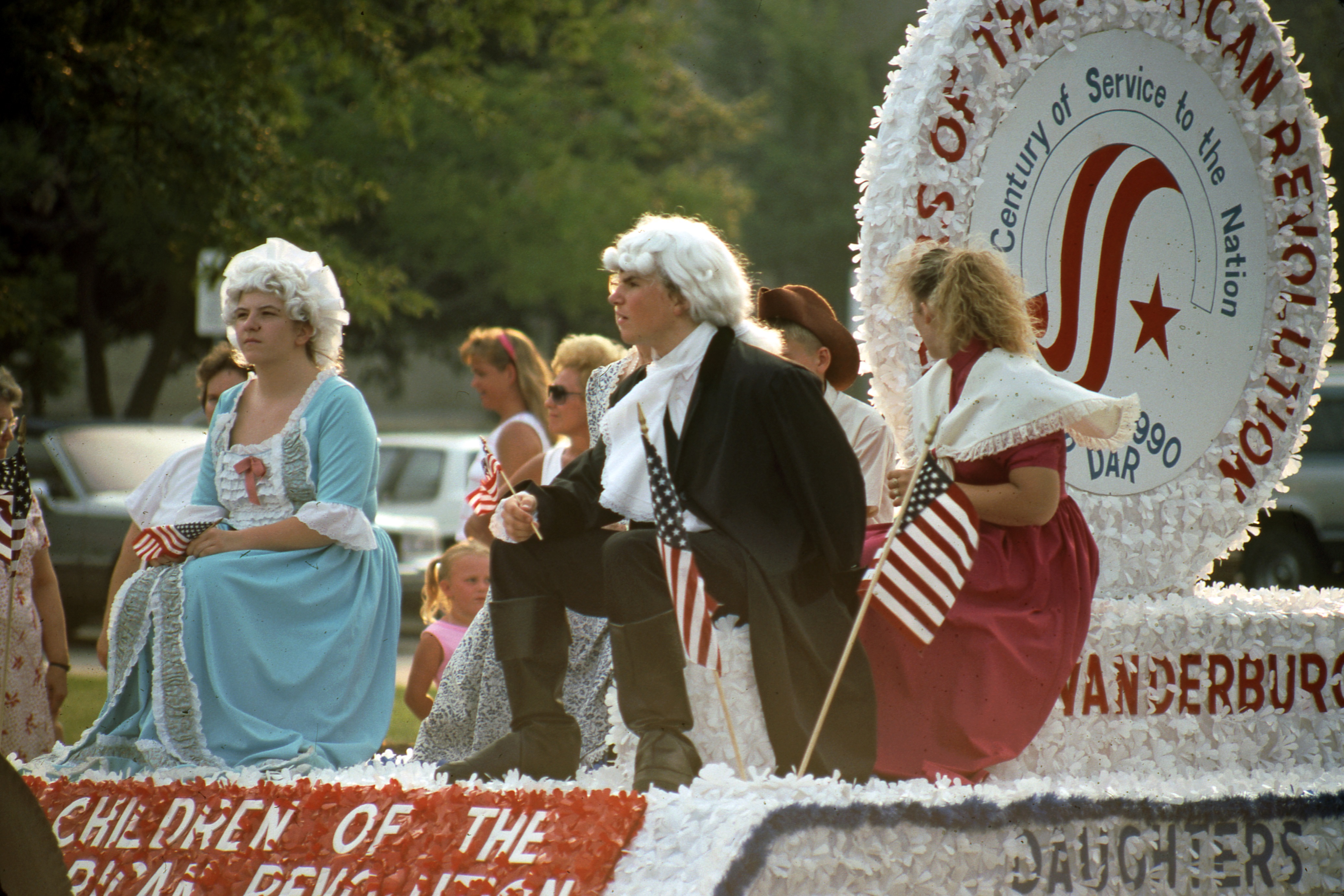
The following images are from MSS 124, the Eric Braysmith Collection, and depict a Freedom Festival parade held in Evansville, circa 1990.

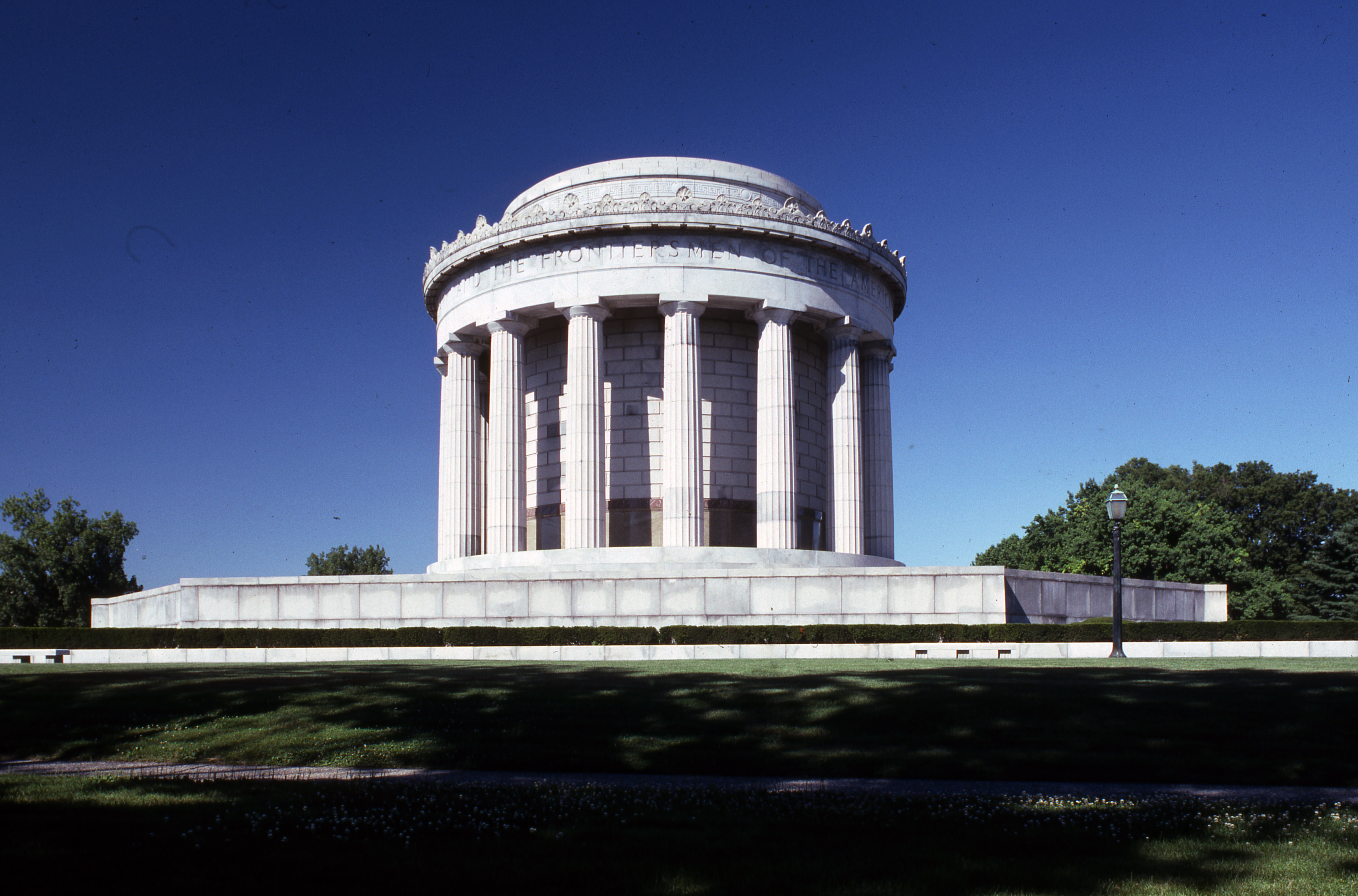
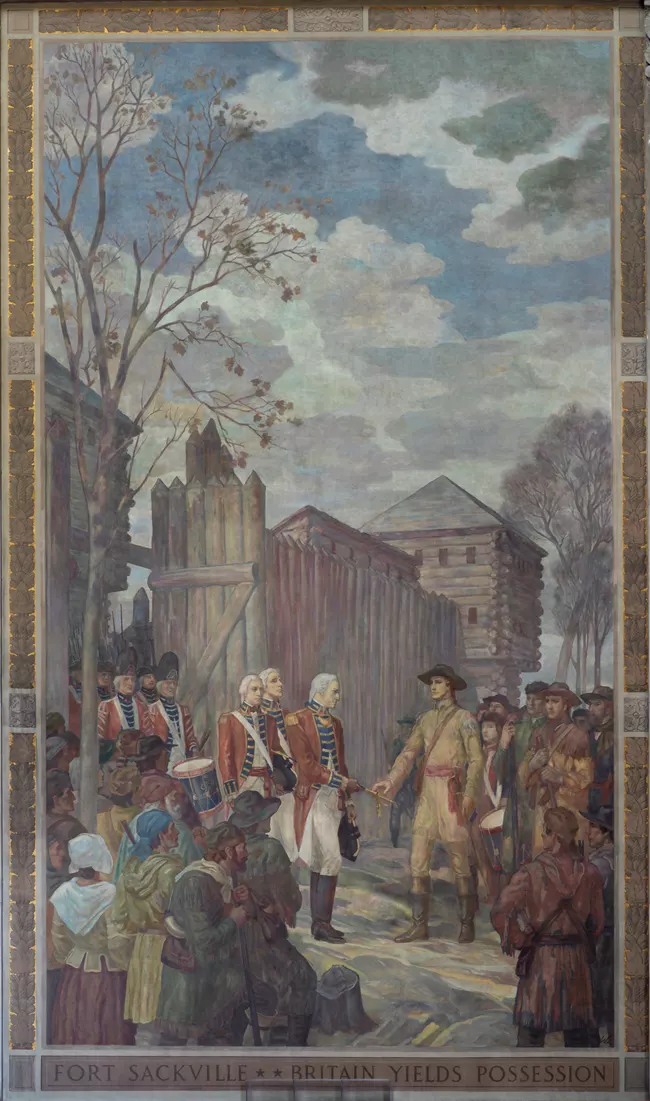
Also from the Eric Braysmith Collection, MSS 124, are these images of the George Rogers Clark Memorial At the George Rogers Clark National Historic Park in Vincennes, IN. On February 25, 1779, American Colonel George Rogers Clark captured the British Ft. Sackville. “Although unable to achieve his ultimate objective of capturing Detroit, Clark successfully countered British and Indian moves during the remainder of the conflict. The young Virginian had prevented the British from achieving their goal of driving the Americans from the Trans- Appalachian frontier. As a result of Clark’s brilliant military activities, the British ceded to the United States a vast area of land west of the Appalachian Mountains. That territory now includes the states of Ohio, Indiana, Illinois, Michigan, Wisconsin and the eastern portion of Minnesota.” The fort’s exact location is unknown, but it is believed to be close to where this memorial was constructed in 1931-1933.

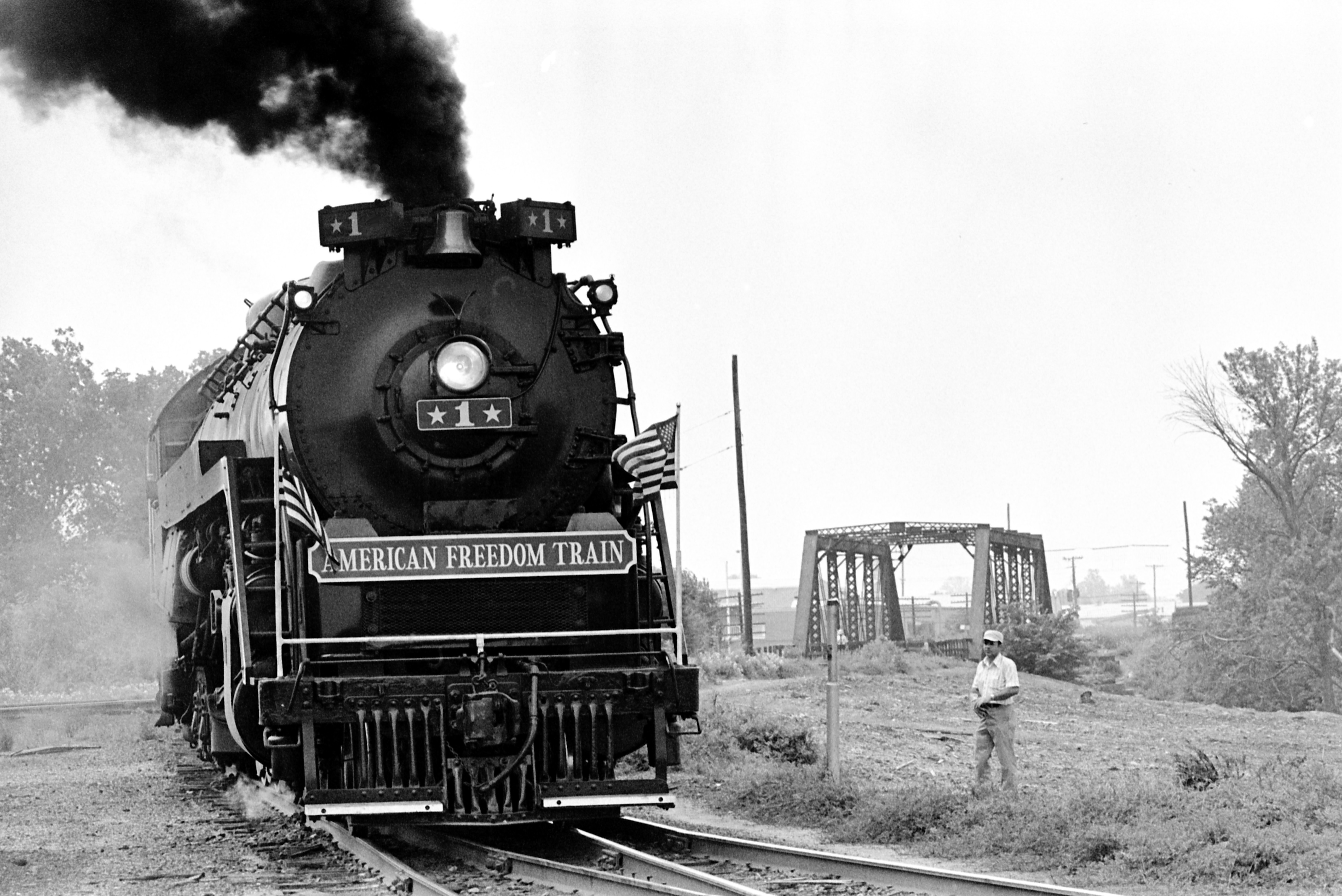
The following images are from MSS 034, the Greg Smith Collection. They show the visit of the American Freedom Train to Evansville June 15-17, 1976. The train sat on a siding behind the (then) Civic Center complex (today’s Old National Events Plaza) and was open for touring. “The triumph of the steam-powered American Freedom Train was, indeed, the only nationwide celebration of the Bicentennial. It was pulled by steam locomotives in the age of the diesel, and would improve on the three display cars of its predecessor, the 1947 Freedom Train. The American Freedom Train would feature twelve display cars, ten that visitors would go aboard and pass through and two to hold large objects that would be viewed from the ground through huge “showcase” windows. The display cars were filled with over 500 precious treasures of Americana. Included in these diverse artifacts were George Washington’s copy of the Constitution, the original Louisiana Purchase, Judy Garland’s dress from The Wizard of OZ, Joe Frazier’s boxing trunks, Martin Luther King’s pulpit and robes, and even a rock from the moon. The American Freedom Train (AFT) was a 26-car train led by one of three enormous steam engines restored just for the occasion. Over a 21 month period from April 1, 1975 to December 31, 1976 more than 7 million Americans visited the train during its tour of all 48 contiguous states. Tens of millions more stood trackside to see it go by.”

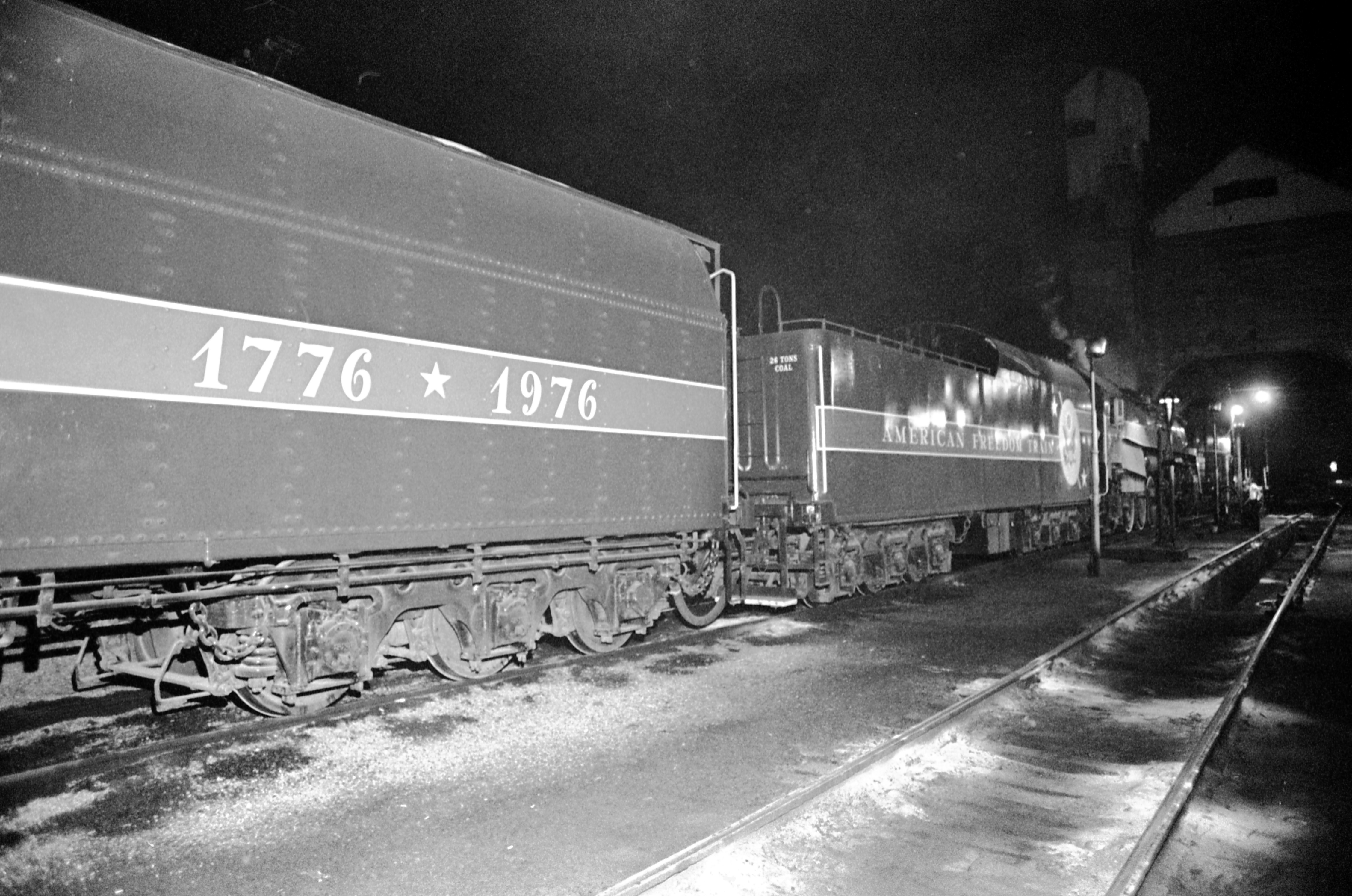
MSS 034-0598
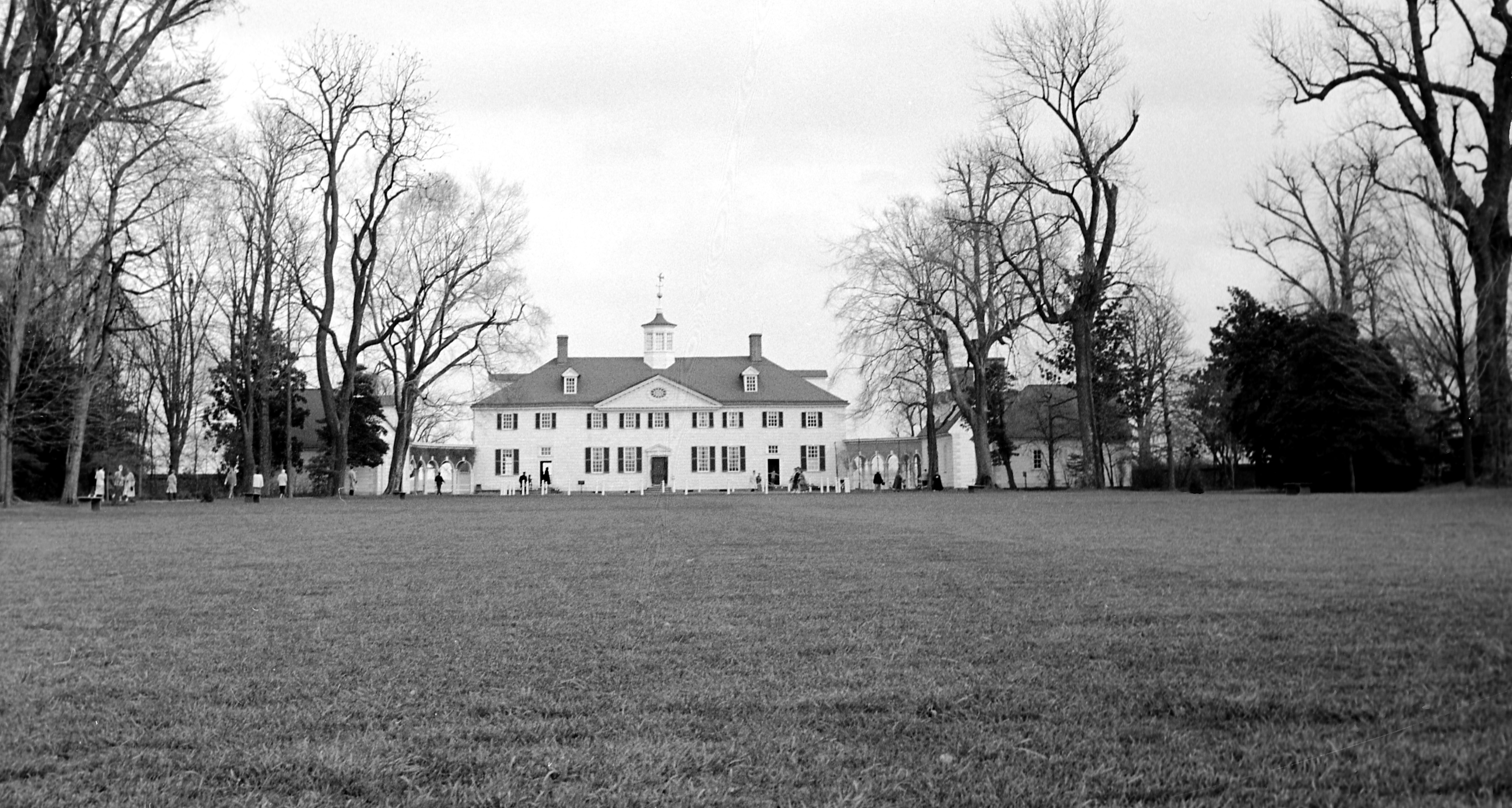
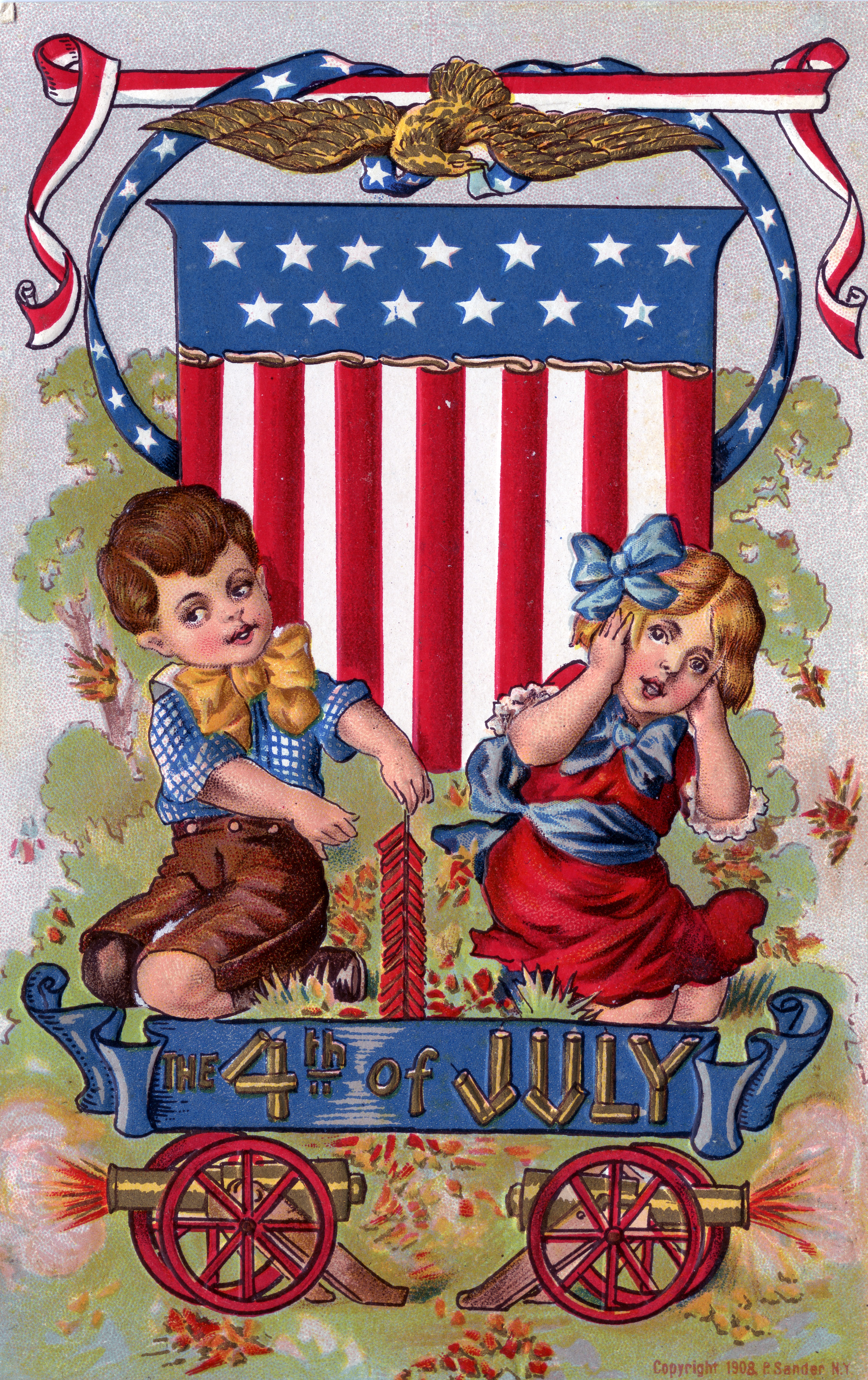
Finally, here’s a 4th of July postcard for you. Hope you enjoy/enjoyed your celebration of American independence.

 amUSIngArtifacts
Leave a comment