*Post written by Mona Meyer, Archives and Special Collections Metadata Librarian, and Kirsten Williams, Resource Sharing and Catalog Librarian.
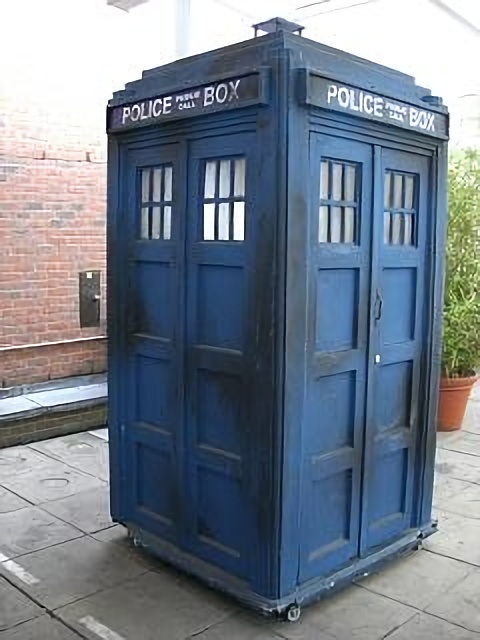
First, a couple of definitions. The homecoming theme this year is a reference to the multiyear Eras tour of superstar Taylor Swift. She will perform a total of 151 concerts, celebrating her journey through the eras of her career. A Tardis is a time machine spacecraft from the BBC science fiction television series, Doctor Who. Finally, I know you know who Archie is….the long time university mascot, Archibald Eagle. In this blog we’re envisioning Archie entering the Tardis to explore the history of USI much as Taylor might have entered it to explore her career.

Archie has 4 eras to explore:
The Foundation Era, beginning in 1965The Independence Era, beginning in 1985, The Expansion Era, beginning in 1994/1995, and the Division One Era, beginning in 2022.
Foundation Era
One of Taylor’s early albums was entitled Fearless. Archie might think of that word to describe those brave souls who boldly proposed the establishment of a state university in southwestern Indiana. This image pays homage to her album, released in 2008. The fearless man in this photograph is Dr. David L. Rice, founding president of ISUE/USI. Here he walks past the mud and muck of construction with a smile on his face, proof that his vision was coming true.

Evansville had a booming WWII economy, but by the 1950s most of the opportunities dried up as Chrysler, Briggs, International Harvester, and Hoosier Cardinal closed their doors. Additionally, in the early 1960s the baby boom threatened to overwhelm the capacities of Indiana’s colleges and universities, both public and private. Evansville was the largest city in the state that did not have a state university. True, it did have Evansville College (as it was called then), a private school that had lots of community support. It’s just that Evansville needed more.
It was an uphill battle. In 1966 a non-profit group called Southern Indiana Higher Education (SIHE) was formed. It “battled ‘sacred cows’ in Indiana’s academic powerhouses, challenging accepted practices that had left Indiana with one of the lowest educational achievement levels in the nation. They battled legislators from other cities with different agendas. And they battled some of their own peers, who couldn’t see beyond parochialism and an old allegiance.”i Finally, there was an unwritten gentlemen’s agreement (the “Indiana Plan”) among the presidents of the current state universities that they would not establish a branch campus anywhere there was already a private institution. Eventually Indiana State University (ISU) “broke ranks” and agreed to establish a branch campus in Evansville.
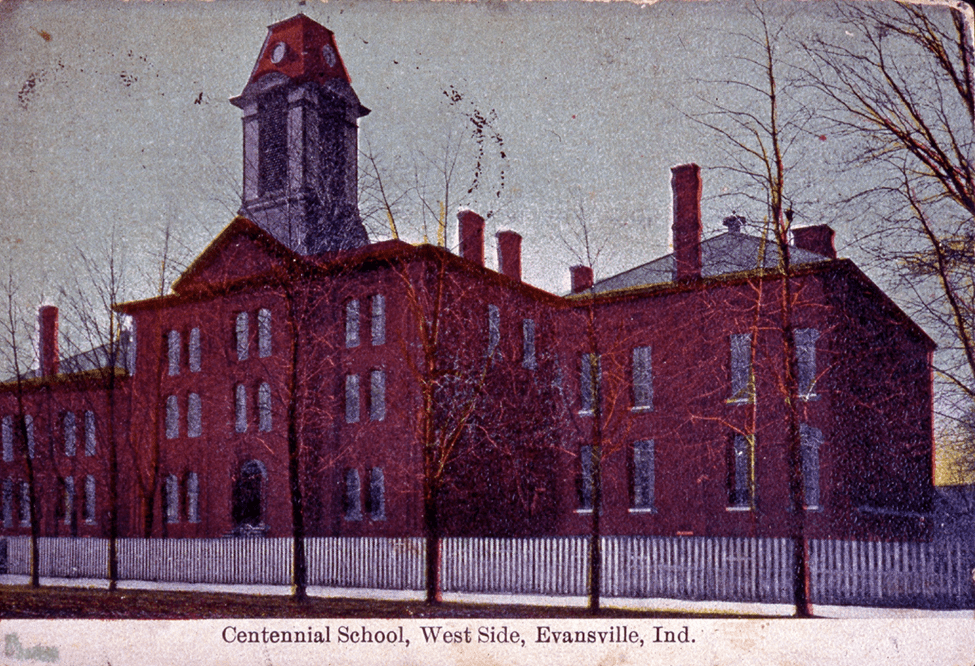
September 15, 1965 saw the first ISUE (Indiana State University, Evansville) classes held at the old Centennial School at 112 N. 12th Ave. There were 412 students, two full-time and 36 part-time faculty and staff, and freshmen-level courses in seven academic programs.
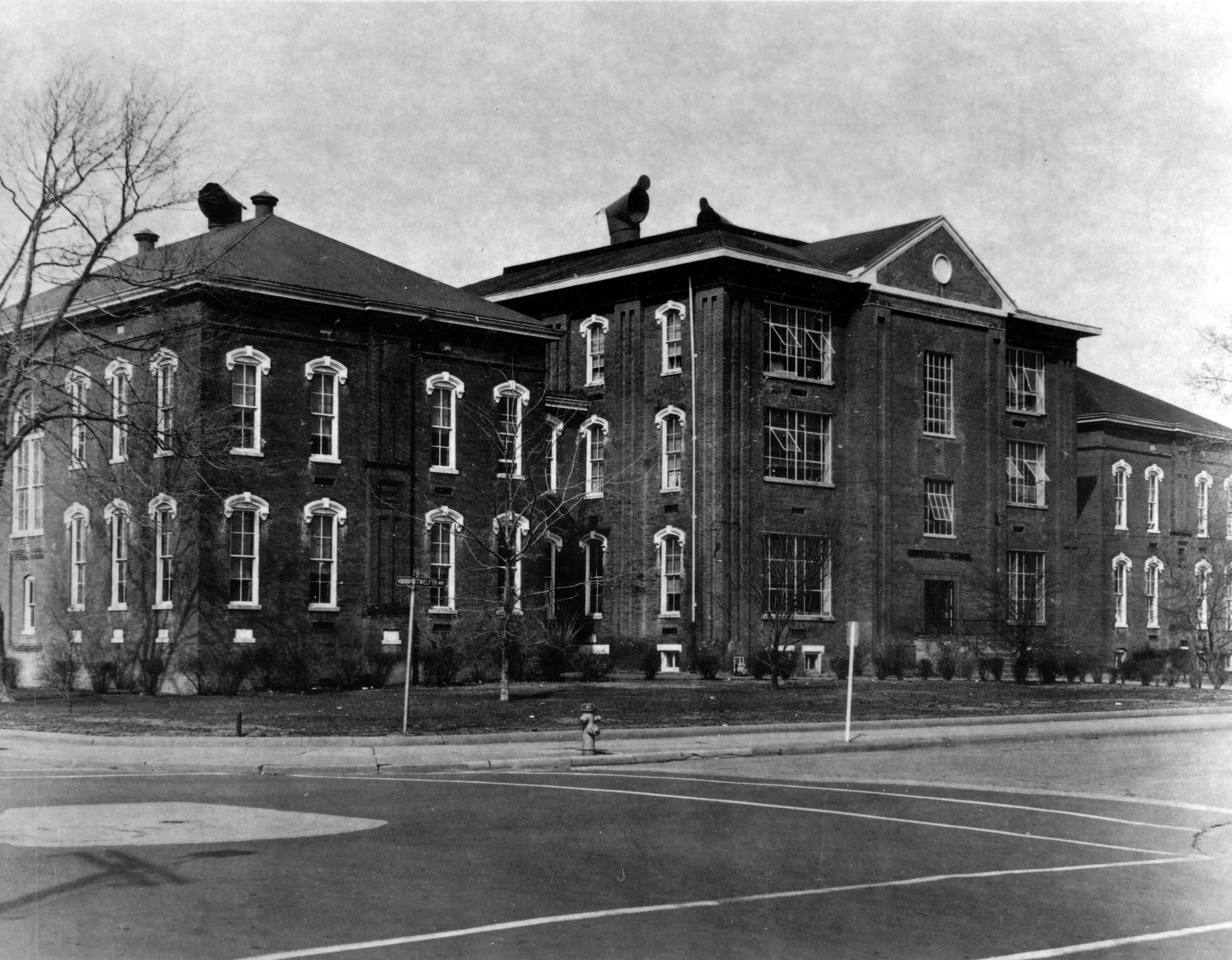
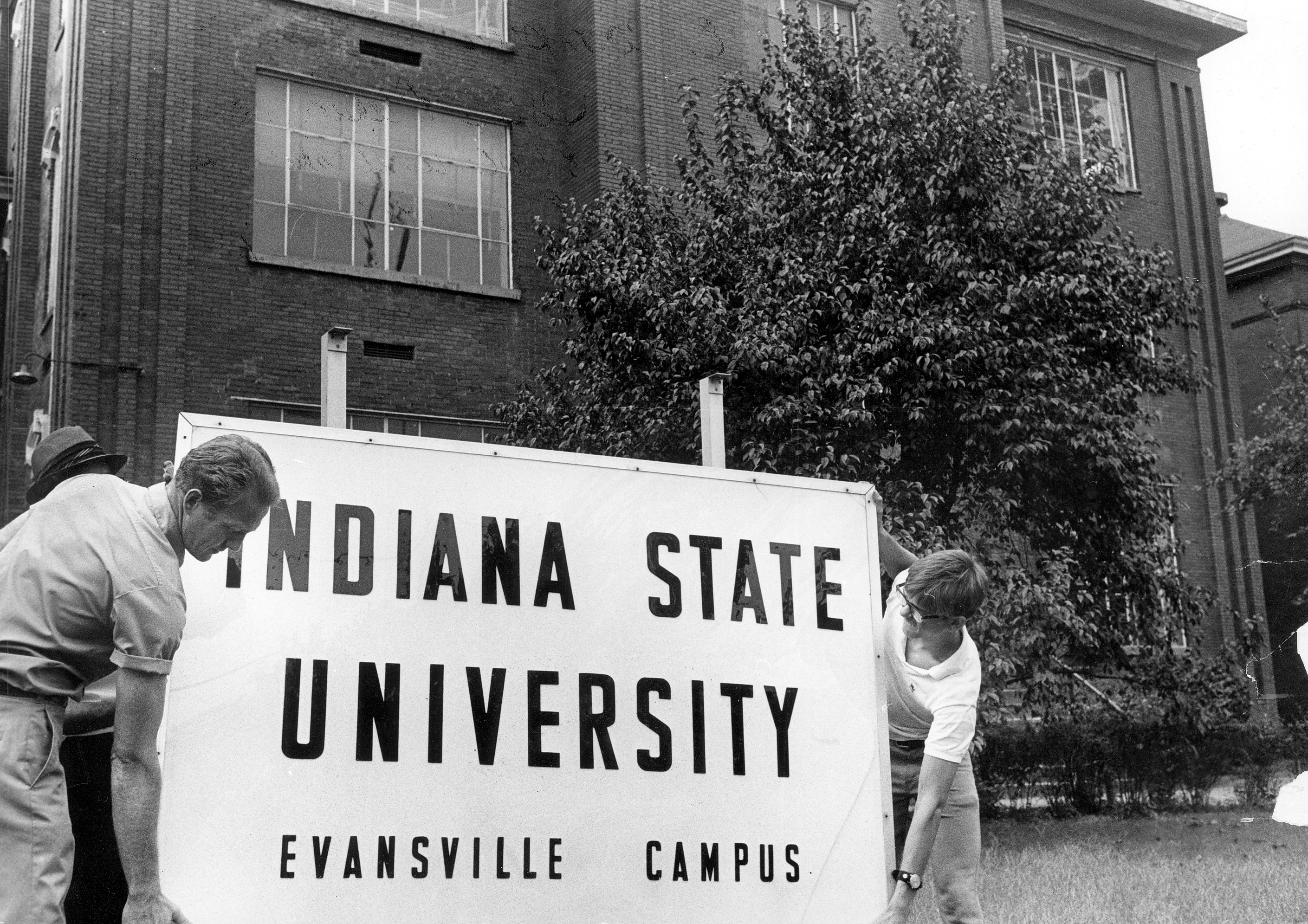

By 1967 it was apparent that Centennial School could NOT be the permanent location for ISUE.


SIHE was still on the ball, raising money and promoting higher education in Evansville. ”It launched a community campaign that raised almost $1 million, a record in Evansville at the time. Then it bought the land for a university and eventually gave it to the school, free of charge. When the state would not build student housing, SIHE built the housing and deeded it to the university, at no cost. A gymnasium was needed, so SIHE bought the vacated Central High School gym and leased it to the university for $1 a year.”ii

One critical limit to the growth of the campus was the lack of housing. For the first few years enrollment slowly grew to just shy of 4,000, but there it peaked, with ISUE enrollment only appealing to those who could commute to campus daily. In June 1970 Dr. Rice requested that the board seek state funding for married students, at the time some 25% of the ISUE student population. For a time it seemed as though this would be successful, but there was a great deal of resistance in the legislature. After all, this was a branch campus, and no other branch campus of any university in the state had housing. The legislature was firmly in the hands of a no-competition mentality.

“Continuous attempts by SIHE….met with the same brick wall of opposition, while the need for housing–not just for married students but for all students–became what [Dr.] Rice described as critical for the campus to continue growing. By April 1978 the SIHE board had made up its mind to no longer wait for ISU to act. … [SIHE board members] went to the ISU board on February 2, 1979 with an offer they felt the trustees would find too good to turn down: SIHE would build student housing and deed it to ISU at the end of amortization.”iii Archie would surely have thought this was a slam-dunk, but no, there was concern about the fact that ISU had overbuilt housing and had empty dorms. BUT THIS HOUSING WAS IN TERRE HAUTE, HARDLY USEFUL FOR ISUE STUDENTS.

SIHE had had enough. It created a nonprofit subsidiary, Mid-America Student Housing, Inc. (MASH) to build housing. This protected SIHE’s assets. Tax -free economic development bonds could be sold to finance construction, so long as a unit of government (state or local) would accept the housing once paid for. The Vanderburgh County Commissioners agree to do this. Despite struggles with high interest rates and continuing banking reluctance, funding was obtained and ground was broken on October 17, 1983 for two buildings that would house 600 students. Over a period of 10 years MASH built housing for 1300 students.

Independence Era
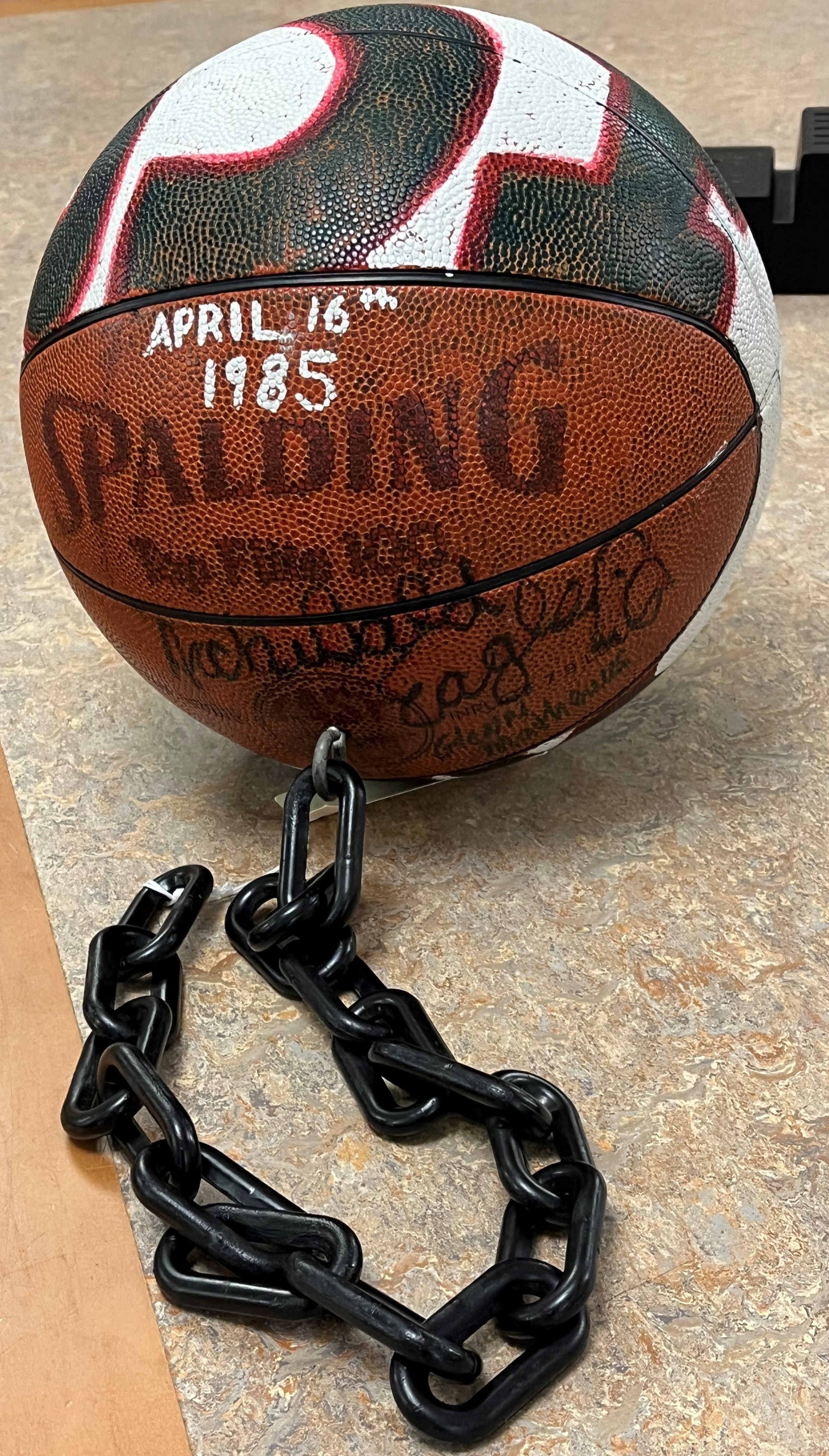
It’s time for Archie to hop back into the Tardis and explore how ISUE became USI. The image below plays homage to Taylor Swift’s album 1989 (Taylor’s Version), released in 2023. Our version shows a 1985 “Free the Eagle” ceremony on campus, with a ball and chain symbolizing the long struggle for independence being cut from Archie’s ankle.


And a long struggle it was! The plan, at least in the minds of all ISUE/USI supporters, was always an independent university. After all, there was precedent: Ball State University began as a division of ISU, but early on gained its independence. Once again, Archie would have assumed this was therefore a slam dunk, but he was sadly mistaken. This time, instead of a speed bump, he encountered a brick wall. There was opposition to creating another university that would then turn around and request state funding. There was opposition to expanding academic programs and as we’ve seen, to campus housing. There was opposition in 1975 from the new ISU president, Dr. Richard Landini, who had replaced the retired (and generally supportive) Dr. Rankin. There was opposition to offering graduate level classes, particularly a master’s degree in elementary education. UE felt this would duplicate and undermine its offering of the same degree. The 1971 creation of the Indiana Commission for Higher Education merely added another brick to that wall. On February 9, 1973, a bill granting ISUE independence passed the Indiana House by a huge margin, but was held up in the Senate which didn’t assign it to a committee; when it finally did so, that committee never scheduled a hearing. Independence wouldn’t even be a possibility for 12 more years.

But Archie and his SIHE friends were nothing if not persistent. In late 1983 they learned that the (Indiana) Commission of Higher Education was prepared to back independence, based on a study it had conducted concerning post-secondary attainment in southern Indiana. Survey results were disturbingly low. A concerted effort was made to quietly lobby legislators one by one, in private, to line up support. Then Governor Robert Orr was not opposed, but he was aware that there was still some opposition in the state legislature. Orr was from Evansville, and knew if he didn’t support independence, he faced a very real risk of losing hometown support when he came up for re-election. He suggested a small amendment to the bill; the new bill would establish a “board of incorporators” that would formulate the university’s mission and the types of programs offered. This was to be for a year, with the full understanding that when the question of independence arose next year it would be granted. This was in March 1984. In March of 1985 both houses of the Indiana General Assembly resoundingly voted for independence. Archie the Eagle could spread his wings and fly!!
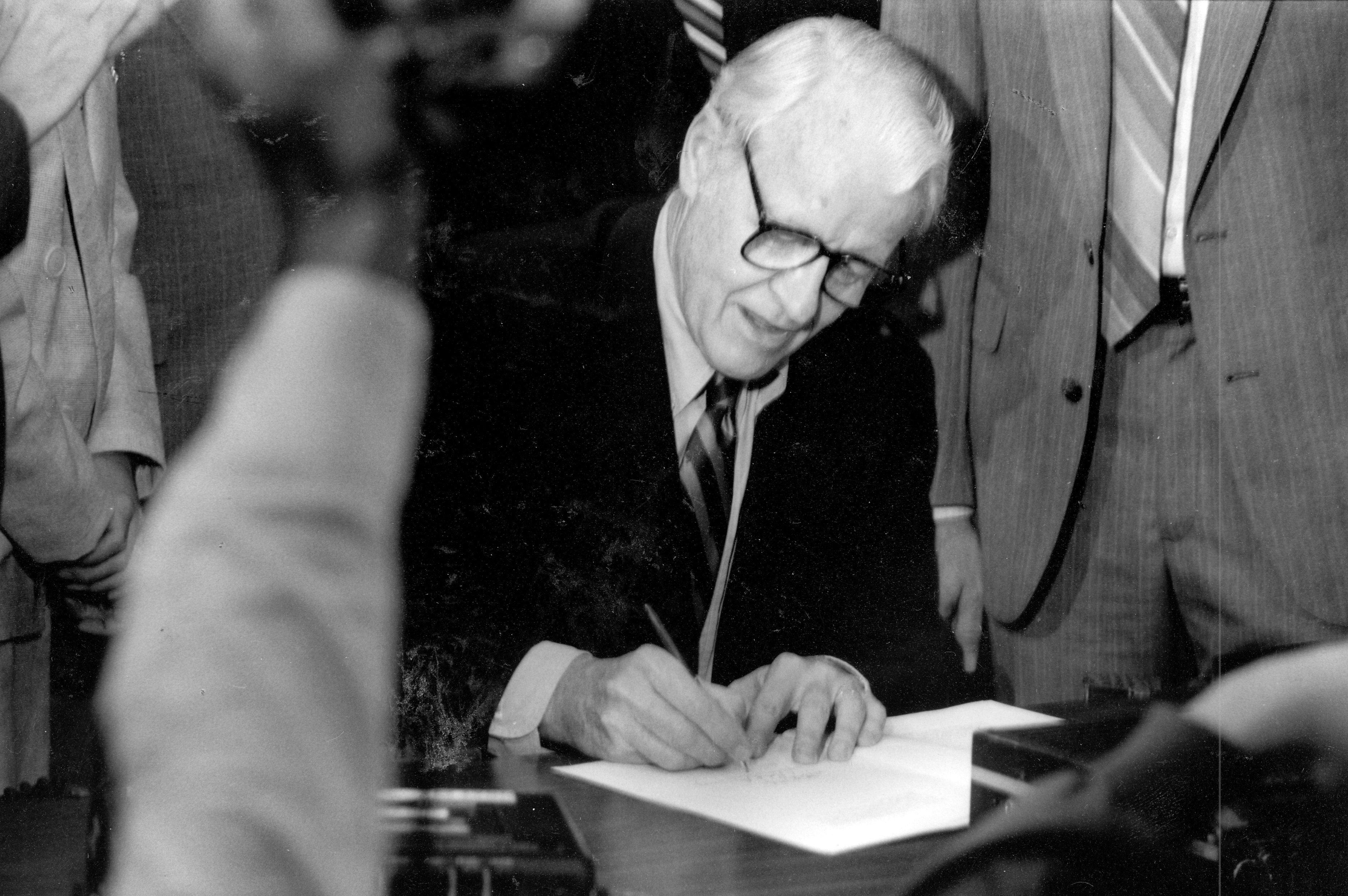
Officially, “the University of Southern Indiana was created at 12:07:15 p.m. on April 16, 1985, when Governor Robert D. Orr …signed the bill establishing the University of Southern Indiana before an audience of more than 1,500 people in the Physical Activities Center.”iv At the ceremony he said,
“I look forward to the day in the future when being an alumnus of the University of Southern Indiana will mean every bit as much as it does to be an alumnus of the greatest universities, not just in Indiana, but in the entire United States of America. I believe the spirit which prevails, which has made this possible today will most certainly achieve the standard, and that is the standard to which we can all aspire. I thank you for your dedication. I thank you for the inspiration which has made the University of Southern Indiana and which is going to make it a great university.”
The first building on campus was the Science Center, opening in 1969.

The second was the original library building, built in 1971.

At about this same time, a Temporary Union Building (TUB) opened.

The Physical Activities Center (PAC) opened in 1980 with an indoor pool and sports arena. Unless you’ve been on campus before 2019, you’ve not seen this building. The Screaming Eagles Arena stands in its place.

Expansion Era
There’s so much more Archie could tell us, but he needs to get a move on back to the Tardis, and travel to the Expansion Era. This image pays homage to Taylor’s Swift’s Midnights album, released in 2022. She includes a listing of the tracks on the cover; Archie’s version lists some of the new things on campus in this era.







To keep fit (this Tardis travel is exhausting), Archie likes to enjoy the outdoors. “USI boasts many miles of multi-use trails on its scenic 1,400-acre campus open to the University community and to the public. The most recent trail is the USI-Burdette Trail, completed in 2012. This three-mile paved trail is the result of a USI/Burdette Park partnership. It is a diverse, interesting, and educational route for hikers, bicyclists, and runners. The scenic trail allows users to witness Southwestern Indiana’s natural beauty while connecting a picturesque park with one of the nation’s most beautiful college campuses. The trail is a key connection to an area of river bottom land, with an additional 37 miles of paved roads currently signed for bicycle use south of Burdette Park. The USI-Burdette Park Trail is a designated destination point of the American Discovery Trail, which passes through Southern Indiana. The trail also has been named a National Recreation Trail by the Secretary of the Interior. The trail begins at University Boulevard between the [Screaming Eagles Arena] and the Recreation, Fitness, and Wellness Center, and also is accessible at trailheads to the side of the baseball field, at the Broadway Recreational Complex, and via a paved connecting path from the end of Rochelle Lane.”v


Division I Era
Archie is nearly worn out with all this time travel, but he gamely hops back into the Tardis for one last journey. This image is an homage to Taylor’s 2017 album, Reputation. It celebrate’s USI’s February 7, 2022 decision to make formal application to the NCAA for reclassification from Division II to Division I athletics. (I think Taylor would agree “Reputation” is particularly relevant here, too.)

Although the new Screaming Eagles Arena, pictured below, was opened in 2019, it certainly is evocative of the Division I Era.


Next year the university will celebrate its 60th anniversary. This blog barely scratches the surface of all the advancements the university has made. The mere fact that we’re standing and thriving 60 years later proves the vision and fearless tenacity of Dr. David L. Rice and SIHE members. It’s also a testament to those who continue to work to improve and promote the University of Southern Indiana. According to the university’s webpage, USI now offers 130 areas of study along with 130 clubs and organizations. Some 52,000+ alumni can claim ISUE/USI as their alma mater, and we currently have 9,286 students.
Now, Archie might say, enough of this!! It’s time to focus on the main event, Homecoming 2024. February 10 USI will take on SIU Edwardsville. Game time is 7:30. Archie is relieved to be out of the Tardis and eager to be at the game, cheering on his favorite team.
GO, SCREAGLES!!


Illustration Footnotes
Box 1: (Left): Centennial School, December 13, 1966. There is a model of this building in the 4th floor reading room of the library. UA78, University Photographs Collection UP01140; (Middle): Charles Wiley and Joseph Schoenbachler hanging the ISUE sign at the Centennial School. UA78, University Photographs Collection UP01150; (Right): Original cartoon courtesy of the Evansville Press. This image from UA 041, Creative and Print Services.
Box 2: (Left): A billboard donated by the West Side Nut Club stands over the 1968 groundbreaking ceremony for the new campus. From left to right are John McCutchan, Evansville’s representative on the board of Indiana State University, Dr. David L. Rice, then dean of ISUE, ISU President Rankin, who is shaking hands with Evansville Mayor Frank F. McDonald, and Charles Emge, Nut Club president. UA78, University Photographs Collection UP26067; (Right): UA78, University Photographs Collection UP18724
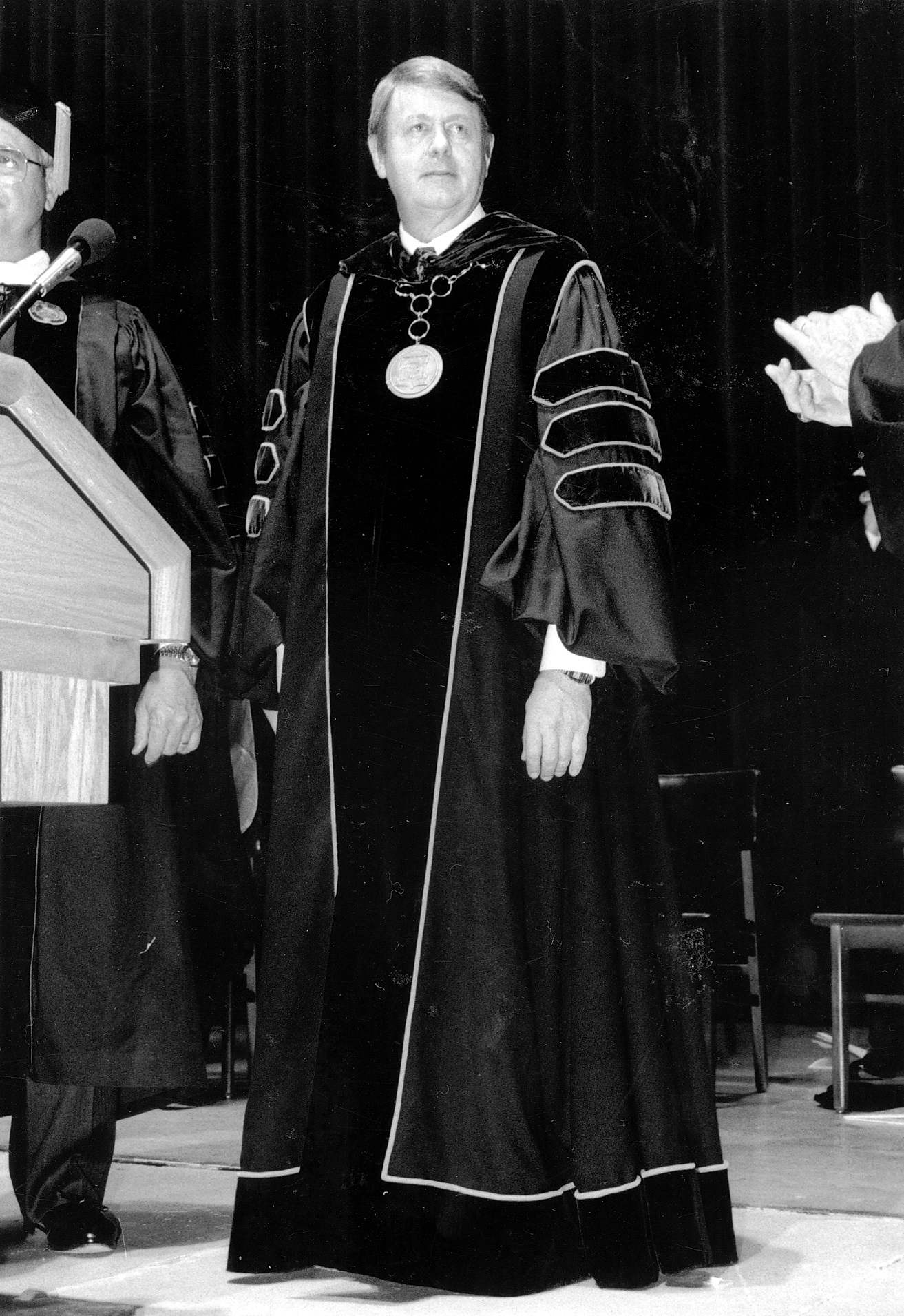
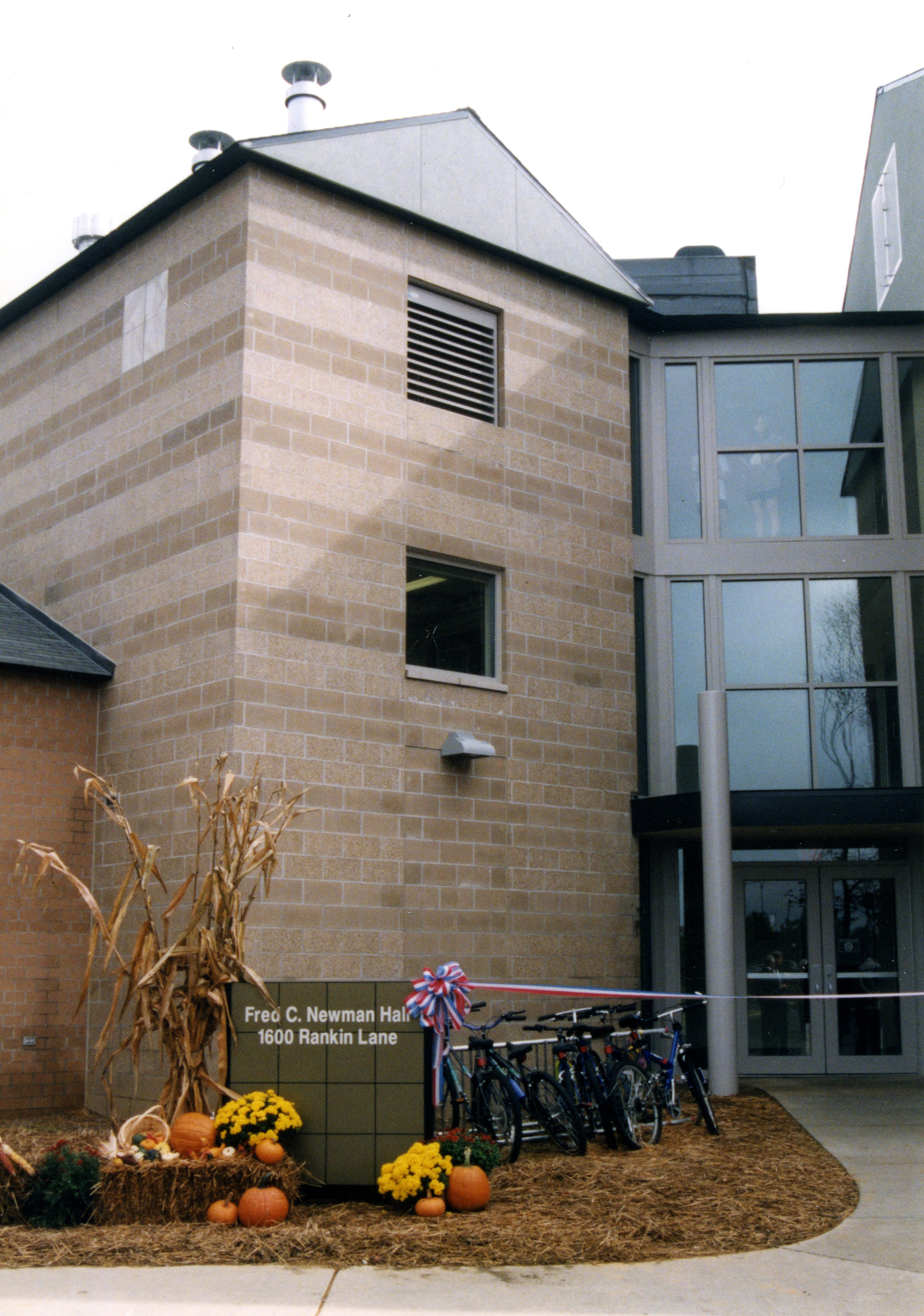
Box 3: (Top left): The Health Professions Center opened in 1994. UA78, University Photographs Collection UP02901; (Top center): In 1993, the founding president of ISUE/USI Dr. David L. Rice announced his retirement. His successor, Dr. H. Ray Hoops, was inaugurated in 1995 as seen here. After nearly 30 years in existence, USI had just its second president. UA78, University Photographs Collection UP01697; (Top right): Also in 1995, USI’s men’s basketball team won the NCAA Division II championship. Image courtesy of USI Photography & Multimedia; (Middle left): 1999 saw the addition of the first suite-style residence hall, Newman Hall. UA78, University Photographs Collection UP05568; (Middle center): The Liberal Arts Center opened in 1999. UA78, University Photographs Collection UP02792; (Middle right): These magnets were distributed to publicize and celebrate the opening of the new David L. Rice Library on July 23, 2006. Image from personal collection; (Bottom left): USI installed its 3rd president, Dr. Linda Bennett (left) on October 15, 2009. Here she is alongside Dr. David L. Rice (middle) and Dr. H. Ray Hoops (right). Image courtesy of Photography and Multimedia; (Bottom right): October 10, 2010 saw the ribbon cutting and open house for the Business and Engineering Center. Image courtesy of Photography and Multimedia.
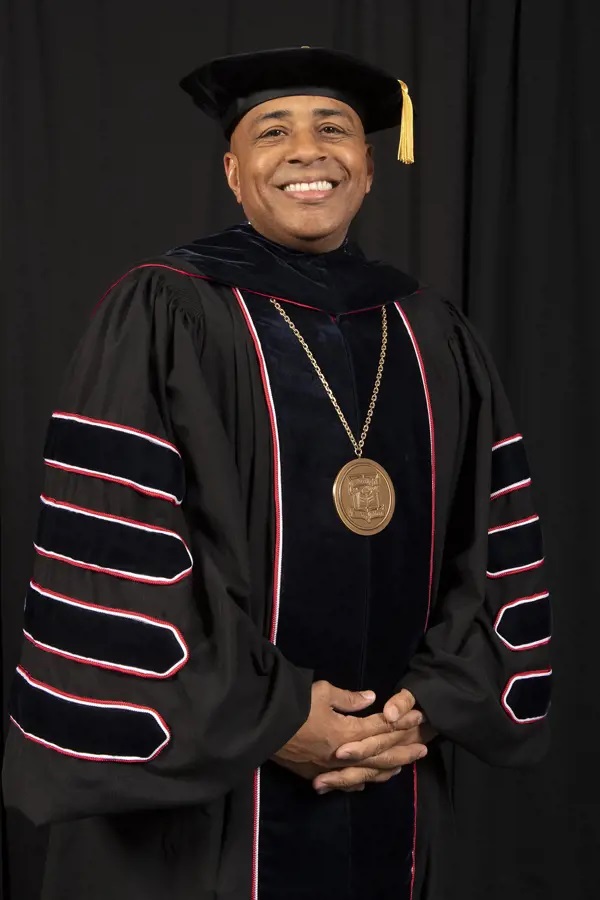
Box 4: (Left): The Performance Center opened in 2015. Image from USI website; (Center): Interior of the Performance Center, showing its nearly 300 seats. Image from USI website; (Right) Inauguration portrait of USI’s fourth president, Dr. Ronald S. Rochon, on April 5, 2019. Image from USI website.
Resources Consulted
Heiman, Roberta. A Story of Leadership: Southern Indiana Higher Education, Inc. How Evansville Got a State University (Almost in Spite of Itself). A Narrative History. Evansville, IN: M.T. Publishing Company, Inc., 2009.
Pedestrian, Bike, and Nature Trails. USI Trails webpage.
Shaping the Future: University of Southern Indiana 1965-2015. Evansville, IN: M.T. Publishing Company, Inc., 2015.
Notes
- i Heiman, p. 4
- ii Heiman, p. 4
- iii Heiman, p. 22
- iv Shaping, p. 58
- v Pedestrian
 amUSIngArtifacts

Leave a comment