
*Post written by Mona Meyer, Archives and Special Collections Metadata Librarian.
I really love history, but I know that not everyone does. One major complaint is trying to remember all those dates and names, and if that’s all there was to history, I’d dislike it, too. But take a look at the Civil War through some artifacts and it suddenly becomes more human, more interesting.
Below are some surgical amputation kits that date from the Civil War. We don’t know who utilized them, but they put a very real face on the dangers faced by soldiers on both sides of the conflict.

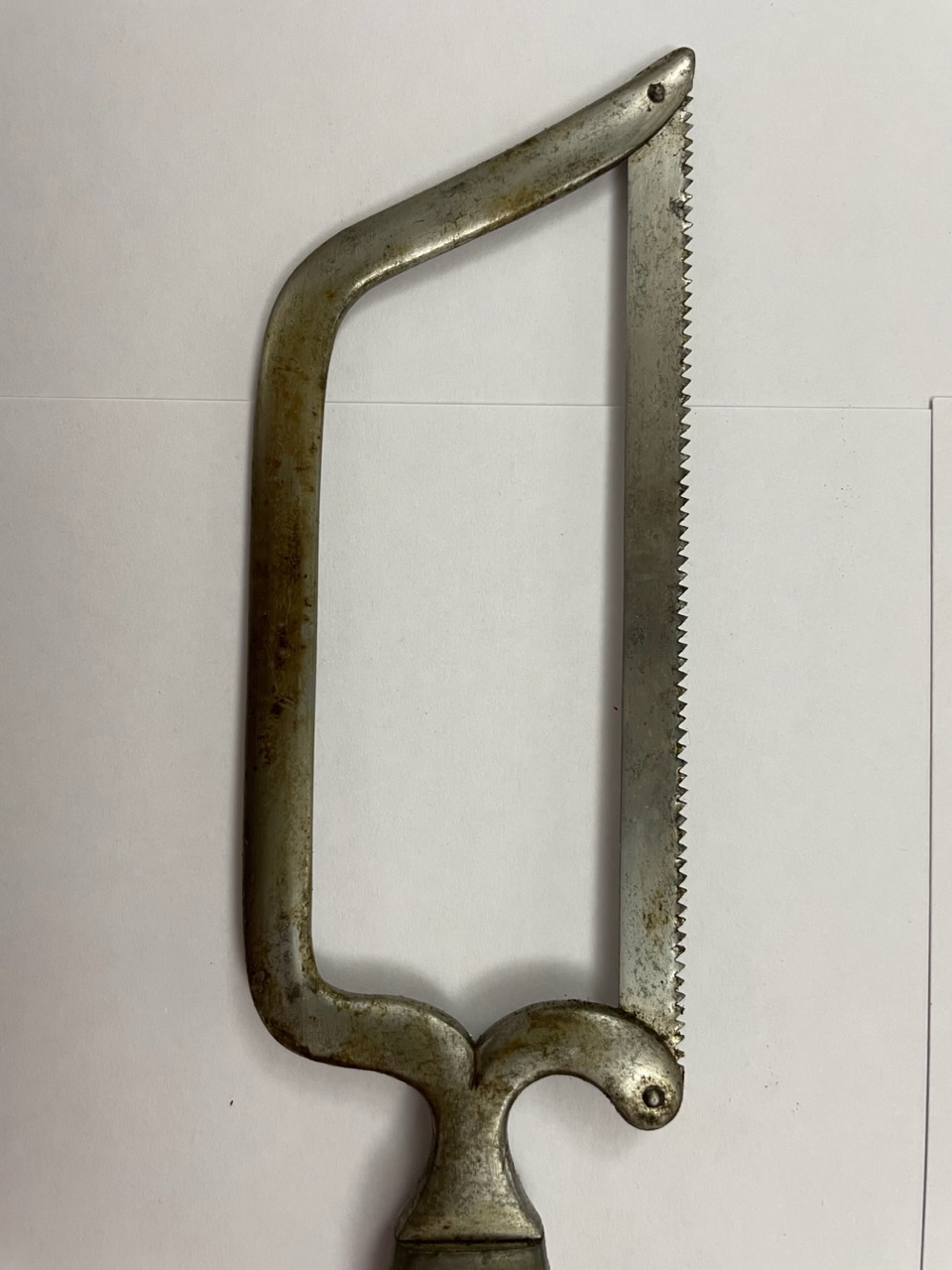

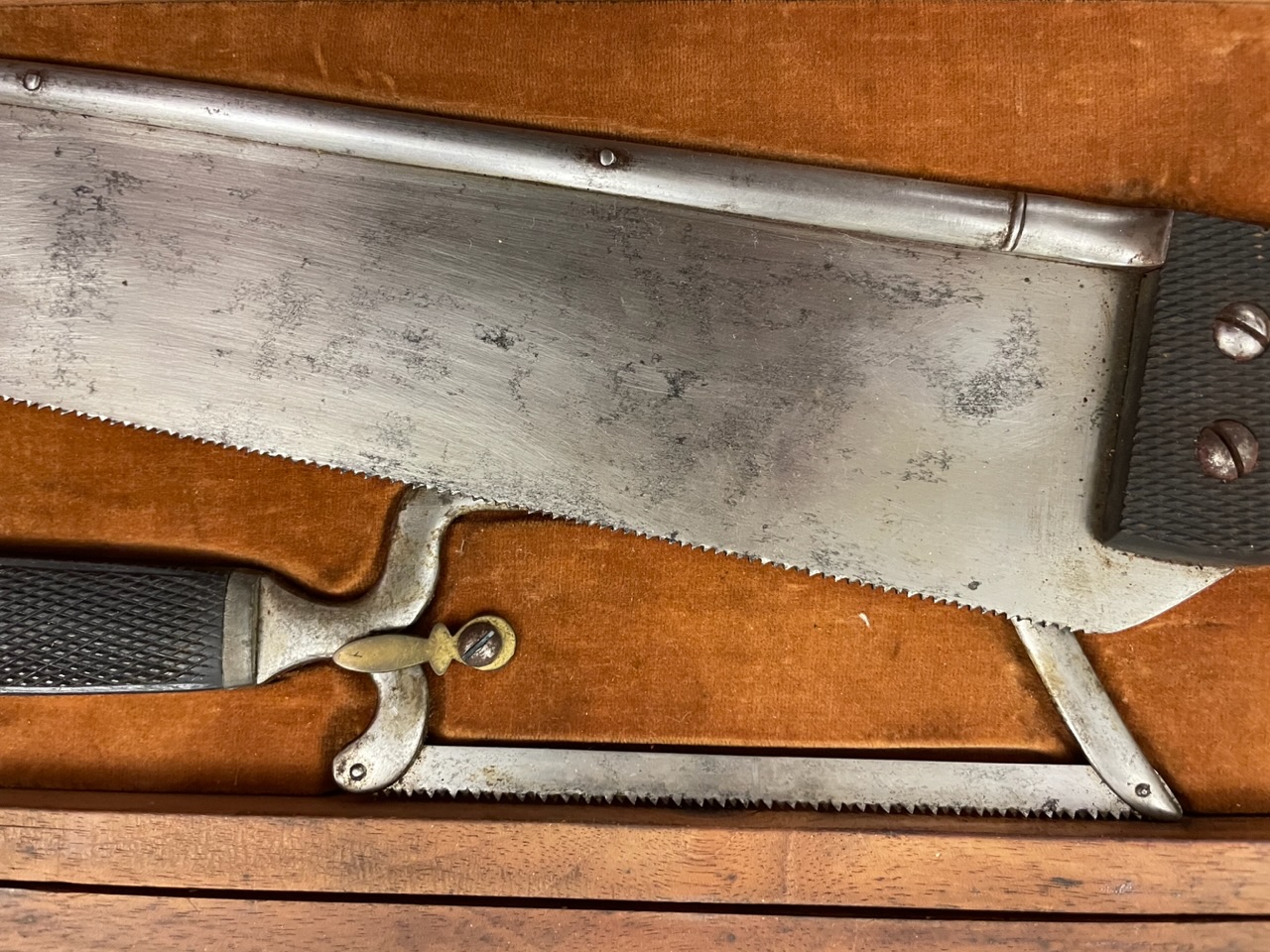

Historic New Harmony Collection, UA 59


“Three of every four surgical procedures performed during the war were amputations. Each amputation took about 2 to 10 minutes to complete. There were 175,000 extremity wounds to Union soldiers, and about 30,000 of these underwent amputation with a 26.3% mortality. The further from the torso the amputation was carried out, the greater the survival. As the war went on, it was noticed that if amputation was done within 24 hours, mortality was lower than if performed after more than 48 hours. Only about 1 in 15 Union physicians was allowed to amputate. Only the most senior and experienced surgeons performed amputations. These changes were put into effect because of the public perception that too many amputations were being performed. Amputations were not carried out using sterile technique, given that Lister’s classic paper on antisepsis did not appear until after the war in 1867.” (Riley)
It’s little short of a miracle that anyone survived. “During the 1860s, doctors had yet to develop bacteriology and were generally ignorant of the causes of disease. Generally, Civil War doctors underwent two years of medical school, though some pursued more education. Medicine in the United States was woefully behind Europe. Harvard Medical School did not even own a single stethoscope or microscope until after the war. Most Civil War surgeons had never treated a gunshot wound and many had never performed surgery…. Yet, for the most part, the Civil War doctor (as understaffed, underqualified, and under-supplied as he was) did the best he could, muddling through the so-called “medical middle ages.” Some 10,000 surgeons served in the Union army and about 4,000 served in the Confederate. Medicine made significant gains during the course of the war. However, it was the tragedy of the era that medical knowledge of the 1860s had not yet encompassed the use of sterile dressings, antiseptic surgery, and the recognition of the importance of sanitation and hygiene. As a result, thousands died from diseases such as typhoid or dysentery. The deadliest thing that faced the Civil War soldier was disease. For every soldier who died in battle, two died of disease. In particular, intestinal complaints such as dysentery and diarrhea claimed many lives. In fact, diarrhea and dysentery alone claimed more men than did battle wounds.” (Civil)
Below is proof of the more disease than battle wounds issue: this is hard to read, but it’s a medical discharge for Private Martin Easley of Company K, 21st Missouri Volunteer Infantry. Easley entered the Army Hospital in Quincy, IL on September 24, 1864 and was discharged from the Army on January 25, 1865 due to partial paralysis of the upper extremities due to small pox that he contracted during his military service.

Be sure to visit UASC to see a display case of Civil War memorabilia from the Louis Puster Collection, too. Below are some resources that provide additional information if you’re interested in exploring this topic further.
Civil War Medicine: An Overview of Medicine. The Ohio State University, Department of History.
Dixon, Ina. Civil War Medicine: Modern Medicine’s Civil War Legacy. American Battlefield Trust




 amUSIngArtifacts
Leave a comment