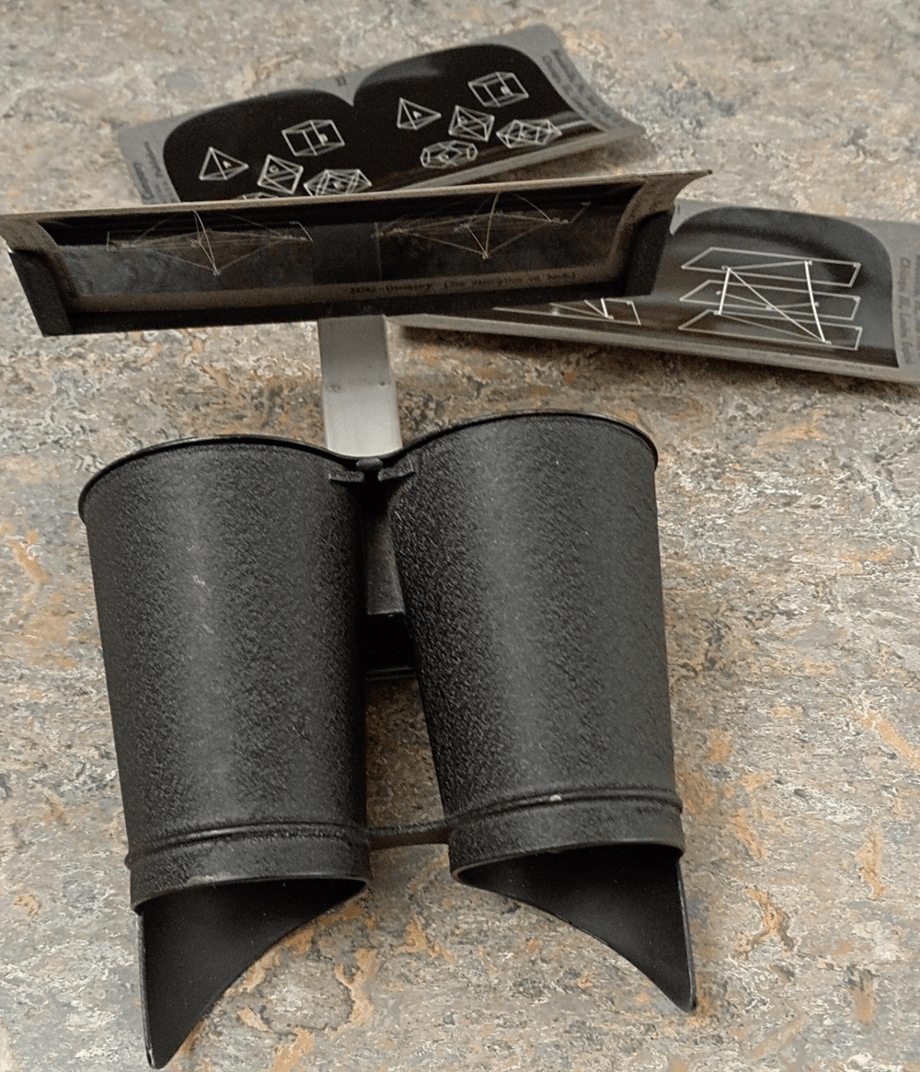
Disclaimer: ordinarily that phrase is the “ayes” have it, meaning that the affirmative votes won. I’m taking a bit of linguistic liberty here to introduce you to some interesting UASC items that deal directly with how our eyes work.
Ordinarily, when you look at something with both eyes, each eye sees something different….the same image from slightly different angles. Our brains enable us to put these two images together into a coherent whole. This is called binocular vision, which is crucial for depth perception.
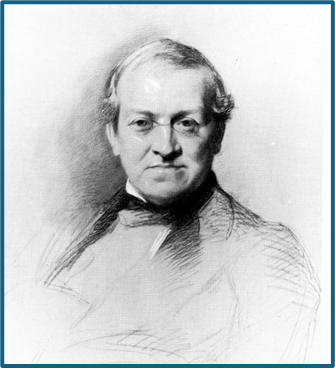
British physicist Sir Charles Wheatstone produced the first (or perhaps one of the first) stereoscopes in 1839. Stereoscopic pictures are produced as two duplicate images side by side, each one photographed from a slightly different angle. Looking at these images with the naked eye you see just that—two images of the same object. With the aid of a stereoscope, however, the two images coalesce into one that also provides depth.
For many years, long before the advent of motion pictures, a stereoscope was the source of much entertainment. In the 19th century when these first came out, photographs themselves were rare, not to mention three dimensional ones! Although the original application of the stereoscope was scientific, they soon became the rage, particularly after Queen Victoria was enamored by its appearance at the 1851 Great Expedition in London. In 1860 Americans Oliver Wendell Holmes and David Bates invented (but deliberately did not patent) a less expensive stereoscope; within 20 years stereoscopes were inexpensive enough that there was one in most homes. The London Stereographic Company had sent photographers all over the world, so between the lowered cost of the stereoscope and the plethora of images, the most exotic of images could be viewed in the most modest of homes.
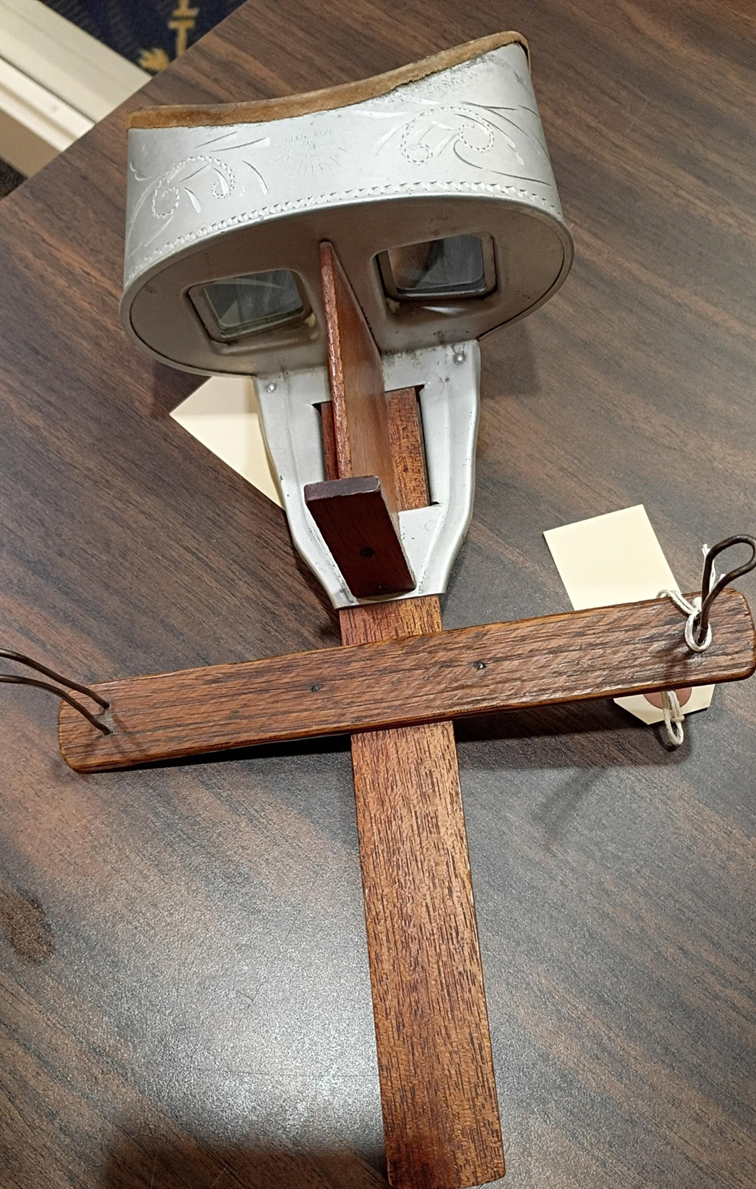
UASC has two stereoscopes in its possession. Unfortunately, not much is known about them, including when and who produced them.
The range of images made available for stereoscopic viewing ranged widely from “exotic” (meaning an image of life in a foreign land, something most people of that time period who not have seen nor would probably ever see in person)….

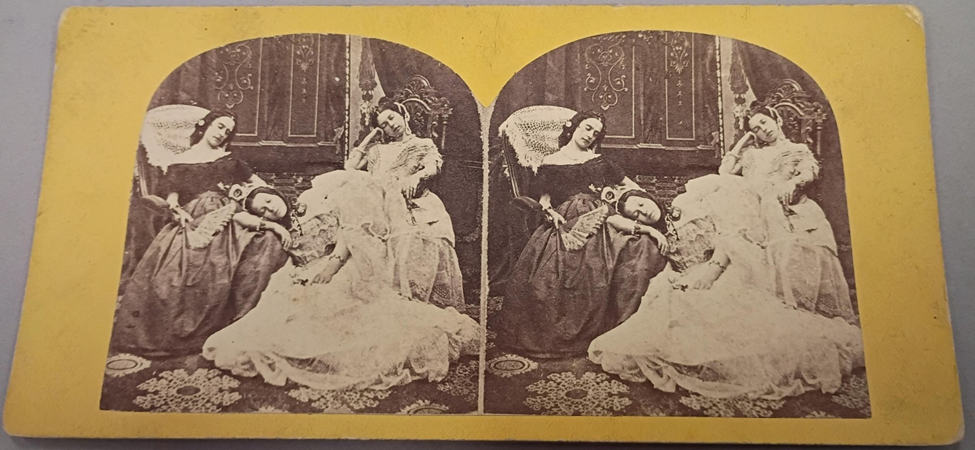
…to a romantic image of three sisters in slumber, displaying their beautiful clothing.
The 1893 World’s Columbian Exposition, aka the Chicago World’s Fair, was an extravaganza designed to celebrate the 400th anniversary of Columbus’ arrival in the new world. Seen below is the Ferris wheel built by George Washington Gale Ferris, Jr. as the highlight of the Midway and the tallest object at the fair.
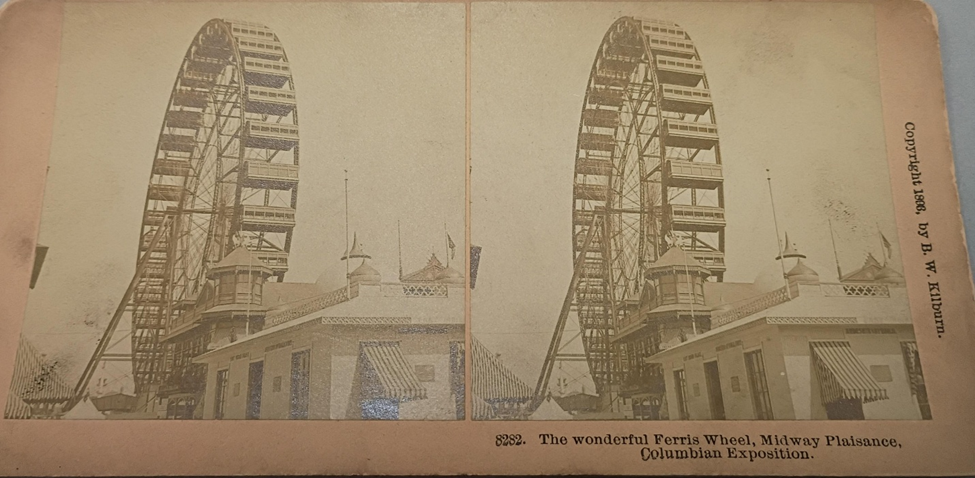
(NOTE: if you’re interested in the Columbian Exposition, there was a 3 part blog entitled “All the World’s A Stage…” posted in September 2018. You can find/read the parts here: pt.1, pt.2, pt.3.)
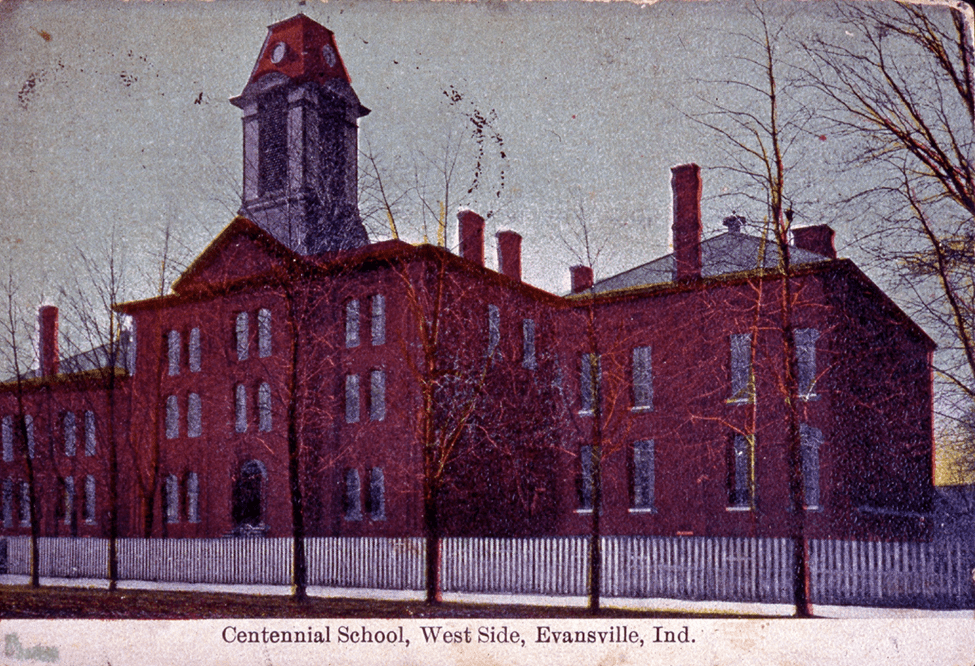
Not all stereoscopic photographs were exotic: the next two are of buildings in Evansville.
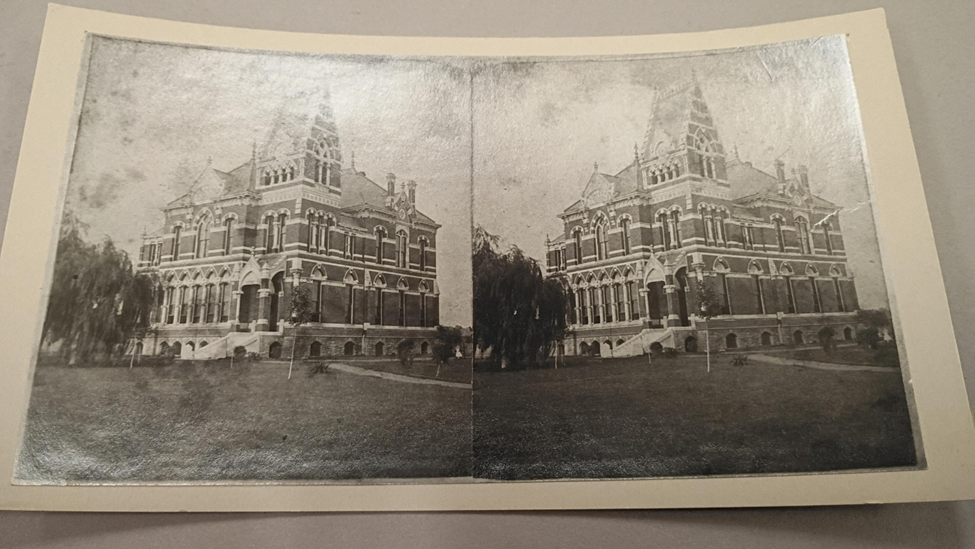
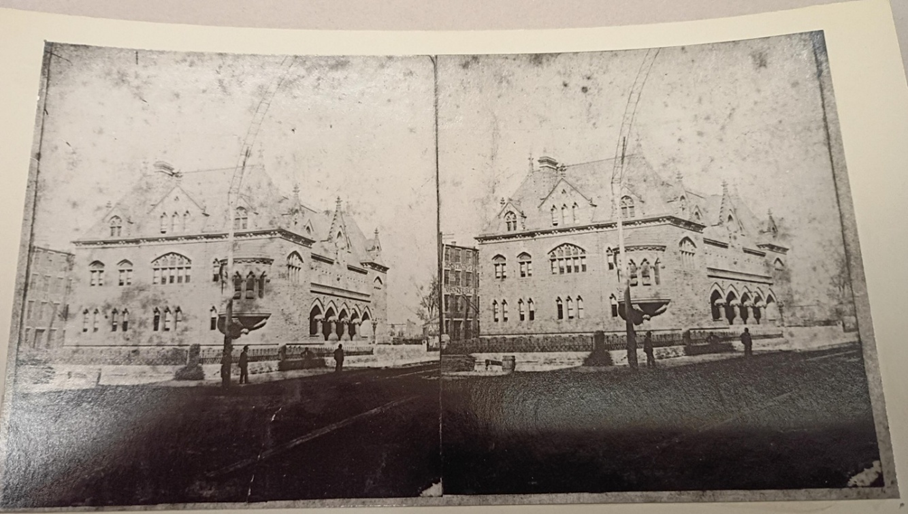
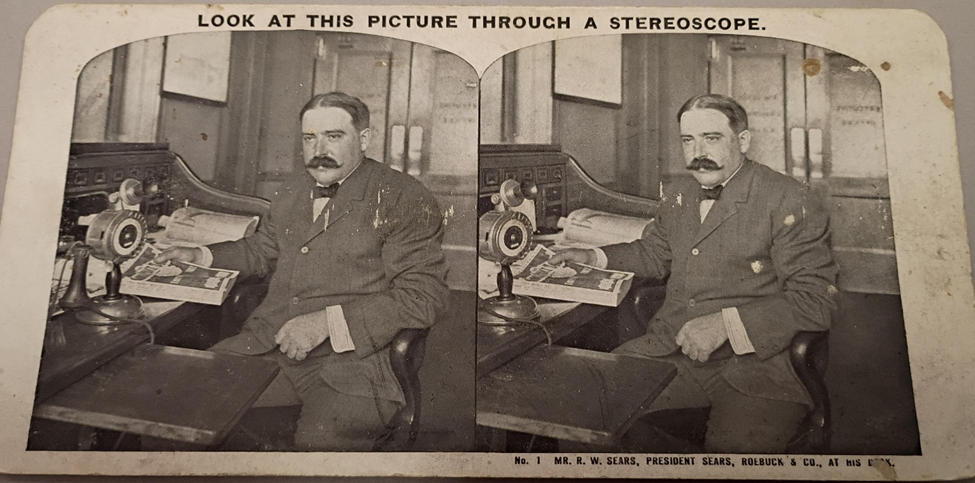
Some images are very mundane, mainly designed to interest the viewer in using the stereoscope.
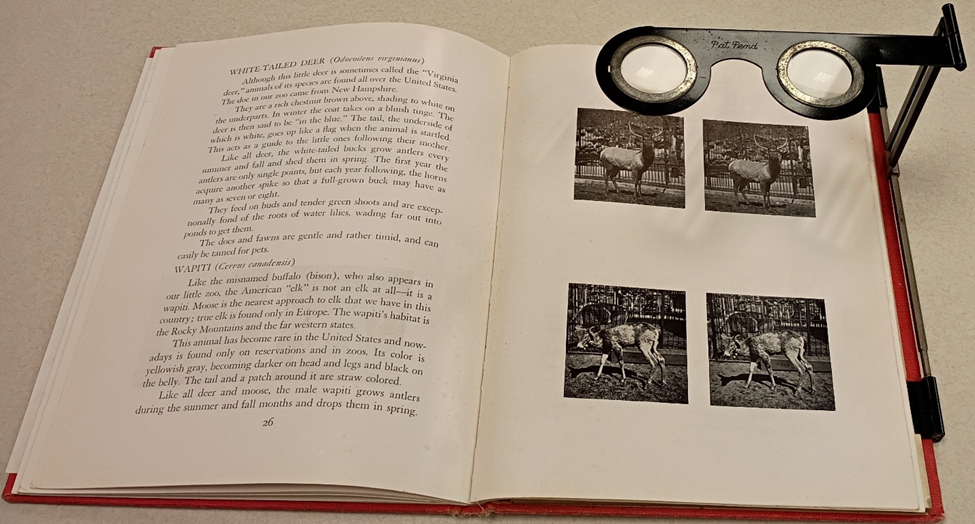
There were stereoscopic images created for educational purposes, too—one example is the geometric images seen earlier in this blog. Another example would be this 1937 Farrar & Rinehart publication, At the Zoo: The Stereo-Book of Animals. This book is located in University Archives and Special Collections QL46 .C45, and available for viewing solely within that location.
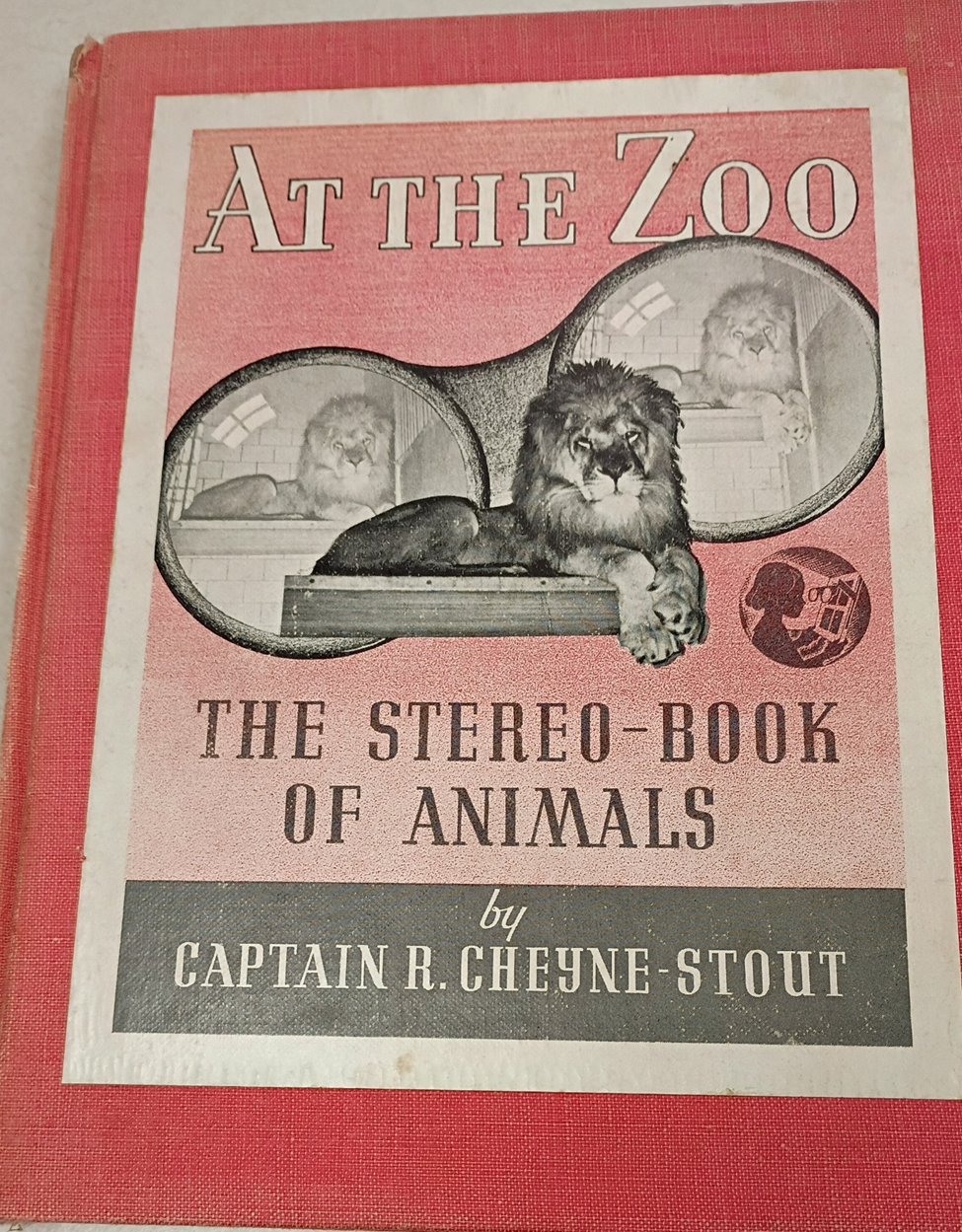
The book provides images (with explanatory text) of animals not generally seen by the average person, along with special stereoscopic glasses in the back that can be used to view the images. Almost everyone today would be familiar with these animals, but it still fun to see how the viewer works.
In 1939 the first View-Master was produced, along with its circular card of 7 color images. Although not originally designed for children, the View-Master soon became a popular toy that is still in production today. The original image discs provided images of tourist and travel attractions, viewable by all ages; today’s View-Master images are less educational and focused on children.
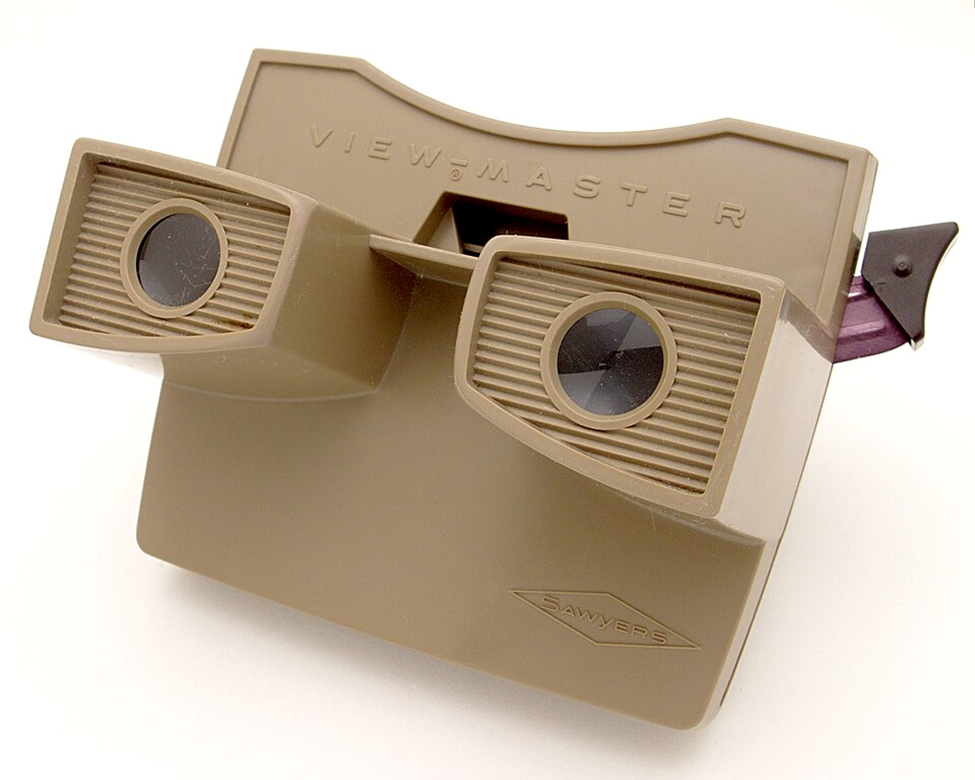
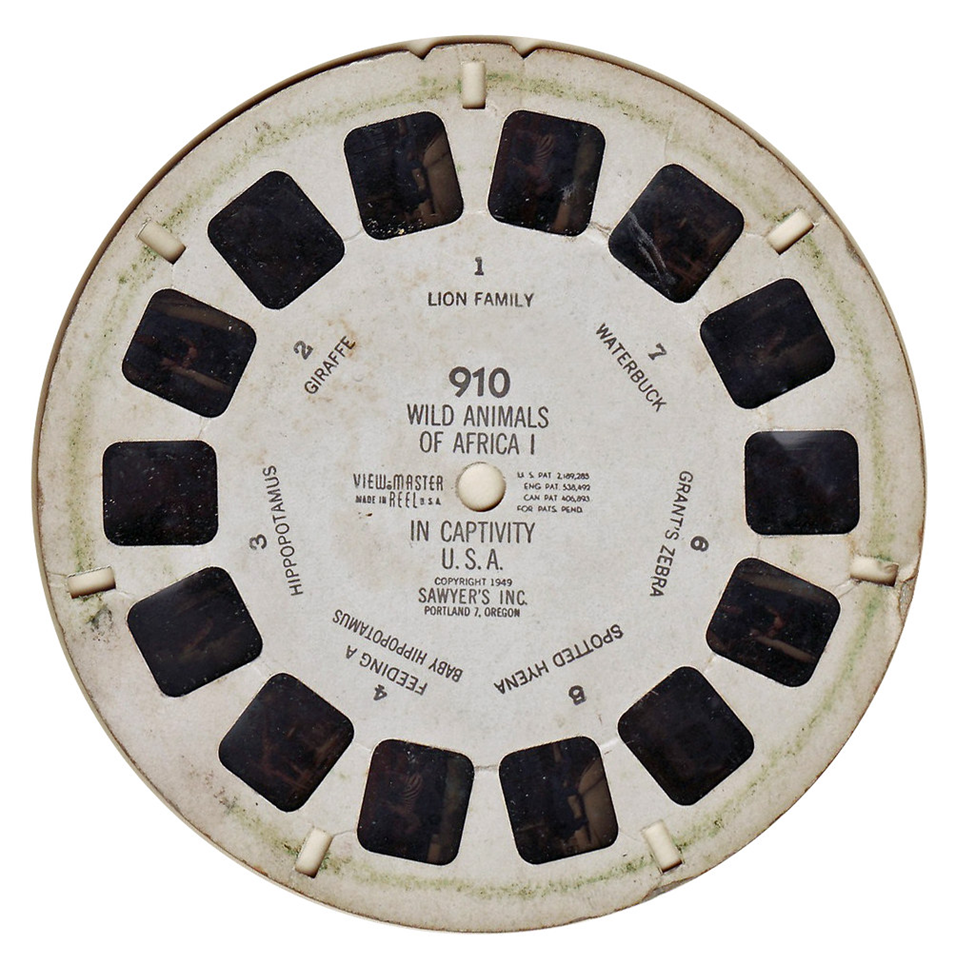
Thankfully, it’s far easier in today’s world to view 3D images with the appropriate technology…enjoy!

 amUSIngArtifacts
Leave a comment