One of the collections within University Archives and Special Collections is Communal Studies. The Communal Studies Collection began in conjunction with the Center for Communal Studies, which promotes the study of contemporary and historic communal groups, intentional communities and utopias. The key word is intentional. These communities were/are deliberate attempts to live communally, with shared goals and economies. This blog is one of a continuing series….you can search for the phrase Living in Community to find others.
Bishop Hill’s story is rooted in a time of political, economic, and religious upheaval in Sweden in the the 1840s. “The Swedish Lutheran Church and its clergy had become bound up with–often inseparable from–the political and economic elite whom common people blamed for their troubles. The Pietist movement in Sweden, as in other parts of Europe, entailed the belief that one’s personal sense of faith and devotion to God was more important than the authority of the church, and that one could find salvation by honest religious searching and inquiry without the intercessory role of the clergy. The religious-political establishment was quite correct in taking this as a challenge to its authority, and it responded as it would to any kind of political treason. Sweden’s Conventical Edict of 1726 had made it a crime for any gathering of people to read the Bible without a clergyman present, but the edict was not much enforced until after the “lasare” (reader) movement began to organize lay Bible study sessions in the 1830s.”i How this played out in the beliefs and persuasive powers of a man named Eric Janson is the story of Bishop Hill.
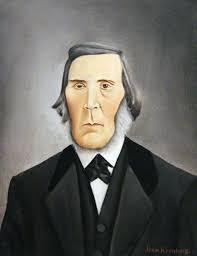
Eric Janson (1808-1850) was born in the Uppland province of Sweden. After a rheumatism attack at age 22, he prayed for relief and “at once I was freed from my pains. At the same time I became conscious, believing firmly that God had taken away my sins and made me free from all sin.”ii On his travels as a wheat flour salesman, Janson used the opportunity to spread his beliefs. He and his followers became more and more convinced of their “rightness” and the sinfulness of the established church. Jansonists rejected all religious literature outside of the Bible, and on several occasions held public book burnings, setting ablaze the works of Martin Luther and other well known theologians. Claiming to be without sin, and destroying the works of someone as revered as Luther (Sweden had declared itself a Lutheran nation in 1544), incited mob violence and official persecution. Janson was arrested on more than one occasion, but escaped or freed on appeal. He went into hiding, eventually escaping over the mountains to Norway. Plans were made to immigrate to the United States. A Janson follower named Olof Olson was sent ahead to scout for a good place to colonize, eventually settling on Henry County, Illinois. Janson and a group of followers followed, arriving in July 1846.
The trip across the Atlantic was harrowing. “A fifth of the five hundred Jansonists in the first wave of migration perished from scurvy and shipwreck, and scores more, weakened by the voyage and harsh conditions of pioneer life, died soon after arrival.”iii Olof Olson, his wife, two children, and another family member died soon thereafter. Living conditions the first winter on the Illinois prairie were dire–unsanitary conditions, cold, contagion, and a poor diet killed 96. “Almost every morning that first winter at least one corpse was carried from the dug-outs [log-lined niches dug into the side of a ravine where people slept] or cabins. Because there were no coffins, the bodies were wrapped in whatever fabric was available and frequently several were interred in a common grave.”iv Janson claimed the deaths were due to a lack of faith. Another tragedy struck in 1849 when the sixth group of colonists to arrive brought cholera with them. Some 140 colonists died between July and mid-September of that year, with death frequently occurring within hours of the first symptoms. Janson ordered partial evacuations, but to no avail. Janson and his family had moved to a nearby island, but soon his wife and two youngest children died. Others had died en route and were buried at sea or in graves, often unmarked, along the overland trail.
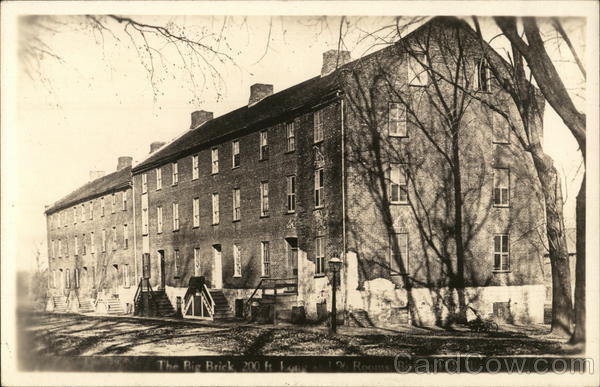
Despite the deaths and privation, the colony began to thrive. Olof Olson had indeed chosen a an ideal location. “The fertility of the land made a deep impression on these farmers from the north of Sweden, and on those from Uppland, too; the country must have seemed a paradise. They had been lucky enough to choose one of the most fertile regions in the whole of the United States, and even today it is a rich agricultural center.”v Water was plentiful. There was an ample supply of native fauna for food. What they did not have on the prairie were acres of forest and a good supply of timber as found in Sweden. They learned to adapt, eventually building with home-made bricks. A building called “Big Brick” was built 1849-1851, and when finished, was the largest building in America west of Chicago. It had 3 stories, was 200 ft. long by 45 ft. wide, and had 96 rooms and 7 chimneys. It served as a dormitory for most of the colonists, with a children’s dining room in one part of the building and one for adults in another. Sadly, it burned in 1928, for a loss of $75,000.
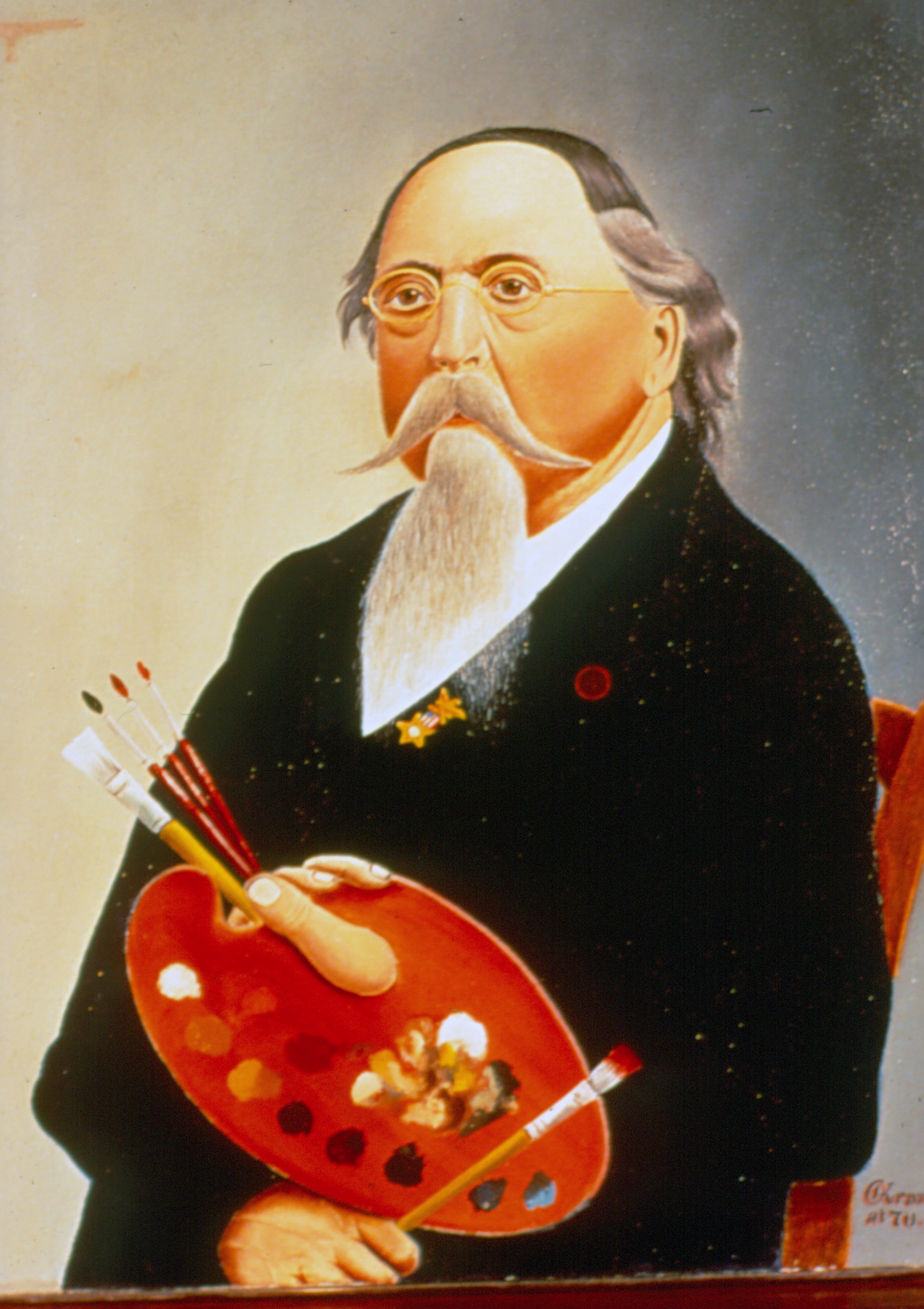
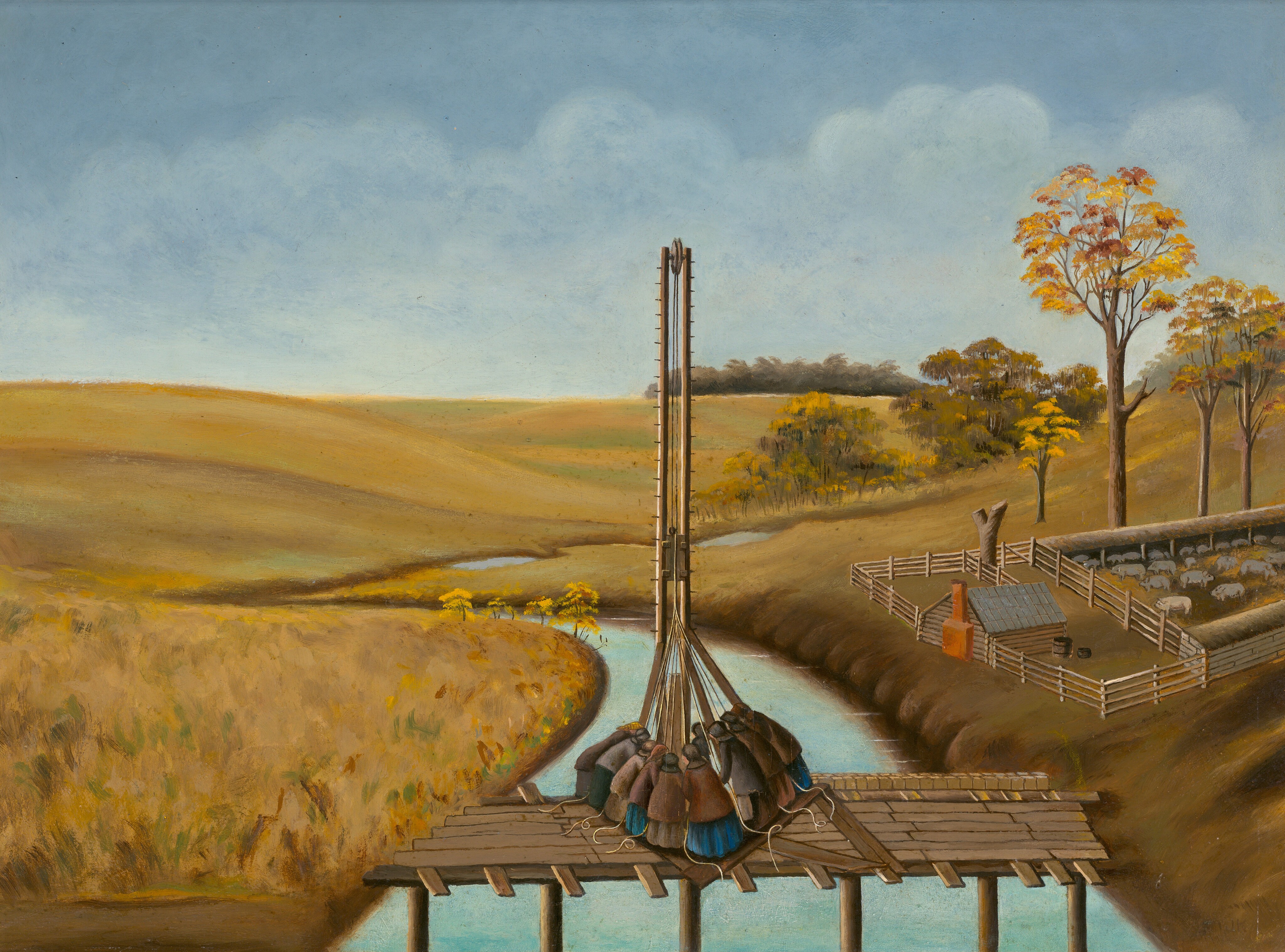
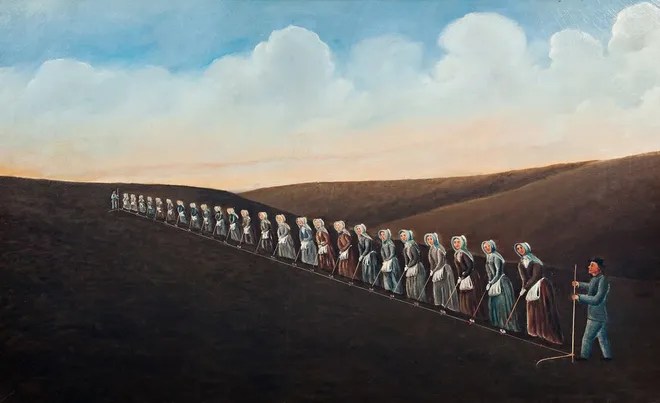
There was ample land for the colony to be productive–some 696 acres in 1846 and 12,000 at the time the colony dissolved in 1862. Broom corn, a type of sorghum used to make brooms, was grown in large quantities, and when sold, was expected to bring in $50,000 in revenue. “It was only natural for the Swedes in American to grow flax …. Much linen cloth was produced, in 1851 more than 28,000 yards. Until enough looms had been obtained, the women had to work day and night weaving. The finished goods were sold to buyers in the towns, and by peddlers belonging to the colony.”vi The dairy barn was so large it also held rooms for all the milkmaids, who could milk 200 cows in half an hour. There were 43 different types of artisans living in Bishop Hill in 1850 (carpenters, smiths, shoemakers, tailors, carriage builders, millers, harness makers, etc.)–sufficient to produce a bounty of goods for sale. Because there were more women than men living there, women performed much of the labor, too–sheep shearing, pile driving, planting, harvesting, etc. Many of the images we have today of the original Bishop Hill come from paintings by Olof Krans. Krans (1838-1916) was born in Sweden and came with his family to Bishop Hill in 1850. In 1896 he began to paint his memories of life at Bishop Hill, completing at least 90 images, many of which he donated to Bishop Hill on its 50th anniversary.
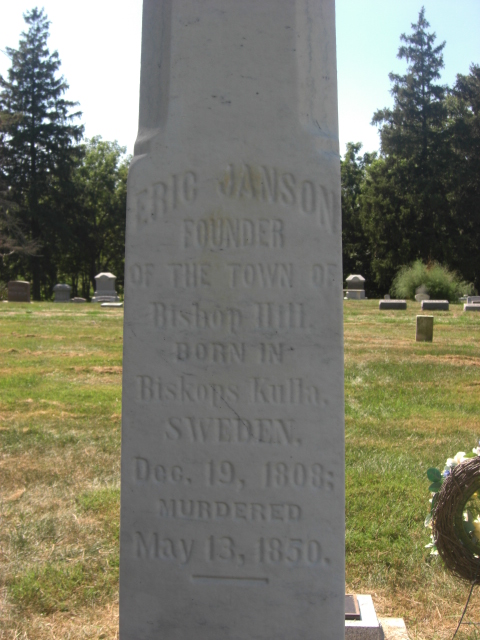
The beginning of the end of Bishop Hill as a Janson colony began not long after it was settled. A man named John Root arrived in 1848 and was allowed to marry Janson’s cousin, Charlotte Janson. The marriage contract stated that if Root left the colony, his wife would be permitted to remain. In 1849 she gave birth to a son, and Root left for Chicago, taking his wife and child with him. “Eric Janson acted at once, and sent men after the fugitives. They returned with the woman to the colony. Root then opened legal proceedings against Janson…. The court decided in Root’s favor, and he took his wife to friends in Chicago. Janson did not give up, but sent some of his most trusted men….to Chicago, where they found her. [Charlotte] was again taken back to Bishop Hill. … Root reacted by collecting a body of men who rode to Bishop Hill to liberate his wife. When they threatened to burn down the town, the situation became critical, but the intruders were driven away by the armed intervention of friendly neighbors.”vii Janson fled for a short while to St. Louis, but was back on May 13, 1850. John Root was also in town that day, tracked Janson down, and confronted him at the courthouse. When Janson declined to return his wife, Root shot and killed him. The colonists believed that their prophet was immortal and would rise after three days, so a vigil was kept. When Janson remained dead, he was buried in the local cemetery.
The role of leader was taken over by Jonas Olson. In 1853 the colony was incorporated and an elected board of trustees became responsible for its operation. For a time, things went well, with much new building and an increase in wealth. It profited from the Crimean War, but after the war ended, an economic slump highlighted some of the poor decisions made by the trustees. The trustees had failed in their fiduciary responsibilities and were non-responsive when colonists tried to obtain more information. With faith in their leadership destroyed, more and more discord arose. In 1860 the (formerly) communal held property was set to be divided, and that process, too, was fraught with deceit. After a lawsuit and prolonged litigation, Bishop Hill colony officially dissolved in 1861, some 15 years after its inception.
A small number of the original buildings still stand today as seen in this visitors map from 1992.
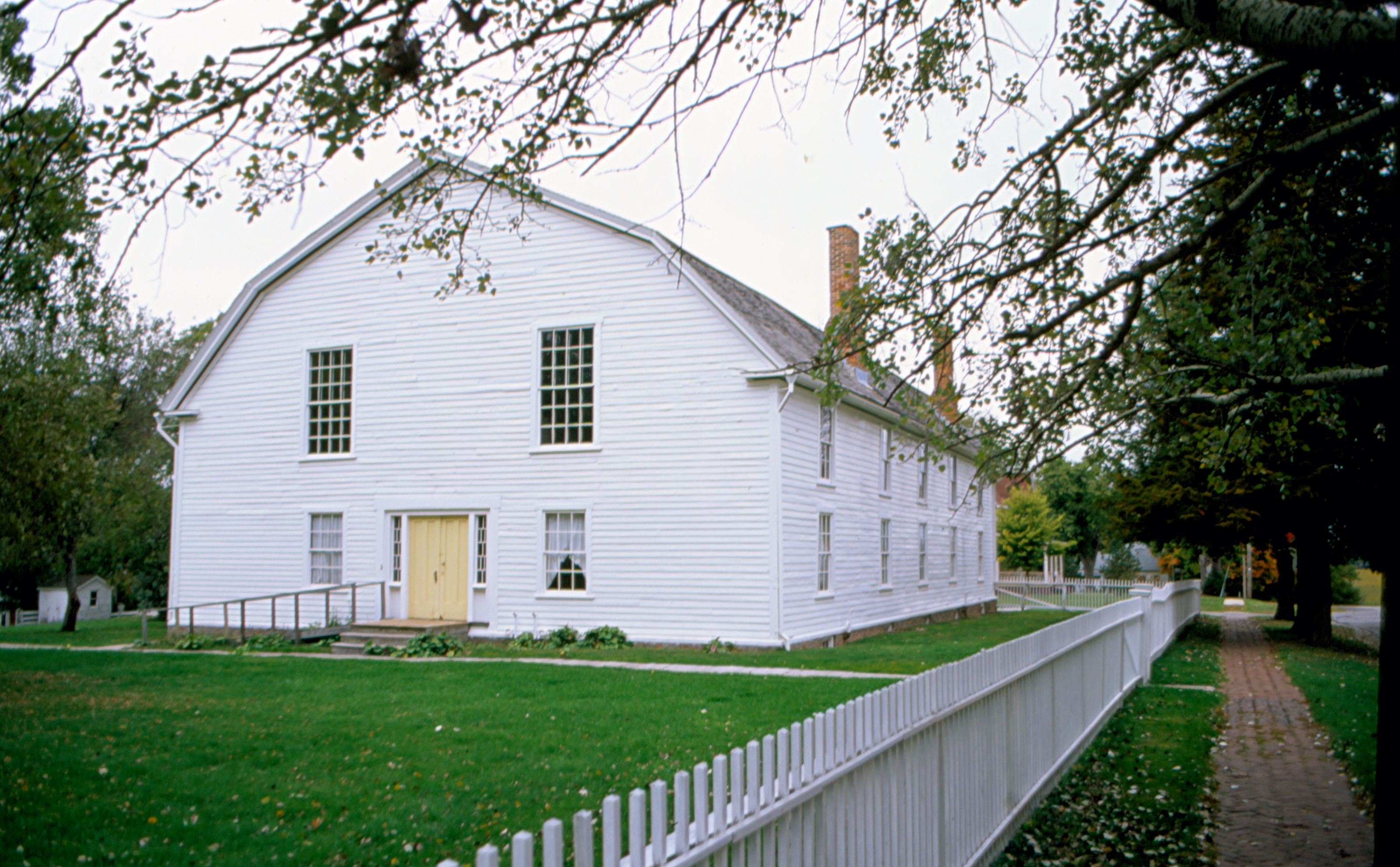
The oldest of the still standing structures is the 50’8″ by 82’10” ft. church, built in 1848. The sanctuary was on the second floor and the basement and ground floor contained 20 rooms.
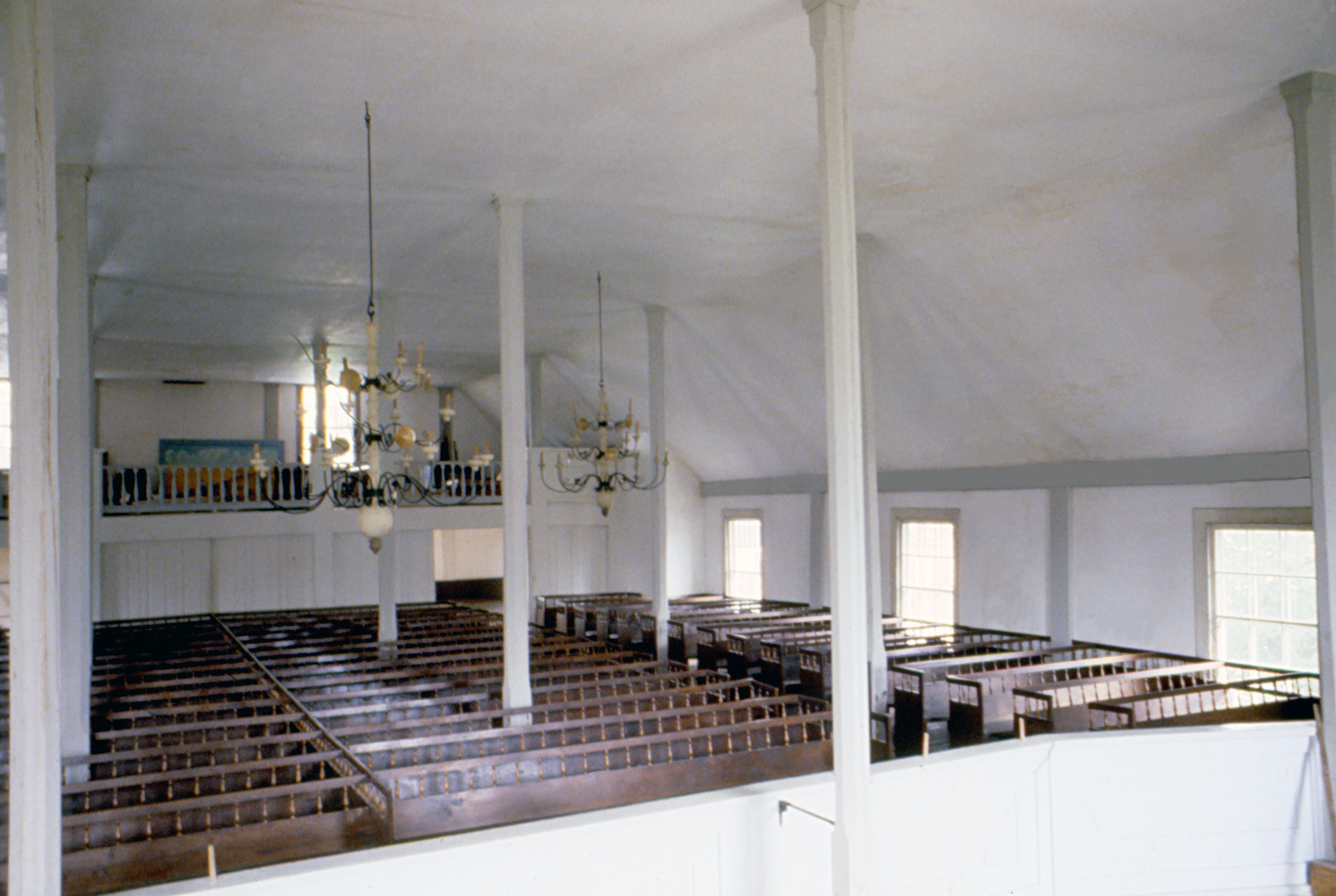
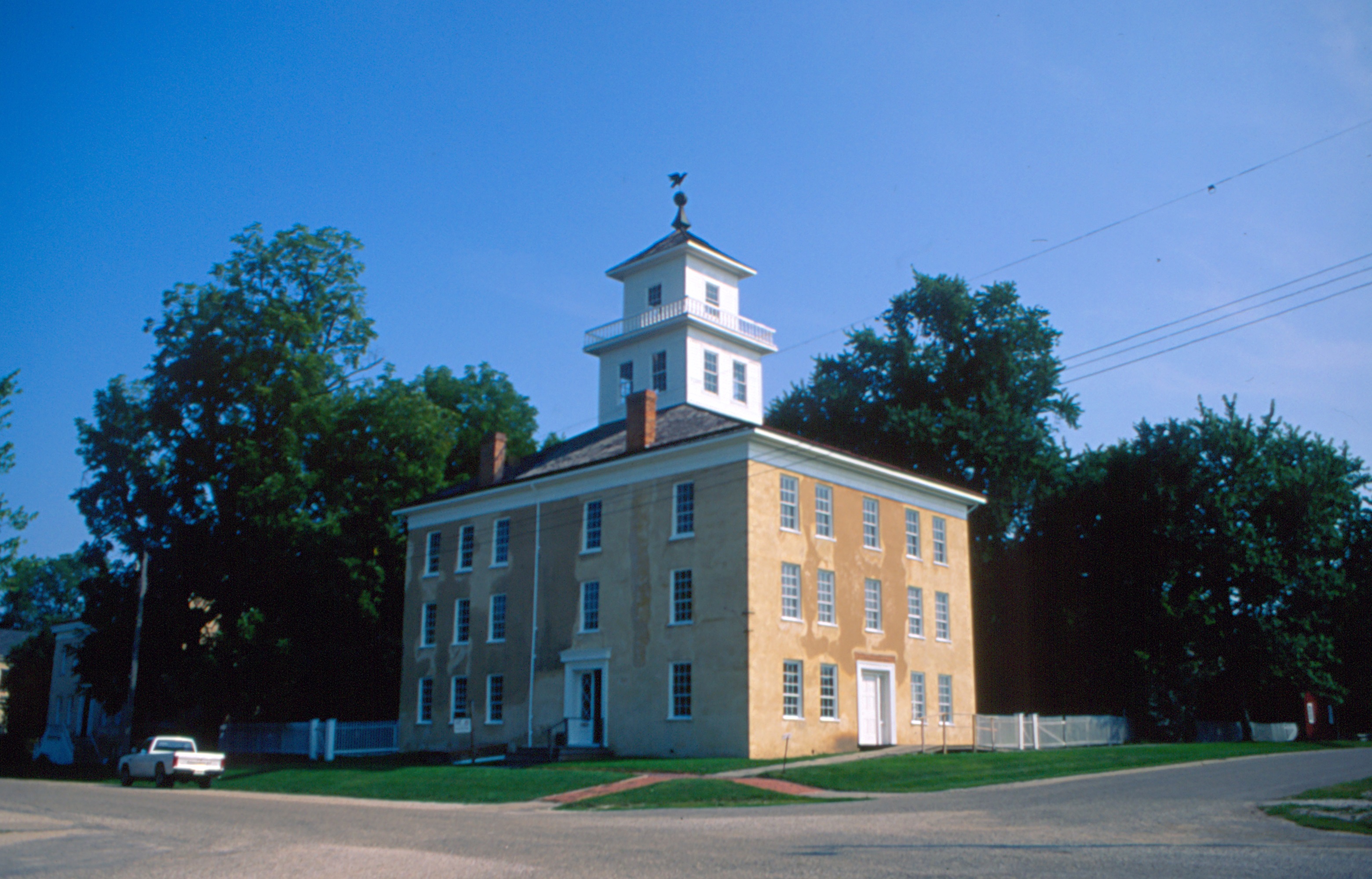
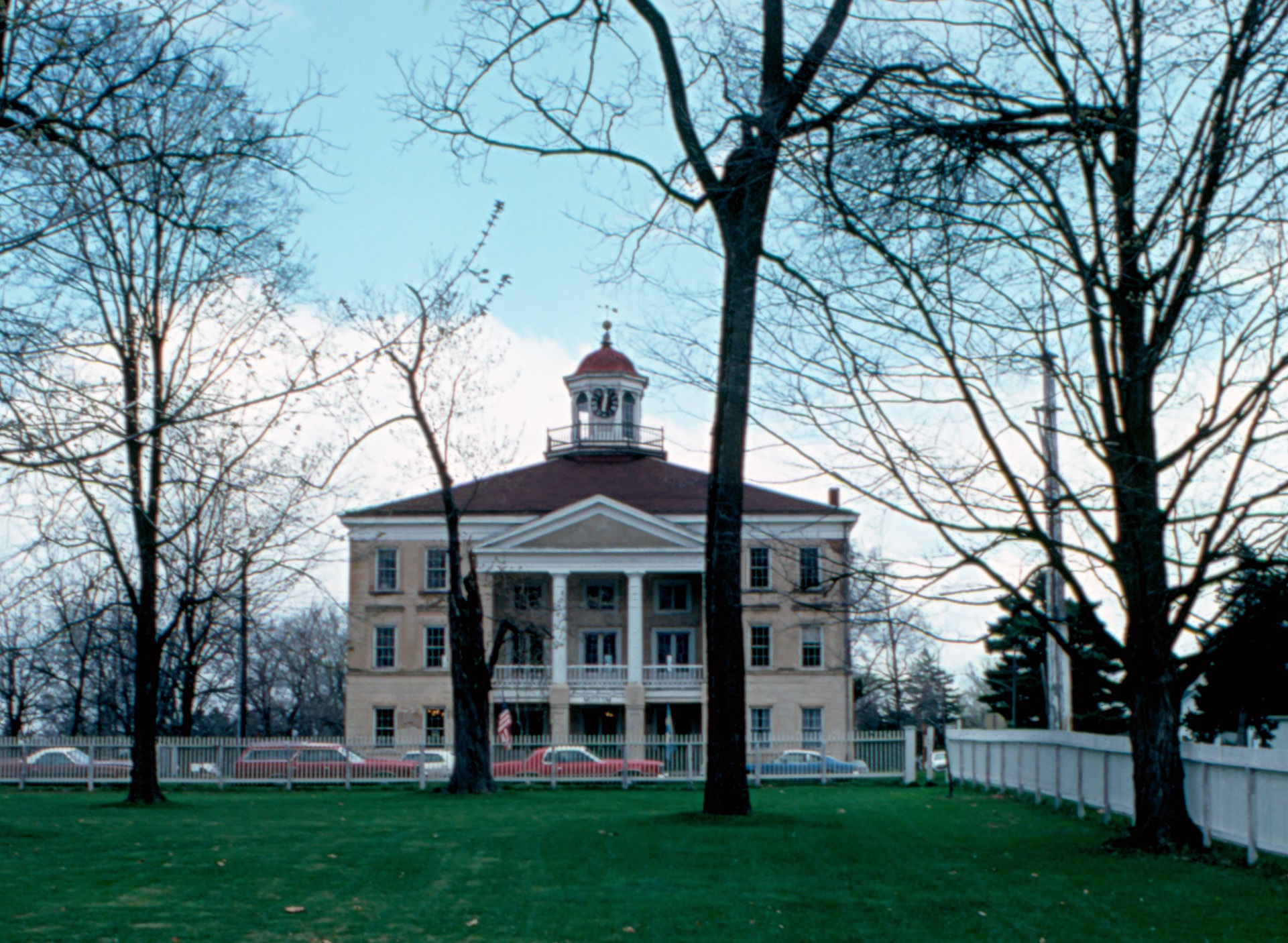
Hospitality was important at Bishop Hill, and the 59’5″ by 42’3″ ft. colony hotel, built in 1852, served that purpose. In 1861 a third story of hotel rooms, ballroom, and the tower was added. It is now named the Bjorkland Hotel and serves as a museum.
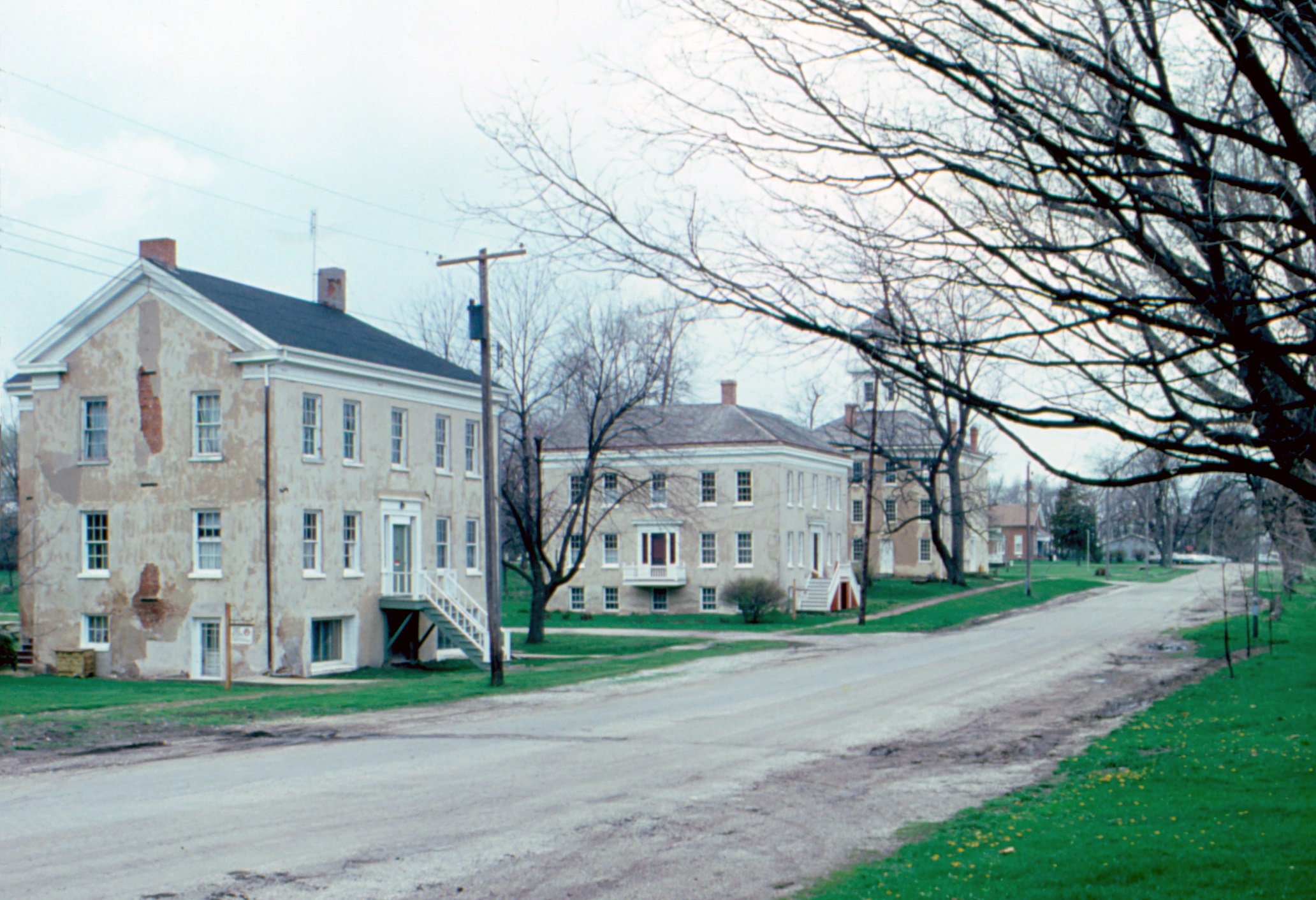
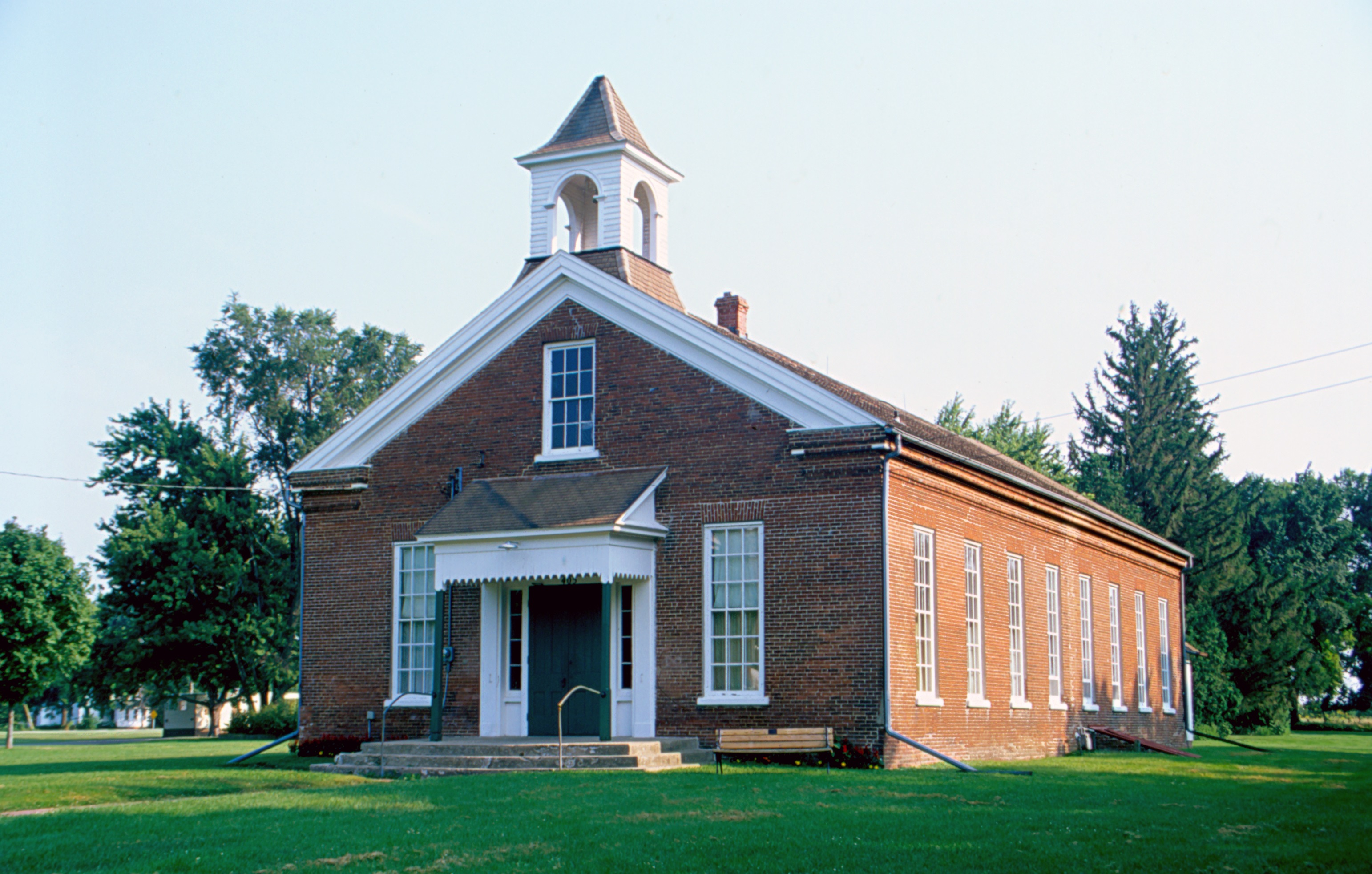
The colony school was built in 1861 and was 40’2″ by 80’1.5″ ft. and was the last building built by the original colonists. It served as a school from 1861 until 1953. Bishop Hill residents wanted to become Americans and forget about the persecution they suffered in Sweden, so learning English was a priority. Education beyond the elementary level was not important….it was considered that higher education made one conceited.
The Steeple Building, dating to 1854, was originally intended as the hotel, but served as a dwelling, school, administration building, and later housed a bank, telephone switchboard, and apartments. The roof dates to 1869. It is 66’4″ by 56’4″ ft. in size.
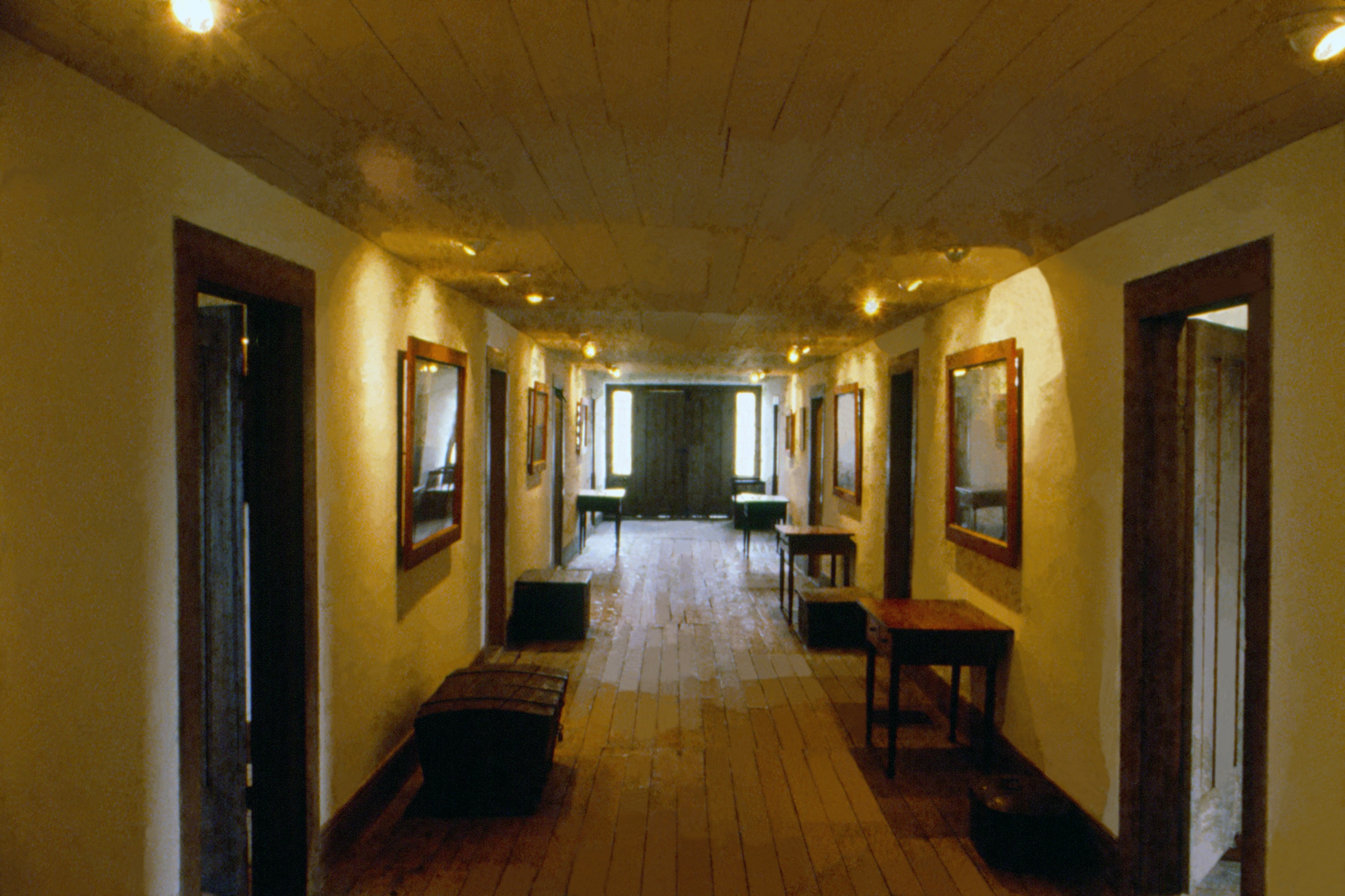
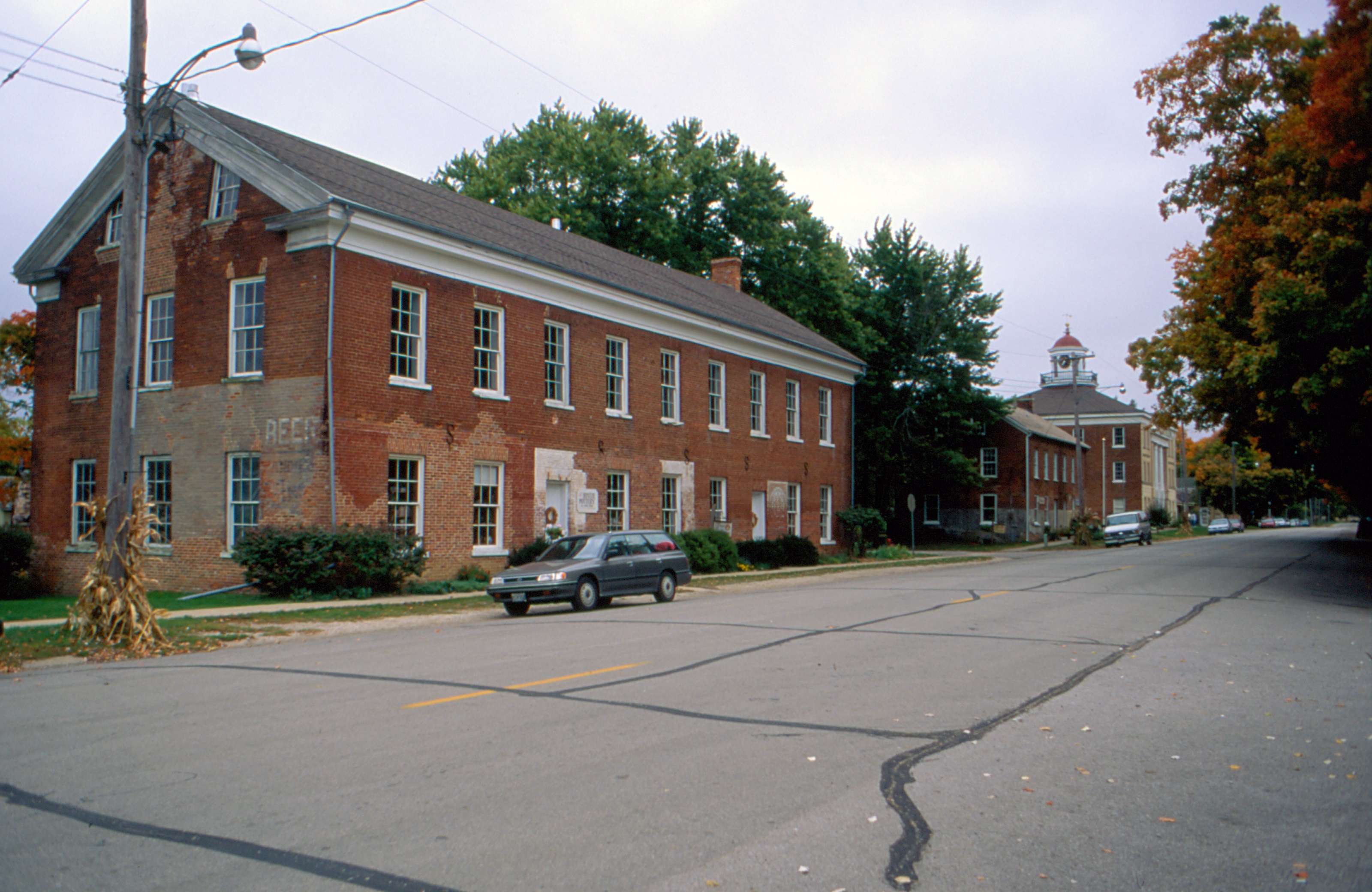
The blacksmith shop dates to 1857, a 2.5 story building without a basement. The forge was in the center of the main floor and could be used by 6 blacksmiths at the same time. It was a very modern (for its time) facility, with a steam engine powering the line shaft that operated the tools. Wagons were made on the second floor and brought to ground level by means of a ramp. Kentucky Shakers purchased wagons made here. The carpenter and paint shop dates to 1851 (it currently houses the post office at one end) and was 26’4″ by 53’1″ ft. and 1.5 stories.
Resources Consulted

Bishop Hill, Illinois website
Isaksson, Olov. Bishop Hill, Ill.: A Utopia on the Prairie. Stockholm, LT Publishing,1969. Copies in the General Collection and in the Communal Studies Collection.  Call number F549.B6 I8
Lowe, David G. "A Prairie Dream Recaptured." American Heritage, v.20:no6 (October 1969)
Swank, George. “Bishop Hill: Showcase of Swedish History.” Galva,IL,n.d.  (pamphlet located in CS 059-6, the Bishop Hill collection)
Wagner, Jon. “The Making and Breaking of an Utopia.” The Prairie Journal, Winter 1984-85,p. 14-23 (article located in CS 059-17, the Bishop Hill collection)
White, Janet. "Swedish to American: Built Form at the Bishop Hill Colony. Material Culture:v.44:no.1 (Spring 2012), p. 50-68.

End Notes
i Wagner, p. 15
ii Isaksson, p. 38
iii Wagner, p. 16
iv Swank, p. 36
v Isaksson, p. 69
vi Isaksson, p. 107
vii Isaksson, p. 127


Leave a Reply