Mesker Zoo. Mesker Park Drive. Mesker Amphitheatre: maybe you recognize these places/locations in Evansville. These are the obvious things honoring the contributions of the Mesker family to Evansville, but there are other, more subtle contributions—let’s take a look at those.
It all began with the birth of a certain John Bernard (J.B.) Mesker in Germany on February 22, 1823. He came to America in 1835, first settling in Cincinnati, OH, where he trained as a tinsmith. After learning his craft, in 1844 he began to establish his own business, initially traversing the Ohio and Mississippi Rivers down to New Orleans on his own flatboat and providing his wares and services from there. His connection with Evansville began in 1850 when he decided to move here after visiting his brother, Henry, and forming a positive feeling about the city.
The 1860 Evansville City Directory shows a John B. Mesker business in stoves, tin, copper, and sheet iron war located at 72 Main St. Within 10 years the business had grown and was relocated to the corner of Market and Court Sts.
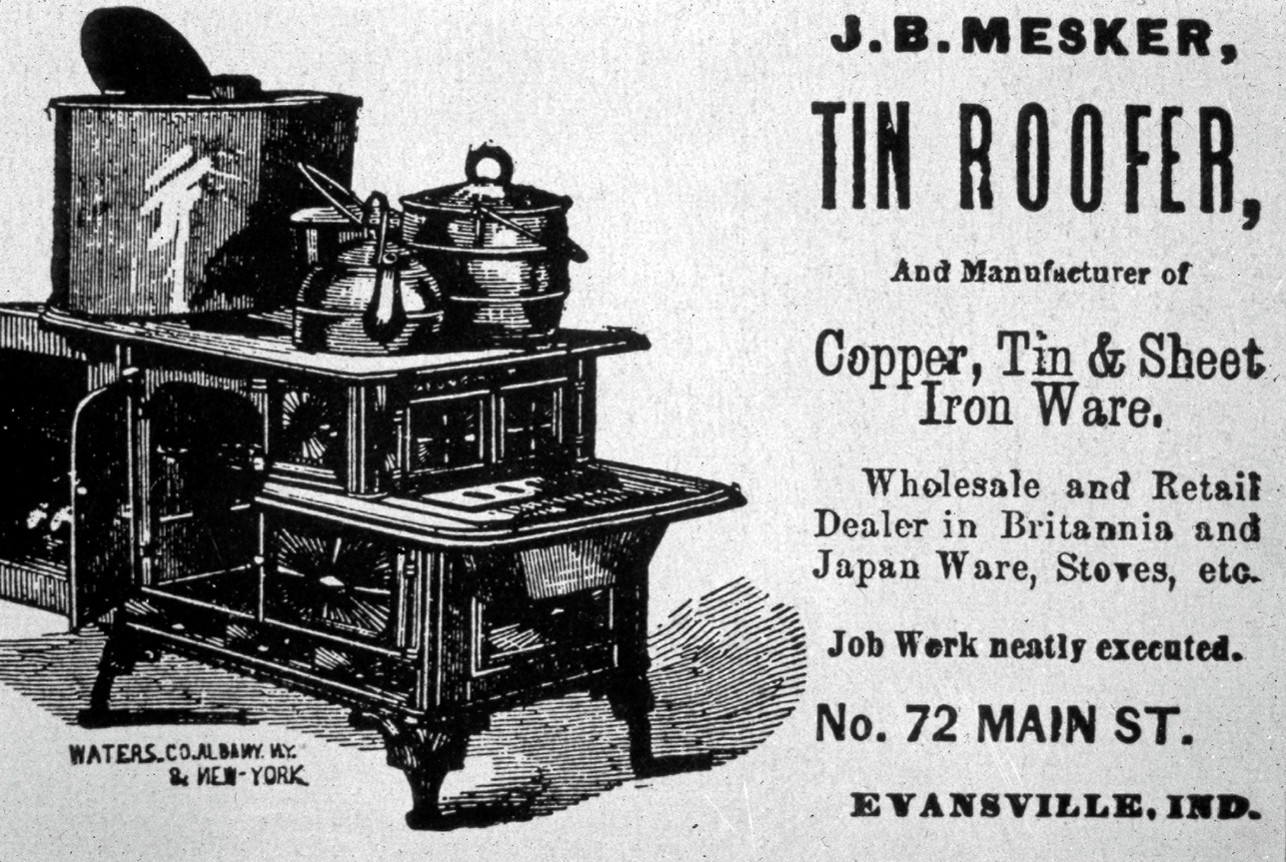
J.B. was driven to begin new enterprises, including the Eagle Foundry, founded with partners F.W. Brinkemeyer and John H. Roelker. More important is how he passed on that drive and ambition to his sons. Sometimes with their father, other times independently, a number of his sons founded/were part of an enterprise that dealt with tin and sheet metal.
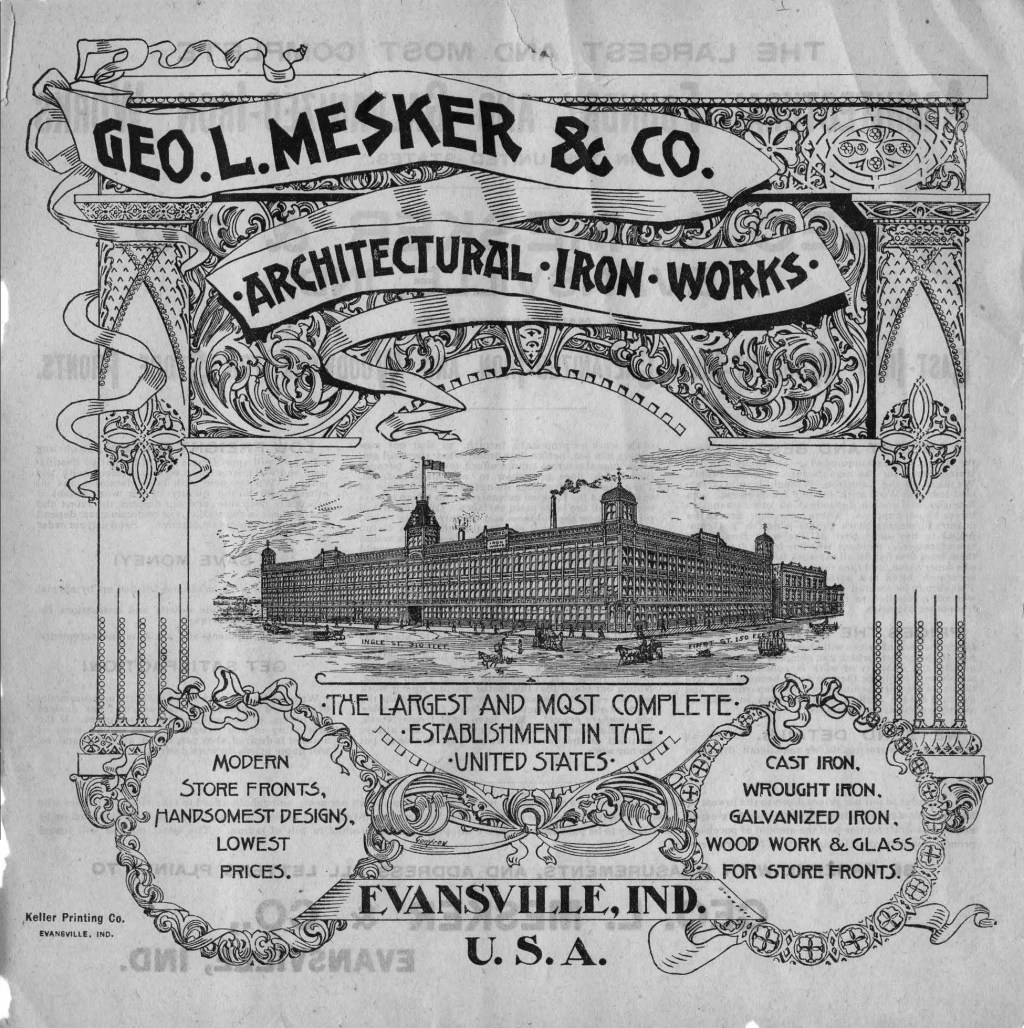
One prime example was son George L. Over time the original John B. Mesker became J. B. Mesker and Son, and George was an integral part of that, rising from bookkeeper and ironworker to becoming a partner in 1880. Just four years later he started his own firm, George L. Mesker & Co., which grew to be the largest architectural ironworks company in the country. “Apparently to avoid competition in the family, the Evansville Meskers each chose a specialized niche within the sheet-metal and iron market. Leaving the architectural sheet-metal and iron work to George, J.B. and yet another son, Edward Mesker (1860–1898), focused on stove and range manufacture, while John Henry Mesker, who in 1883 established his own business, J.H. Mesker & Company, dealt with iron fences, railings, and similar building components. Despite these ventures being independent, J.B. Mesker’s ironworks at the corner of Market and Court Streets was the epicenter of family business activity as both of his sons’ businesses operated at this same location.”
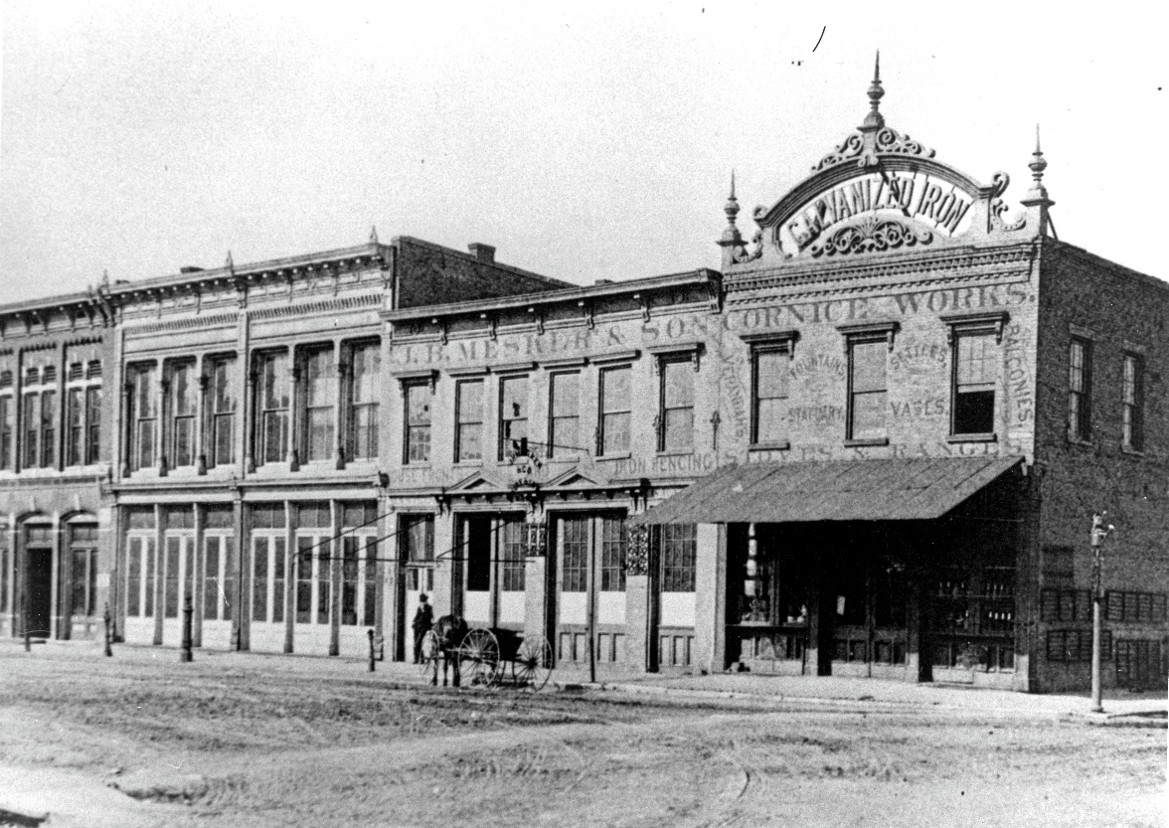
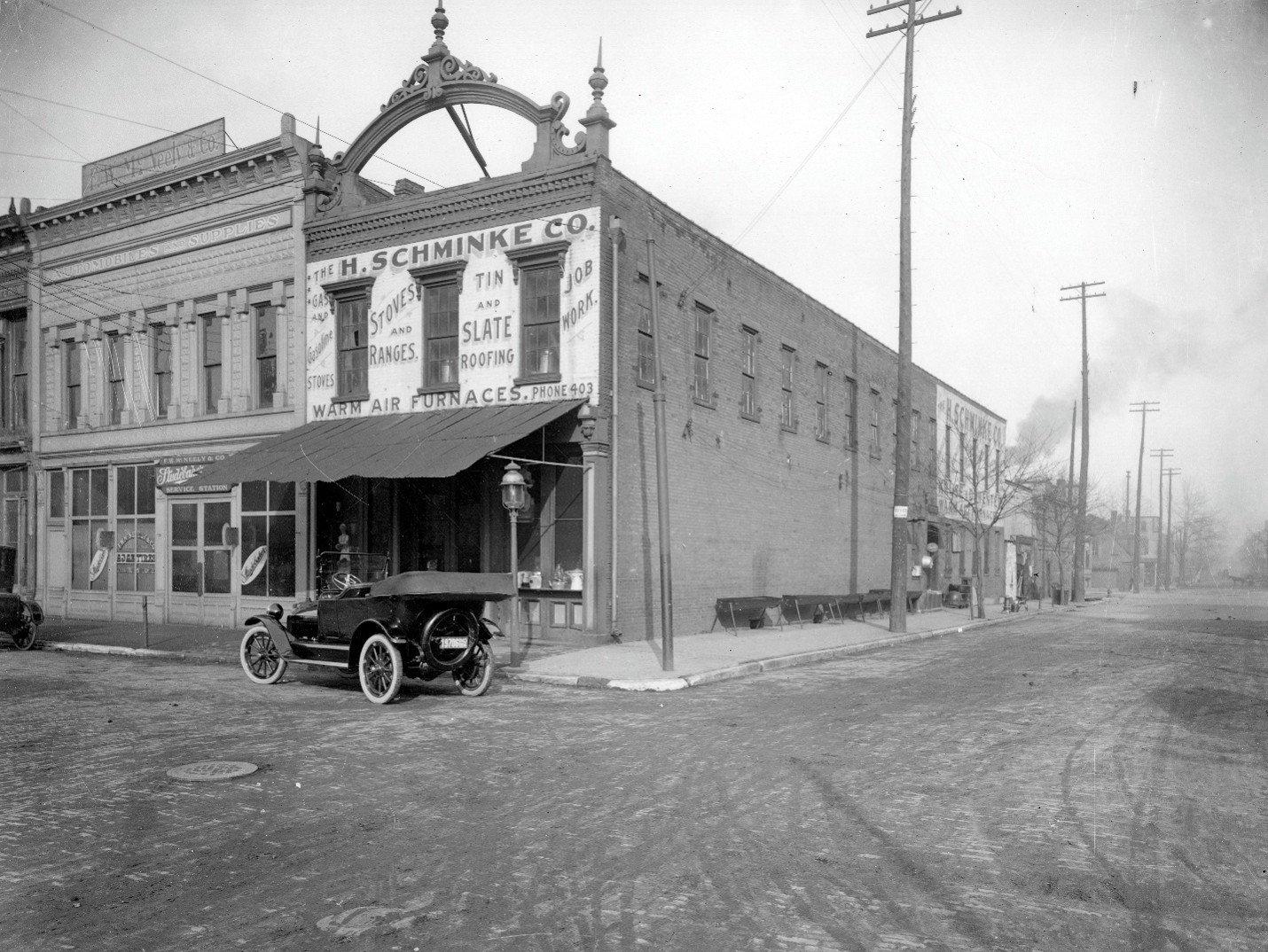
In 1895 J.B. Mesker finally retired and sold the above business and building to his employee, Henry S. Schminke, who renamed and modified the façade. This building (actually, the entire block) was razed in 1916 to build the Coliseum.
John Bernard Mesker died in 1899, but his work and legacy continued through George L. Mesker and Co. and later Mesker Steel, as well as the work of his other sons. As early as the 1890s George was proudly asserting that his was the best and biggest such company in the country.
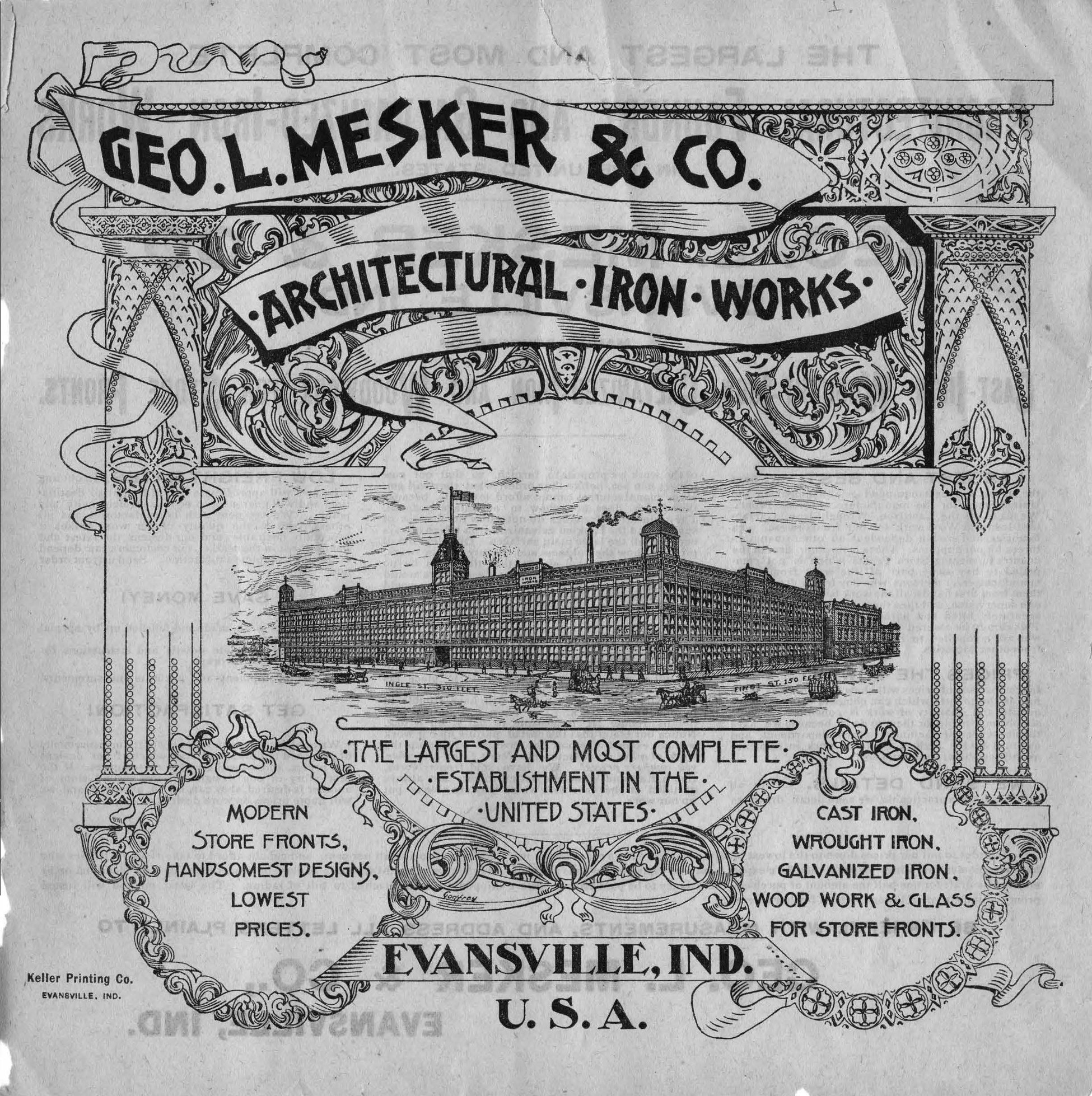
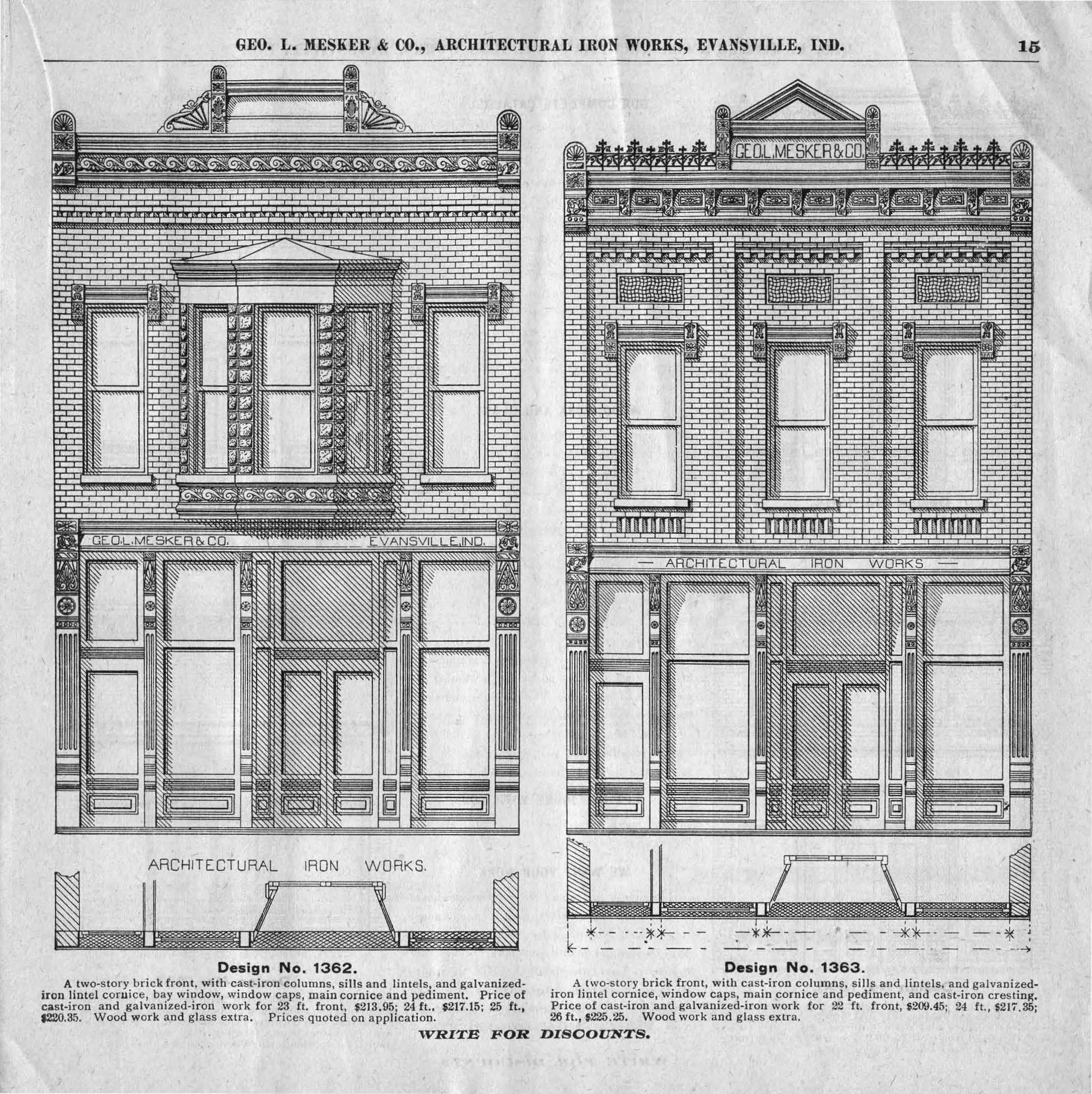
This catalog was full of examples of the type of work Mesker could provide to its customers.
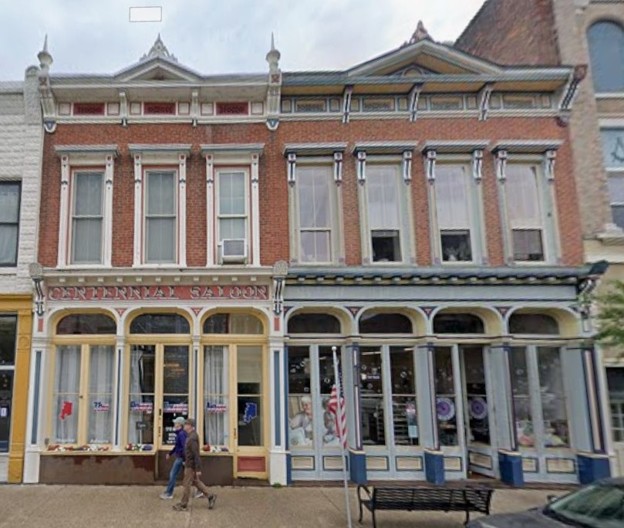
But better than the catalog are images from across the country of still standing buildings that the “Mesker boys” created.
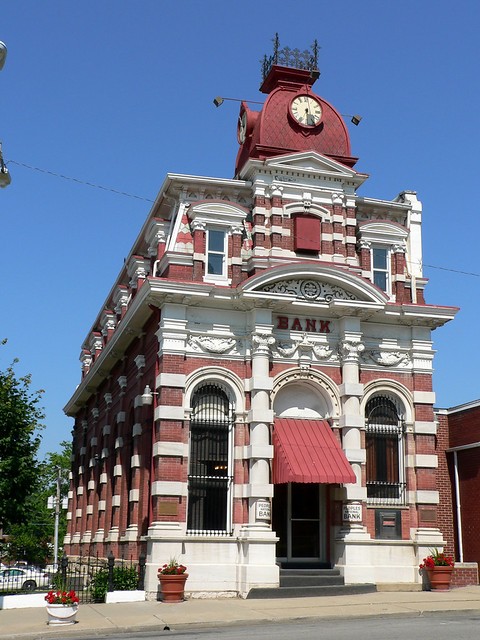
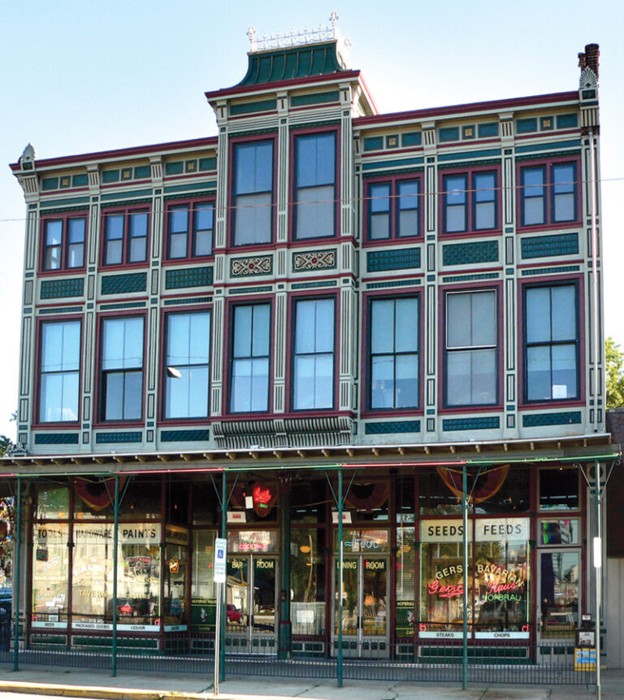
This next one might be more familiar to you. Located at 2100 W. Franklin St., you may have eaten at what is now the Gerst Haus, or at least walked past it at the Fall Festival. When adorned by Mesker, this was Heldt and Voelker Hardware.
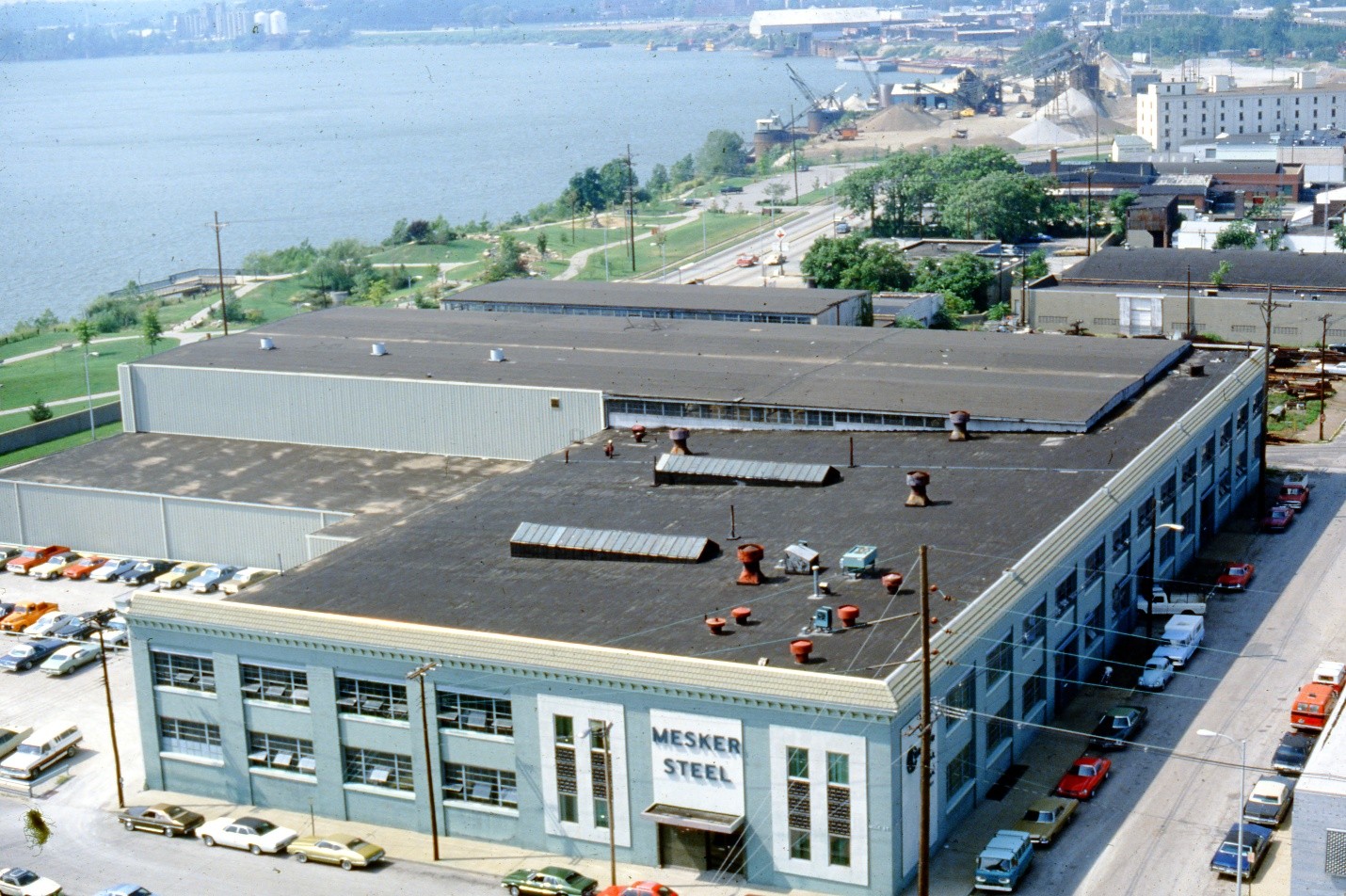
The 1981 photograph below shows the last location of the company that created all this architectural adornment: Mesker Steel at 30 Ingle St. George L. Mesker & Co. (architectural iron works) opened in this location in 1892. That building was destroyed by fire in 1891 and soon rebuilt. With expansions, by 1962 it comprised a city block. The name became Mesker Steel in 1971; the business closed in 1981. After use by another company, this building was razed in 1992.
In researching this blog, I ran across a number of blogs written by Darius Bryjka. According to his bio, he is a project reviewer at the Illinois State Historic Preservation Office, and has been fascinated by and researching about Meskers since 2004. Since I used his work, I’m crediting him below with links to his posts.
All by Darius Bryjka:
“The Largest and Most Complete Establishment.”
I also used this article: Winnerman, Jim. “Face Behind the City.” Evansville Living magazine, November 14, 2012.
In addition, UASC has the George L. Mesker Steel Company Collection which I consulted. Here’s a link to the items in the collection. If you find something that intrigues you, contact University Archives and Special Collections via the email linked here to view the collection.


Leave a Reply