Mona Meyer, University Archives Special Collections Metadata Librarian
In a May 27, 2025 blog entitled “Parts is Parts,” I talked about 3 parts of Evansville, originally independent from the larger city, which became incorporated into what we know today as the city of Evansville: Lamasco, Independence, and Howell. Today we’re going to revisit Howell and learn a bit more about how it got its name.
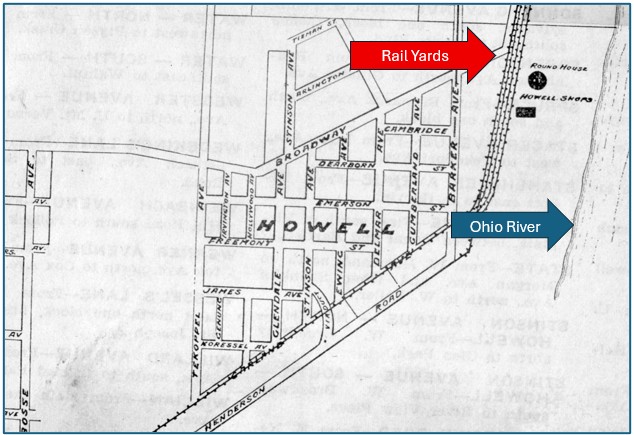
Howell was a railroad town, centered around the L & N (Louisville and Nashville) railyards seen on this image at the red arrow. The blue arrow indicates the proximity of this area to the Ohio River. “Howell began as a company town, founded at the close of the 19th century. Its origins are deeply connected to the Louisville and Nashville Railroad (L&N), which came searching for a new rail yard location on the busy route between Louisville and Nashville. The railroad found the land west of Evansville perfect for this purpose. In 1881, the community of Howell was platted.” The name comes from Captain Lee Howell. Howell was born into a farming family in Lauderdale County, AL, in the northwestern corner of the state, on May 18, 1840. He began work at age 15 as a clerk and bookkeeper at a county store, joining the 4th Alabama Cavalry, Captain Dick Johnson’s Company, in 1862. In 1863 he became clerk to the brigade’s quartermaster, and by the time the war ended, he was named quartermaster.
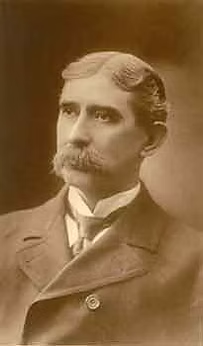
Circa 1865, Howell began in the packet boat business on both the Tennessee and Ohio Rivers, starting as a clerk and ending up as a master. His first assignment was as a clerk on the Rapidan, a packet boat that operated between Florence and Paducah, KY, and within 2 years he was its captain. Evansville was the far end of the route for the two packet boats he purchased, so this was probably his introduction to “our fair city.”
His experience with transportation in general landed him a job with the L&N railroad as its freight agent in Evansville by 1880. The family moved around for a bit, but by 1887 they settled into 217 Chestnut St. (The house no longer exists, but it would have been near the corner with SE 2nd St.)
“On June 1, 1882, Captain Lee was promoted to division freight agent for the Evansville and St. Louis, and Evansville, Henderson and Nashville divisions of the L&N. On November 1st of that same year, he was made general freight agent. He held this position for the rest of his life and apparently refused further promotions in the company. His efforts to build the success of the L&N in Evansville helped to create jobs at the Howell Yards. Most of these workers lived in the area of Evansville known as Howell, which was originally an incorporated town with all the amenities. In 1889, then L&N president M.H. Smith bestowed the name on the town. Howell was also known as “The Little Railroad Town.””
Howell was an ambitious man. In addition to his responsibilities with the L&N, he was a stockholder in:
Evansville & Tennessee River Packet Company
St. Louis & Tennessee River Packet Company
The Howell Land Company
The Evansville Cross Tie Company
Green River Transportation Company
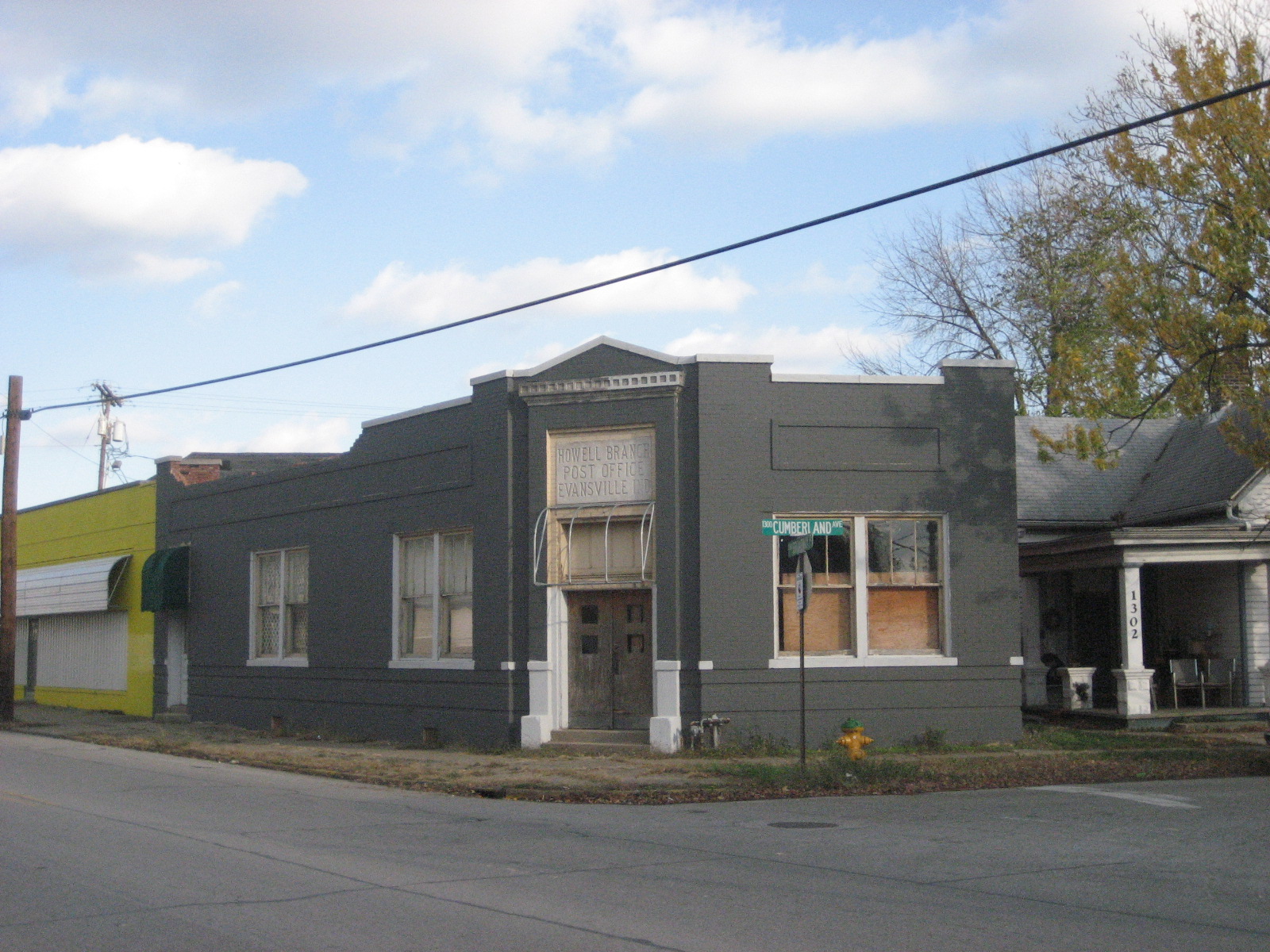
He was also involved in starting the Evansville, Newburgh, and Suburban Railway, and took over as president when the original president, F.W. Cook (think Cook Brewery) passed away. Howell thrived as its own tight-night community. It had its own school and post office (the post office building is still there, but no longer functions as such).
Lee Howell died in 1918 and is buried at Oak Hill Cemetery. By 1915/1916 Howell was incorporated into the city of Evansville. No longer a separate entity, Howell remains a close knit neighborhood and a well recognized area within the city.
Resources Consulted:
“Howell: Evansville’s Historic Railroad Community with a Heart of Gold.”


Leave a Reply