The French were among the first Europeans to explore what we now call the state of Indiana, in the early 1500s. But they were far from the first people here–indigenous peoples, what today we would call Native Americans, lived here long before Christopher Columbus “sailed the ocean blue” in 1492 and discovered America.
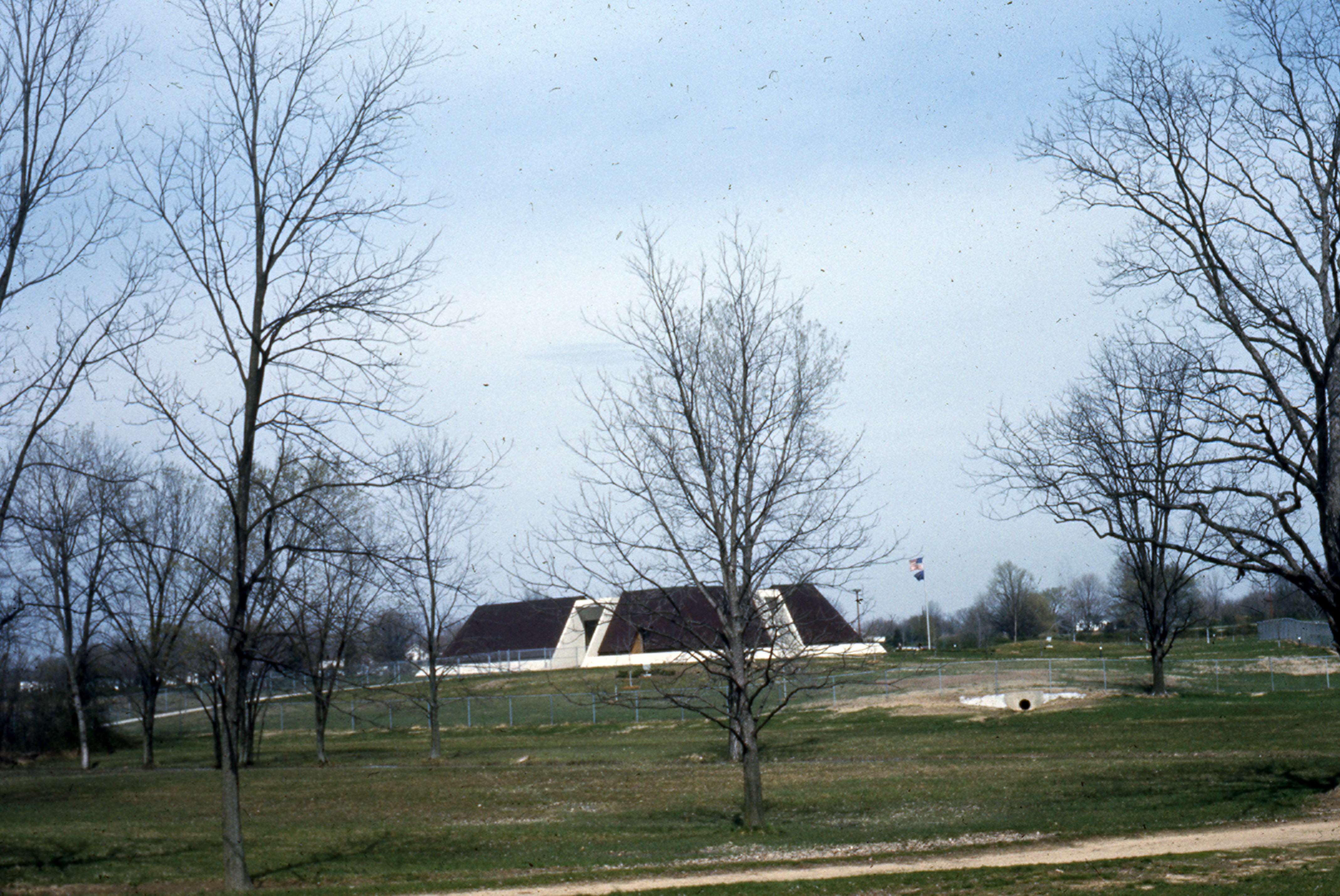
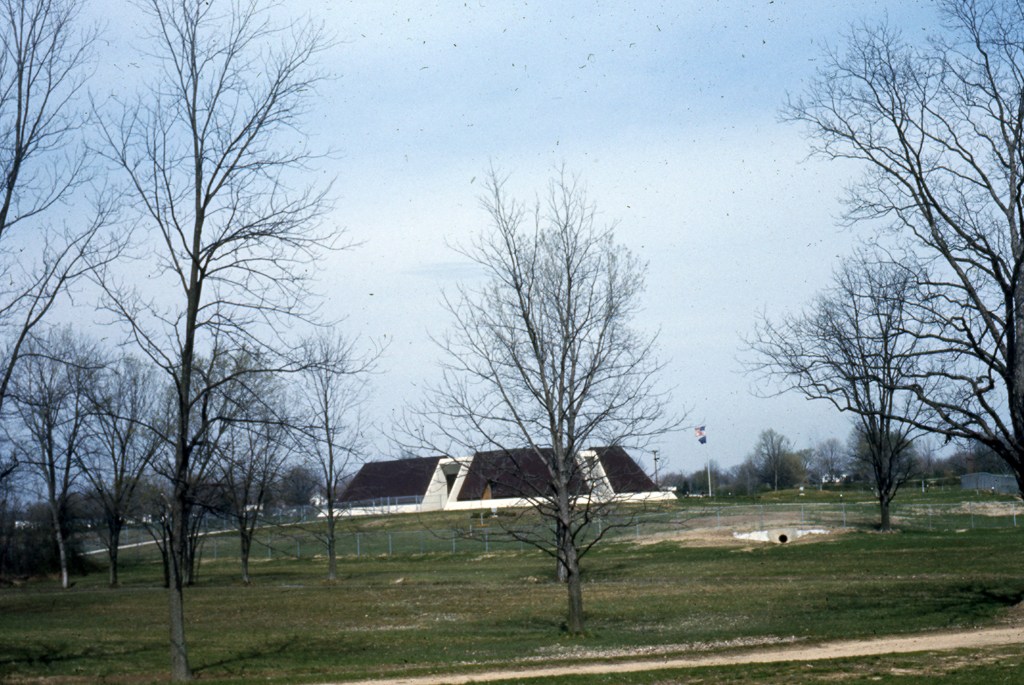
The photograph above is of Angel Mounds State Historic Site, located at 8215 Pollack Ave., on the far east side of Evansville. A culture referred to as Mississippian lived there. It “was established by A.D. 1100 and became a major center in the region. By 1450, the city was abandoned and the people established towns and villages elsewhere.” ‘Angel’ has nothing to do with the culture–it’s merely the name of the family who owned the site before the state purchased it in 1938.
Angel Mounds is a beautiful site to hike and explore–I encourage you to visit, but in this blog I want to explore some of the indigenous peoples those early French explorers might have encountered in Indiana and some of those cultures that were here when Indiana became a state in 1816.
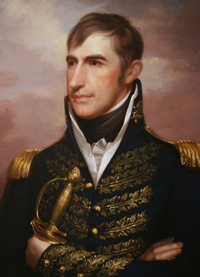
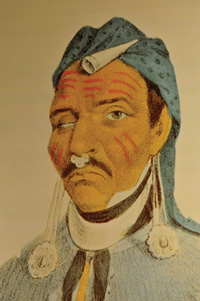
The Shawnee lived in the Ohio Valley generally, but moved into Indiana after conflicts with Europeans. Many lived in the area surrounding present day Lafayette, IN: you might recognize the names of Tecumseh and the Prophet from Indiana history. These two brothers wanted to create a confederation of Native American peoples (Potawatomi, Shawnee, Kickapoo, Delaware, Winnebago, Wea, Wyandotte, Ottawa, Chippewa, Menominee, Fox, Sauk, and Creek) to resist European encroachment, with the headquarters where the Wabash and Tippecanoe Rivers meet. They called it Prophetstown. At this time, William Henry Harrison was the territorial governor (later 9th U.S. President) and was well aware of the threat that Tecumseh and the Prophet presented to European-American settlers. On November 11, 1811, the Prophet launched a surprise strike on Harrison’s forces. There were heavy losses on both sides, but Harrison’s forces prevailed, with Prophetstown residents fleeing and the town being burned to the ground.
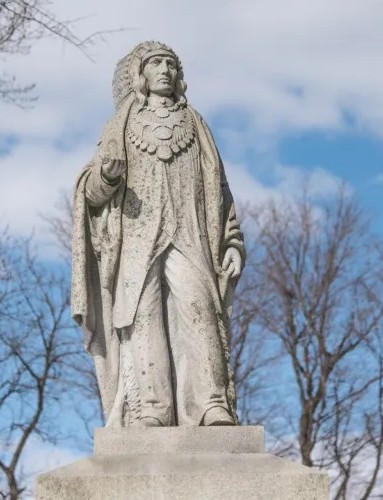
Northern Indiana and parts of Michigan, Illinois, and Wisconsin were inhabited by the Potawatomi. Pokagan State Park in Angola, IN pays tribute to these peoples: Leopold and Simon Pokagan were notable members of the Potawatomi. Potawatomi Inn at that state park plays further tribute. Sadly, the Potawatomi fared no better than any other indigenous culture when it came to conflicts with European-Americans. “Over a period of about fifteen years beginning in 1830, indigenous nations were forcibly removed from Indiana to territories farther west when the United States Congress passed the Indian Removal Act in 1830. … The Potawatomi village, led by Chief Menominee, resisted as long as possible. He and his village were removed along what is called the Potawatomi Trail of Death in 1838. Of the nearly 900 people removed in 1838 around forty of them died along the journey. The devastation did not end there. Forcing a group to leave their ancestral homelands and all that they know to go to a place that is unfamiliar is potentially catastrophic for the culture because of the shared set of values, ideas, concepts, and behaviors that defines a group.”
Further displacement was caused by the following key treaties, often (if not always) obtained by deceitful methods.
| Treaty | Year | Key Points |
| Treaty of Fort Wayne | 1809 | Ceded over 3 million acres, sparking resistance by Tecumseh |
| Treaty of St. Mary’s | 1818 | Led to the removal of Miami and Delaware from central Indiana |
| Treaty of Chicago | 1833 | Forced cessions of northern Indiana lands by Potawatomi |
Many other Indiana place names find their origin in indigenous languages and/or possible European corruptions of what they heard.
Indiana: our state name means “land of the Indian.”
Yankeetown: a town in Warrick County. “There is good evidence the name originated from a now-unknown Massachusetts Indian tribe who called the North European settlers, “yen-geese, yen-gis, yankis, or yankrvis, Indian names for English.”” (Macpherson, p. 84)
Ohio: the name of the river that serves as our southern border was given by French settlers based on what they understood the Iroquois name to be. It means “the beautiful river.”
Wabash: this river name comes from the Miami language and means something like beautiful white or bright water. French Jesuits in Indiana translated this as Ouabache; there is a Ouabache State Park near Bluffton, IN.
Patoka: there are several possible meanings of this word. The Kickapoo say it is the name of a Wabash River chieftain. The Fox say it refers to water depth. To the Miami, it means snakes.
Resources Consulted
Glenn, Elizabeth and Stewart Rafert. The Native Americans. Indianapolis, IN: Indiana Historical Society Press. 2009. General Collection E78.I53 G54 2009
Hicks, Ronald, ed. Native American Cultures in Indiana: Proceesings of the First Minnetrista Council for Great Lakes Native American Studies. Muncie, IN: Minnetrista Cultural Center/Ball State University, 1992. General Collection E78.I53 N38 1992
The History Museum (South Bend, IN) website: Early History of Indiana to 1779.
McPherson, Alan. Indiana Names in Indiana. publisher unidentified, printed in Monticello, IN, 1993. General Collection E78.I53 M37 1993


Leave a comment