Why is our stretch of land along the Ohio River named Evansville? After all, the first permanent settler here was named Hugh McGary, Jr. Let’s take a peek into the past to uncover this story.
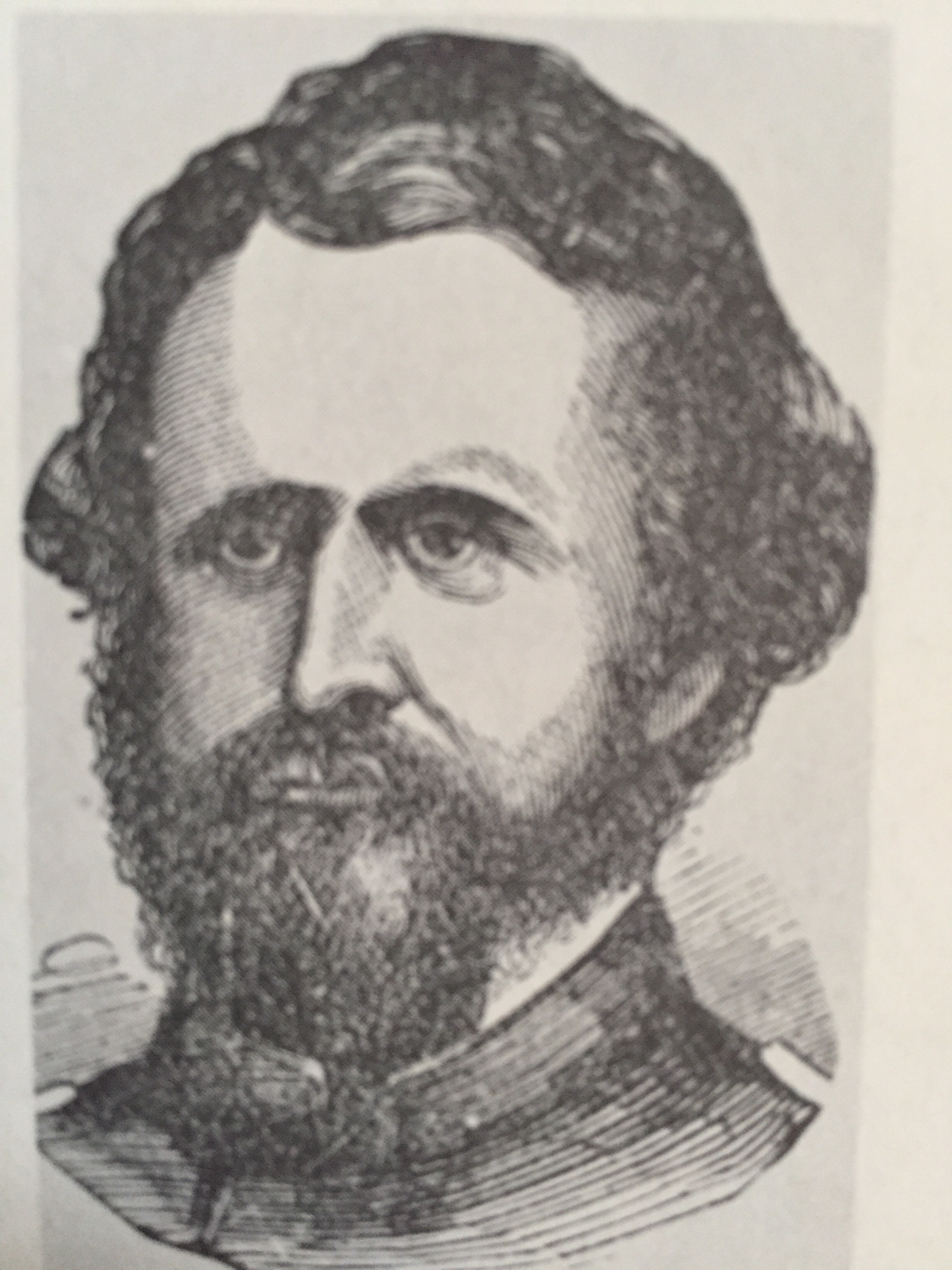
Hugh McGary, Jr. was born in 1778 in McGary Station, Kentucky (near Harrodsburg), the son of an early Irish pioneer in Kentucky, Hugh McGary, Sr. and wife Mary. Hugh, Sr. was apparently quite a piece of work: he “was a man of blood — a man both brutalized and brutal, whose quarrelsome temperament, thin skin and hatred of Indians cost the settlers of frontier Kentucky dear. … Hugh McGary died in 1806. It’s doubtful that many mourned the passing of a disagreeable hothead who stirred discord, sowed mayhem, and left a trail of blood across the frontier of Kentucky.”
Fortunately, Hugh, Jr. was cut from a different cloth. Very little information could be found about him, but there certainly was nothing about a poor temperament like his father! In 1812, four years before Indiana became a state, he built a house/shelter in the area of Riverside Dr. and Main St.
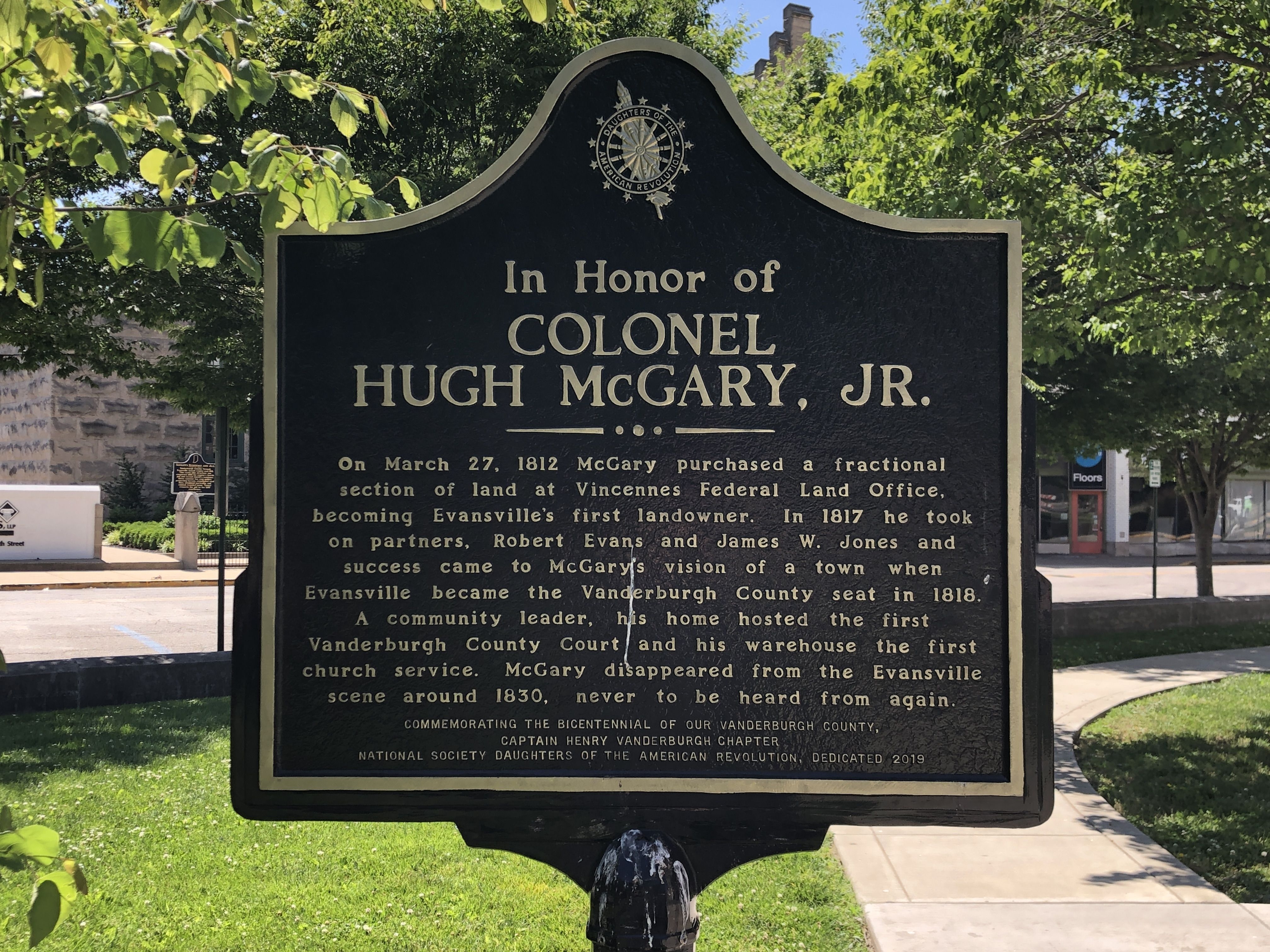
The text reads: In Honor of Colonel Hugh McGary, Jr. On March 27, 1812 McGary purchased a fractional section of land at Vincennes Federal Land Office, becoming Evansville’s first landowner. In 1817 he took on partners, Robert Evans and James W. Jones and success came to McGary’s vision of a town when Evansville became the Vanderburgh County seat in 1818. A community leader, his home hosted the first Vanderburgh County Court and his warehouse the first church service. McGary disappeared from the Evansville scene around 1830, never to be heard from again.
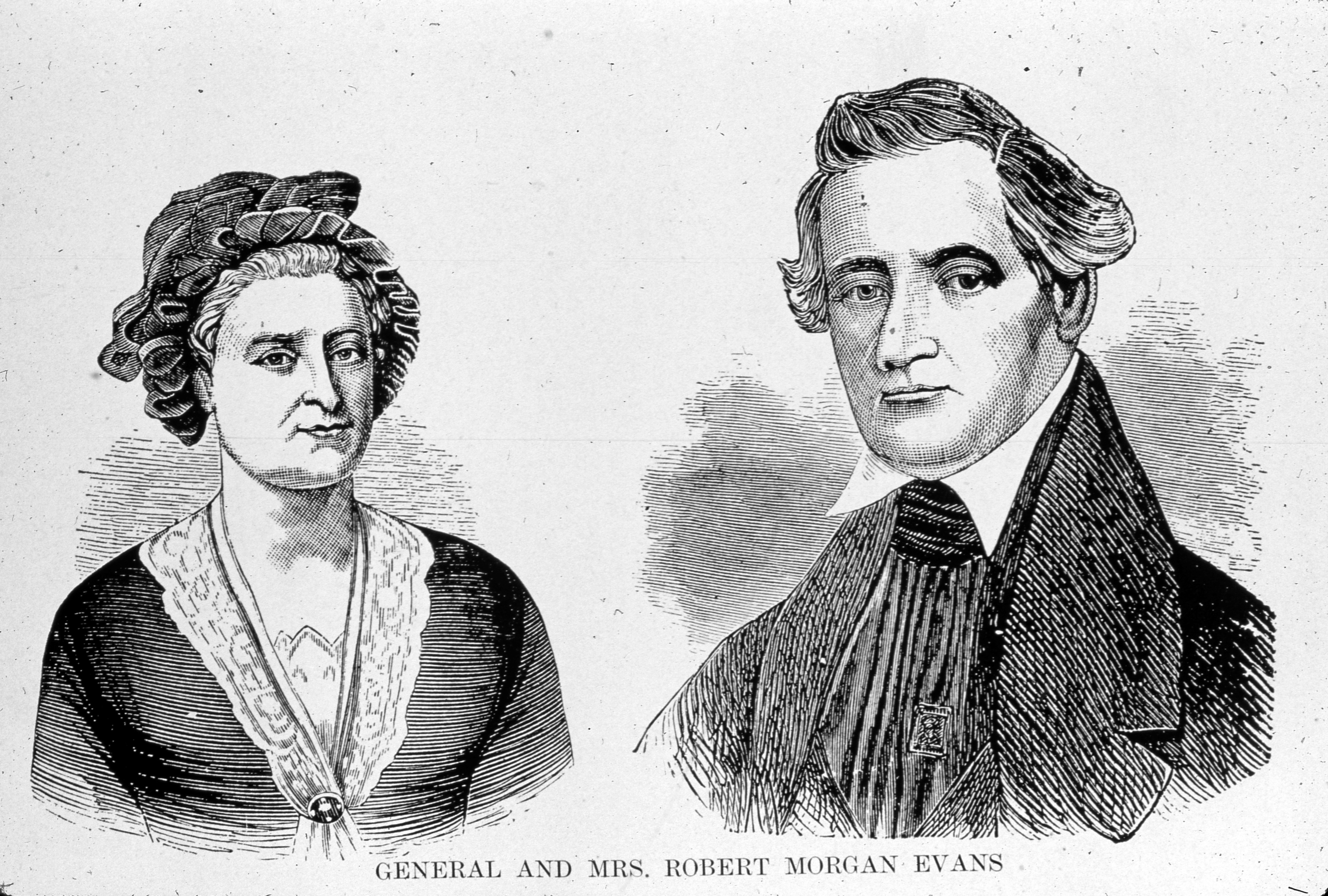
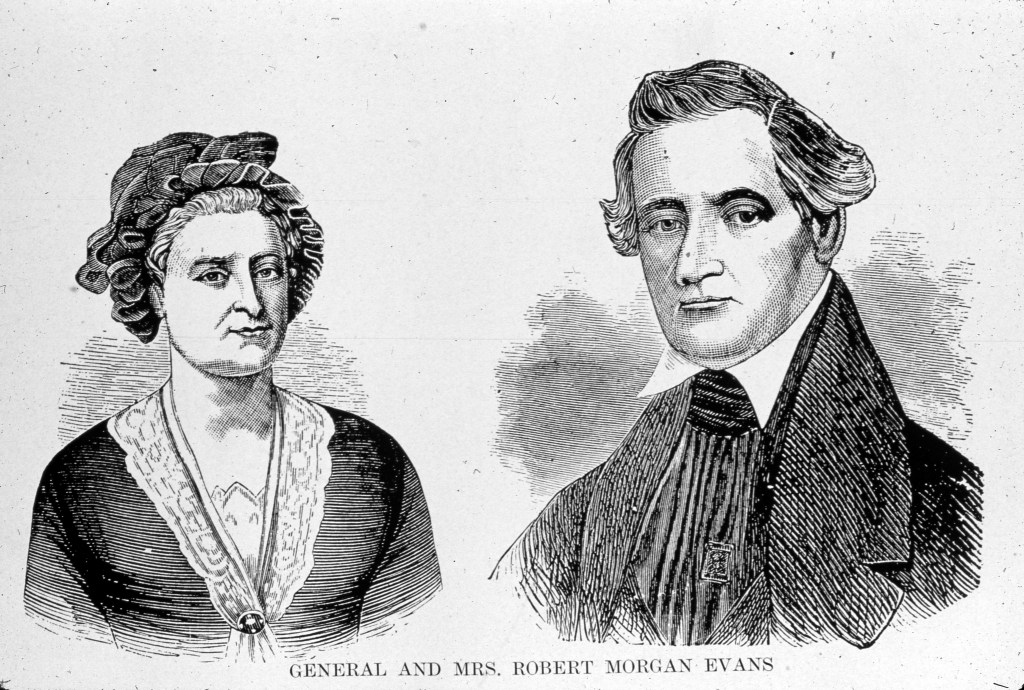
Robert Morgan Evans was born in Virginia in 1782 and moved to the Indiana Territory in 1805, north of today’s town of Princeton. Two years prior he married Jane Trimble, a sister of a U.S. Supreme Court Justice. In 1807 he purchased land a built a home, and lived there for 4 years before moving to Vincennes to operate a tavern. This must not have suited him well, as within 2 years he was back in the Princeton area. He served in the War of 1812 and later was promoted to brigadier general. He went on to serve as county clerk and was elected to the territorial legislature. He studied law and was admitted to the bar in 1816.He moved to Evansville circa 1820, and purchased land from Hugh McGary, Jr. Here he served as Vanderburgh County Clerk and remained in the legislative, being elected as Speaker of the Indiana House of Representatives in 1824.
It seems clear that Evans was the better known resident, and apparently McGary understood that because he was in accord with naming the new town Evansville. Evans lived here until his death on December 14, 1842 and is buried in Oak Hill Cemetery.
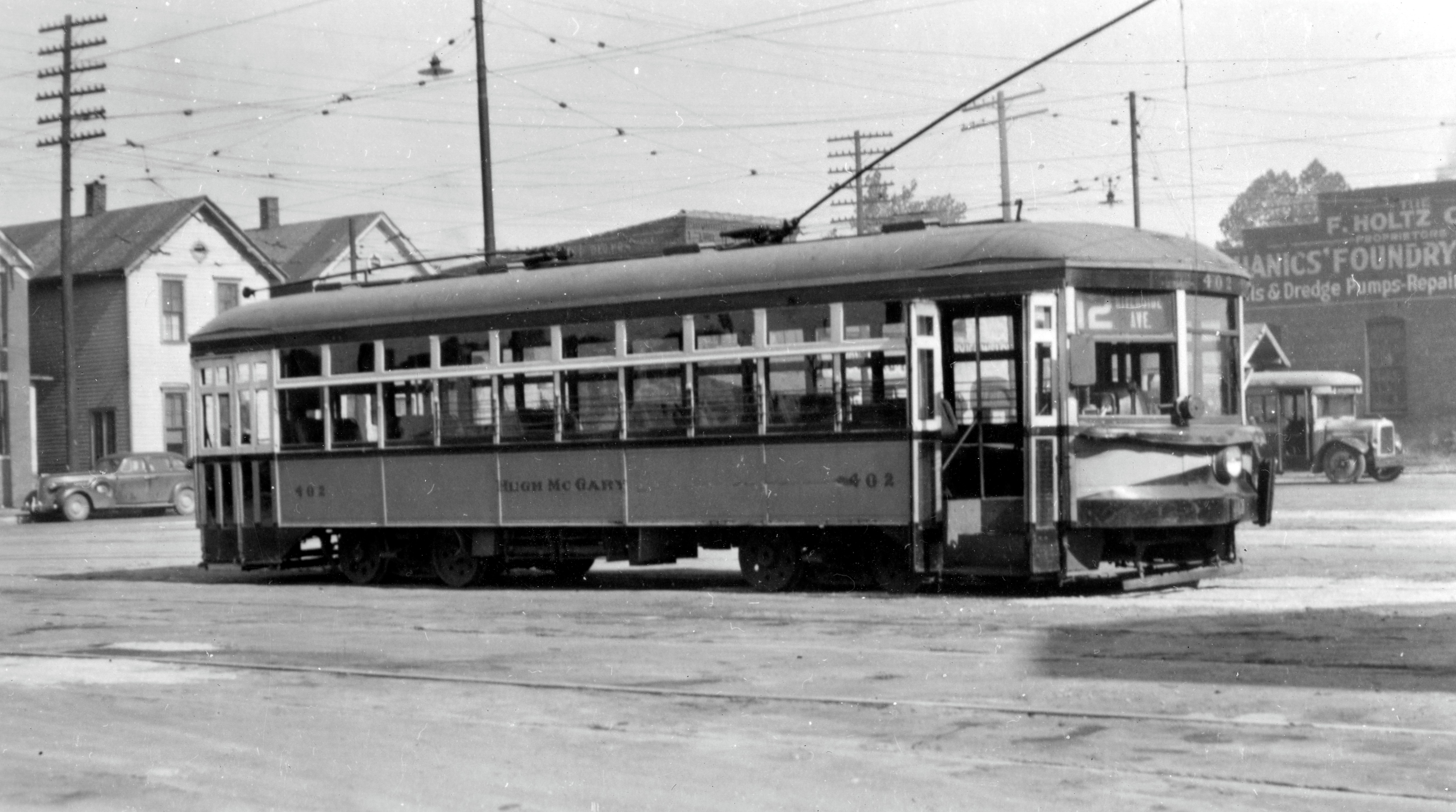
This said, McGary was not completely forgotten even though, according to that commemorative sign, he left Evansville in 1830 and was never heard from again. In the days when the city had streetcars, SIGECO streetcar #402 was named the Hugh McGary. (Southern Indiana Gas and Electric Co. (SIGECO) operated the trolley lines 1929-1948.)
Evansville is in Vanderburgh County. You can find out more about its namesake in this August 26, 2019 blog entitled “Back Home Again…”. In the meantime, stay tuned for more topics of local interest.


Leave a comment